



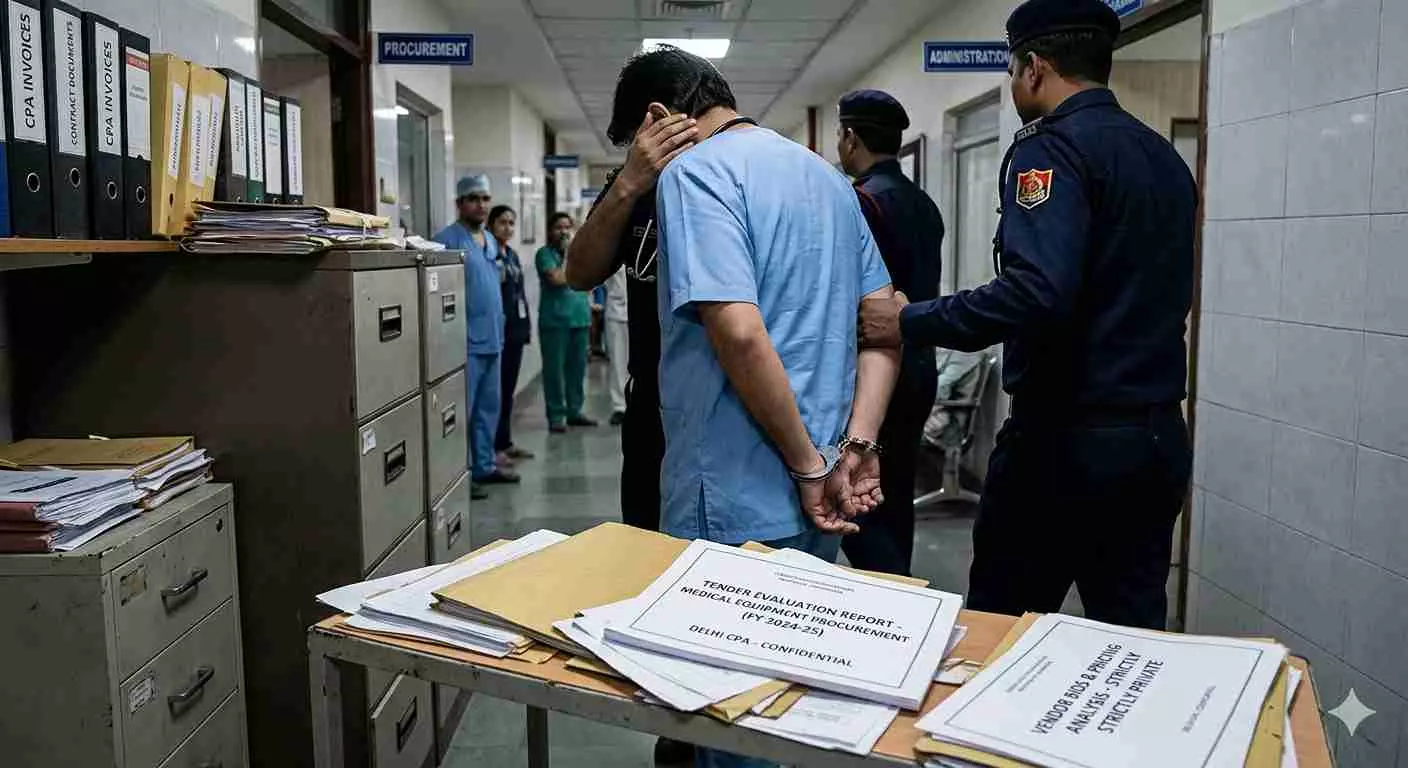
Investigators suspect that large quantities of medical supplies were procured over six months without corresponding demand from hospitals. AI-generated image for representative purpose
Delhi hospitals under scanner in Rs 350-crore procurement case: What we know so far
The Anti-Corruption Branch is investigating alleged manipulation of tenders, inflated purchases and a possible nexus between officials and private suppliers

The Anti-Corruption Branch (ACB) has launched a probe into alleged irregularities worth Rs 350 crore in the procurement of medical equipment, medicines and hospital supplies for Delhi government hospitals.
The investigation led to the arrest of Dr Vinod Kumar Ranga, the former head of the Office of Central Procurement (OCP), on June 18. The case originated from a complaint filed by the Delhi Government’s Directorate of Vigilance and has now put the functioning of the city’s public healthcare procurement system under scrutiny.
What is the case?
The alleged irregularities centre on the Central Procurement Agency (CPA), the nodal body responsible for sourcing medical supplies and equipment for Delhi’s government hospitals.
According to the investigation, the alleged scam involved a series of procurement violations, including creating artificial demand for medical equipment that hospitals had not sought, manipulating tender conditions to favour specific vendors and purchasing supplies at rates significantly higher than market prices.
Also read: CBI uncovers massive corruption in India’s medical education system
Investigators suspect that large quantities of medical supplies were procured over six months without corresponding demand from hospitals. The purchases allegedly benefited a select group of suppliers, while several healthcare facilities reportedly refused to accept the excess inventory due to a lack of requirement.
The probe also alleges that tender specifications were modified in a way that restricted competition and created conditions favourable to certain vendors. Investigators are examining whether procurement rules were bypassed to ensure that preferred suppliers received contracts.
Items under scrutiny
Among the items under scrutiny are expensive medical equipment such as portable X-ray machines, C-arm radiology systems and anaesthesia workstations, along with routine hospital supplies including surgical consumables, medicines, ORS packets, patient bedsheets and ward linen.
The alleged irregularities have raised questions about the use of public funds allocated for healthcare infrastructure.
A key development in the investigation was the discovery that several important procurement files and tender-related documents were missing from official records. The ACB alleges that Dr Ranga had kept some high-value files in his personal custody instead of maintaining them within departmental archives.
Also read: NEET scam: Bihar gang busted, expert calls for online exam | Interview
After the department failed to provide satisfactory explanations regarding the missing documents, a Delhi court granted the ACB four days of police custody of Dr Ranga. Investigators are now attempting to trace the financial trail, recover documents and examine digital records linked to the procurement process.
Probe widens further
The investigation has also widened beyond the former procurement chief. Director of Health Services (DHS) Dr Vatsala Aggarwal was removed from her post, while more than 40 officials associated with the CPA were transferred as part of an administrative overhaul.
Also read: Ayodhya Ram temple multi-crore donation scam: What we know so far
According to the ACB, the probe is now looking into a possible nexus between government officials and private suppliers. More than 100 doctors, medical specialists and members of procurement committees who were involved in approving specifications and pricing are reportedly being examined.
Administrative changes
Delhi Chief Minister Rekha Gupta has also proposed changes in the health administration structure, including the transfer of several long-serving medical officers, with the stated aim of breaking entrenched networks within the system.
As the investigation progresses, authorities are focusing on key questions, including how procurement decisions were approved, whether hospitals were forced to accept unnecessary supplies, and who benefited from the alleged manipulation of the system.