







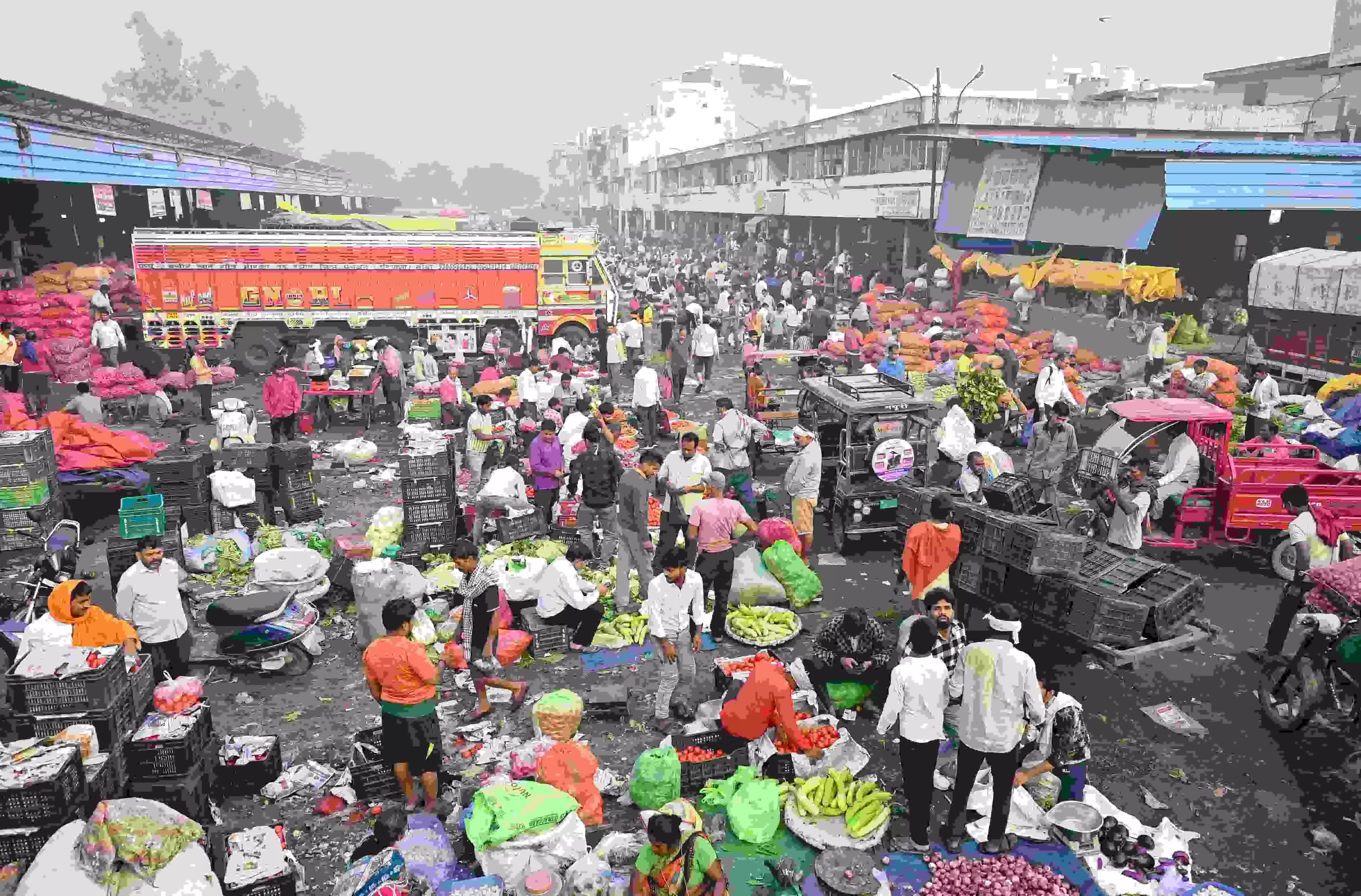
Yadav said CAQM was taking necessary steps based on the findings of its close monitoring of meteorological conditions. Photo: PTI
Centre claims 40 pc drop in stubble burning, but Delhi's air quality remains severe
Yadav says comprehensive action plans are in place, with CAQM monitoring weather conditions and coordinating pollution-control measures

The Centre has undertaken “more comprehensive environmental action plans” to deal with the air pollution in Delhi, with the Commission for Air Quality Management (CAQM) continuously monitoring meteorological conditions, including wind direction, wind speed and the movement of air, Union Environment Minister Bhupender Yadav said on Tuesday (November 3).
Yadav cites decline in stubble burning
His remarks come at a time when the air quality in Delhi slipped into the severe category despite the Centre’s claim of a significant reduction in stubble burning in Delhi’s neighbouring states.
Speaking to reporters, the Union Minister further stated that stubble burning has declined by 40 per cent in neighbouring states such as Punjab, Haryana, Rajasthan and Uttar Pradesh.
Also Read: Delhi air quality turns 'very poor' for first time this season, AQI crosses 300
“Yes, I have already stated that around 40 per cent of the paddy stubble has been utilised through ex-situ management this time,” said Yadav as quoted by ANI.
“There has certainly been a decline in stubble-burning incidents compared to previous years. This time, more comprehensive environmental action plans have also been prepared. Under these action plans, CAQM (Commission for Air Quality Management) has established a dedicated dashboard to monitor implementation and track progress,” he added.
CAQM monitors weather conditions to guide action
As for the steps taken by the government to improve Delhi’s air quality, Yadav said CAQM was taking necessary steps based on the findings of its close monitoring of meteorological conditions.
Also Read: Why Delhi’s discourse on air pollution seems to have moved from action to adaptation
“CAQM is continuously monitoring meteorological conditions, including wind direction, wind speed and the movement of air. Based on these assessments, the necessary steps are being taken,” he said.
The Union Minister further stated that the CAQM has issued instructions in coordination with all concerned state governments so that the measures are properly implemented.
Delhi AQI reaches 451, GRAP Stage-II imposed
Delhi’s air quality remained in the ‘severe’ category on Tuesday, with the city’s overall Air Quality Index (AQI) reaching 451 at 8 am, days before Diwali. Several monitoring stations across the capital also recorded severe pollution levels, according to data released by the Central Pollution Control Board (CPCB).
Also Read: Delhi’s air turns toxic post-Dussehra, despite a six-year low in farm fires
The CPCB data showed that while multiple locations reported AQI readings in the severe range, several others continued to record ‘Very Poor’ air quality.
The CAQM brought Stage-II of the Graded Response Action Plan (GRAP) into force across the National Capital Region (NCR) on Monday, following the rise in pollution levels. The new restrictions took effect immediately and were added to the measures already being enforced under Stage-I.