How did a Delhi fire bring NEET, CBSE rows back under lens? | Capital Beat
Panellists discuss information accuracy, media verification, and public trust in connection with the event which created confusion and made the Opposition suspicious

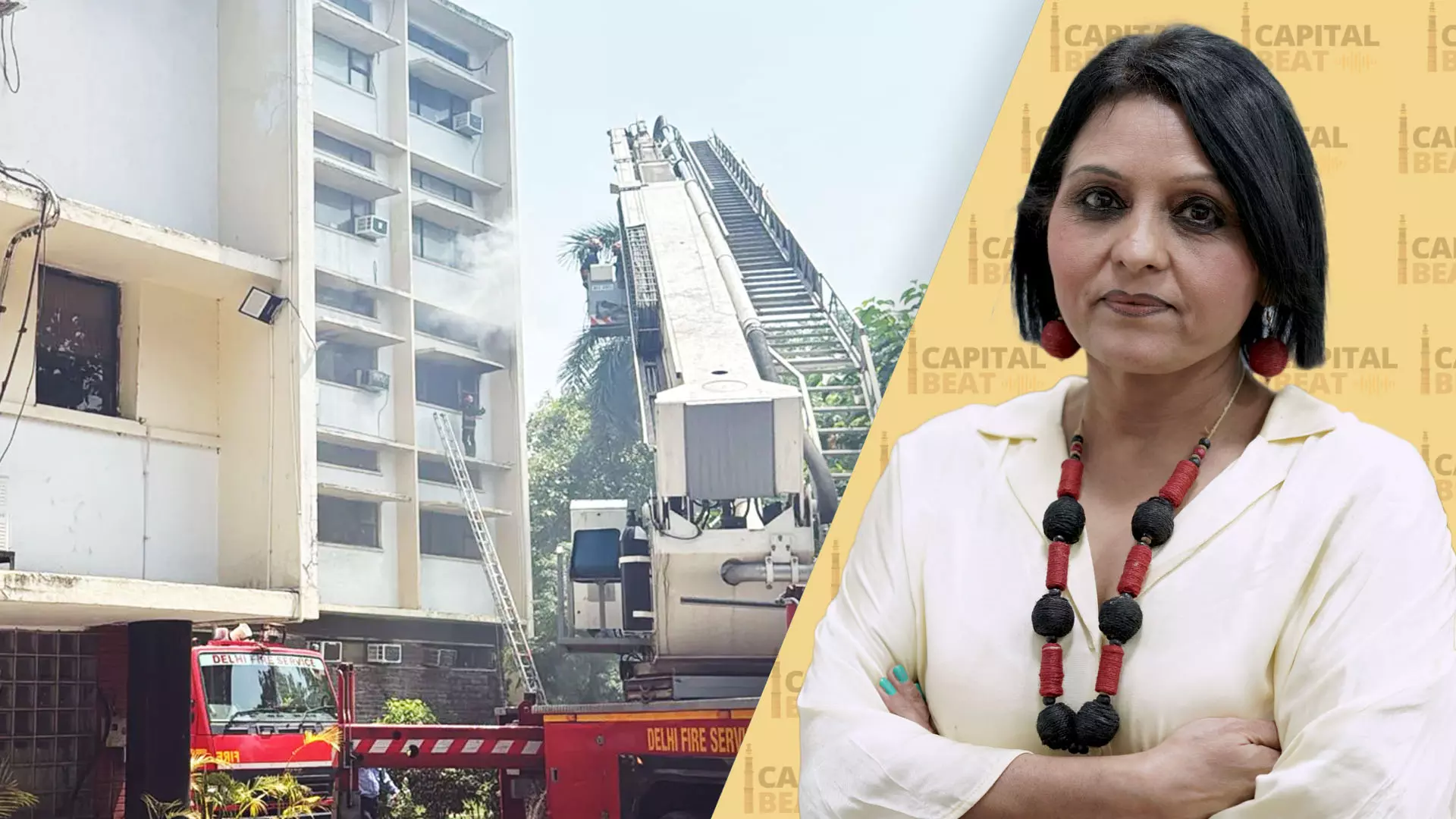
A fire incident at Delhi’s School of Planning and Architecture (SPA) on Monday (June 1) sparked confusion as initial reports claimed that the blaze occurred at the office of the Ministry of Education, New Delhi, triggering reaction from the opposition.
Also read: IAF to airlift NEET re-exam papers: 'India copying wrong things from China'
Columnist and academic Tanvir Aeijaz and Yuva Halla Bol researcher Anchal Gupta joined a discussion over information accuracy, media verification, and public trust pertaining to the episode during this episode of Capital Beat. They examined, by taking into account the sequence of events that followed the fire, how the information spread rapidly through news platforms and social media before clarifications emerged.
Govt, DFS issue clarification
The education ministry issued a clarification saying certain media reports "indirectly stated" that a fire broke out in its office while the actual incident took place at the premises of the SPA, located at Indraprastha Estate, Vikas Marg (ITO). It also said that the ministry is located at Kartavya Bhavan-2, Dr. Rajendra Prasad Road. The Delhi Fire Service (DFS), which initially said about the fire at the ministry office, also rectified it, saying the fire broke out at the SPA instead. No casualties were reported.
Questions over the initial reporting
The panel discussion highlighted how the initial description of the incident was widely carried by news organisations and amplified across social media.
Aeijaz said the scale of the reporting error raised important questions.
“Not even just mainstream but otherwise also they are reporting and they are using the word Ministry of Education. It’s not just for nothing that the name of the Ministry of Education would come.”
He noted that multiple media organisations appeared to rely on similar information and questioned how such a widespread misunderstanding could have occurred.
“One or two I can understand, but so many of them. I think some connection is there that needs to be probed,” Aeijaz said.
ANI issues correction
News agency ANI, which reported about the incident earlier on Monday morning citing DFS, also issued a clarification post on X, saying all its previous posts (it shared screenshots of the tweets and related pictures) regarding the fire were deleted following the clarification from the DFS and the government.
Also read: NTA already with too many problems’: SC refuses CBT mode for NEET-UG 2026 re-test
Even as a series of corrections came, the timing of the correction became a major focus of the discussion, with participants questioning the gap between the initial reports and the subsequent clarification.
According to them, the period between the first reports and the correction allowed the story to spread widely across television channels, news websites and social media platforms.
Political reactions amplify controversy
The confusion also led to reactions from opposition leaders.
Several political figures commented publicly after reports suggested that the fire had occurred at a Ministry of Education facility.
The discussion highlighted statements from Congress leaders Mallikarjun Kharge and Jairam Ramesh and the Rashtriya Janata Dal's Manoj Jha, all of whom reacted to the initial reports before the clarification emerged.
Their comments reflected broader concerns surrounding ongoing debates over examination processes and alleged irregularities in education-related systems.
The panel noted that the later clarification changed the context of those reactions but did not immediately halt public speculation.
Focus back on CBSE, NEET issues
A significant portion of the discussion examined whether the fire controversy had diverted attention from concerns surrounding CBSE evaluation processes and the NEET examination controversy.
Gupta argued that the issues affecting students remained the central concern.
“The real question is 2.2 million young students whose lives and whose parents’ lives have been set on fire,” he said.
He added that the ongoing concerns regarding examination systems, data security and evaluation procedures required sustained public scrutiny.
“Day by day, more and more very serious information is emerging,” he said.
Is media verifying information?
The panel also explored the role of news organisations in verifying information before publication.
Aeijaz questioned how numerous media outlets could have used the same description if there was no connection between the ministry and the SPA premises.
“Why would the Ministry of Education's name come up so many times?”
Gupta similarly questioned how multiple major publications could arrive at the same conclusion if the information was entirely inaccurate.
“How can all of them get it wrong? That’s the question,” the researcher said.
The conversation examined whether the incident reflected broader challenges associated with rapid news dissemination in the age of social media.
Questions about transparency
Both panellists said additional clarity from relevant authorities would help address lingering questions.
Aeijaz argued that more information should be provided regarding the circumstances of the fire and the relationship, if any, between the ministry and the affected premises.
“The minister must come out and give a statement.”
Also read: NEET exam: What experts think is the best solution to fix it | AI With Sanket
He also stressed the need to determine what damage occurred and whether any official records were affected.
Gupta pointed to the absence of public explanations from SPA officials during the early stages of the controversy.
“Not a single word from the administration,” he said.
The discussion suggested that clearer communication from institutions could help prevent speculation during future incidents.
Public trust and accountability
The panel concluded by linking the reporting confusion to wider concerns about public confidence in institutions.
Gupta referred to earlier recommendations related to examination reforms and called attention to previous committee reports and legislative measures intended to address examination irregularities.
Also read: NEET-UG 2026: How NTA, the agency built to fix exams, kept breaking them
“What happened to the committee’s recommendations and what happened to the law?” he asked.
Aeijaz said citizens were seeking answers regarding multiple education-related controversies and argued that transparency remained essential.
“Citizens of this country have the right to know.”
The content above has been transcribed from video using a fine-tuned AI model. To ensure accuracy, quality, and editorial integrity, we employ a Human-In-The-Loop (HITL) process. While AI assists in creating the initial draft, our experienced editorial team carefully reviews, edits, and refines the content before publication. At The Federal, we combine the efficiency of AI with the expertise of human editors to deliver reliable and insightful journalism.