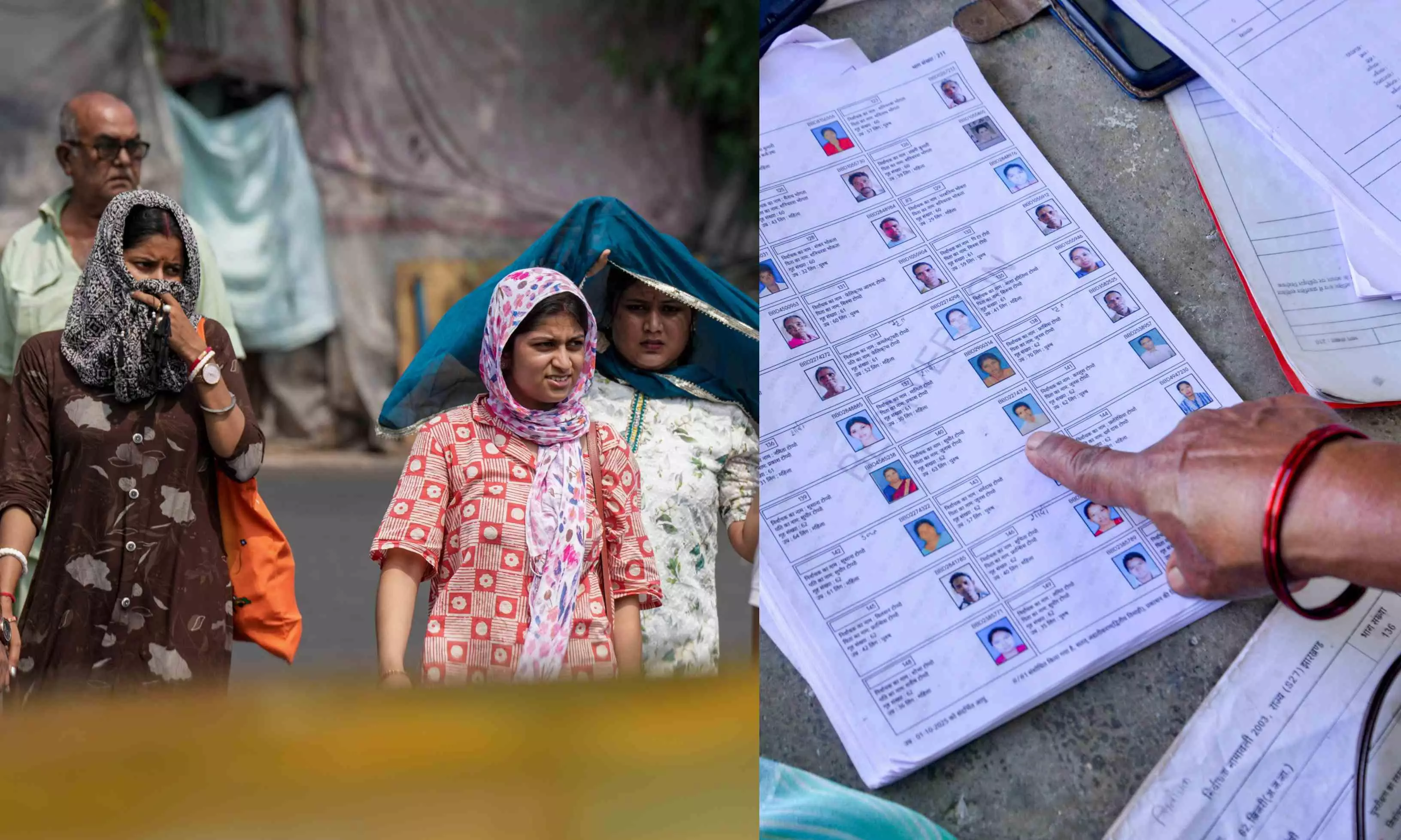
Lakhs and lakhs of people in West Bengal fear deportation as there's no end in sight for the SIR fiasco. Photo: PTI
Bengal voter purge leaves 27 lakh in panic over citizenship, welfare schemes
Trapped in legal limbo with no redress in sight, affected families face intense anguish over the loss of government benefits and growing fears of detention

Mahabub Alam is a perplexed man. Only some of his family members disappeared from the electoral roll during the Special Intensive Revision (SIR) exercise.
His mother's name remained on the list. So did the names of his three brothers and three sisters. But, Alam's name was deleted. His wife Senara Khatun's name was removed too, along with that of a sister.
Also Read: Bengal SIR fiasco continues as tribunals clear just 0.26 pc of around 25L appeals
Alam, a resident of Harishchandrapur in Malda district, filed an online petition before an appellate tribunal on April 6, challenging the deletion. Nearly two months later, he says, he has not received any communication regarding his case. "We are waiting," Alam said over the phone. "Nobody has told us what exactly was wrong."
27 lakh names in limbo
Alam is among over 27 lakh voters across West Bengal whose names were deleted during the SIR process and who continue to remain trapped in legal and administrative uncertainty weeks after the assembly election.
Why affected families are living in fear
♦ Sudden loss of vital government welfare benefits
♦ Deepening panic over unresolved citizenship and legal identity
♦ Constant terror of detention centres and potential deportation
♦ Agonising wait for hearings with no redress in sight
♦ Financial burden of travelling long distances for tribunal hearings
Thousands of appeals remain pending before tribunals with little clarity over when hearings may conclude or whether many applicants will eventually regain their voting rights.
The uncertainty has deepened particularly among sections of Muslim voters after the new BJP government led by Suvendu Adhikari moved to implement in the state a May 2025 Union Home Ministry directive on the detection and deportation of illegal migrants.
Suvendu in action
The state government also indicated that those whose names are deleted from official records would not receive welfare benefits.
District administrations have been instructed to establish "holding centres" for foreigners awaiting deportation, mainly suspected Bangladeshi nationals and Rohingyas. Some districts have already operationalised such facilities while others are still searching for suitable buildings.
Also Read: Battle for Bengal municipalities: After state, BJP eyes TMC’s local power bases
Police crackdowns targeting suspected illegal migrants have already begun in districts such as Malda and Murshidabad. The delays and the government's parallel crackdown on suspected illegal migrants have left many affected families anxious about what may happen next.
In several border districts, particularly among poor Muslim residents, fears are growing that unresolved voter deletion cases could eventually lead to scrutiny over citizenship documents, loss of welfare benefits or even detention and push-in to Bangladesh.
Not an isolated case
In Harishchandrapur, Alam's case is not unique. Another resident, Hasan Ali, says he is also waiting for a hearing after his name was removed from the electoral roll despite appearing earlier in voter records.
Ali told The Federal over the phone that the names of his parents and four siblings remain on the rolls, while only his name was deleted this time. His name had figured in the 2002 SIR exercise as "Md Hassan", while he later enrolled under the name "Hasan Ali", matching his Aadhaar card, he said.
"That may have created confusion," he reasoned. "But the rest of my family members living in the same house are still on the electoral roll. I filed an online petition before the tribunal, but so far, I have not heard when my case will be taken up."
Tribunals overwhelmed
For many petitioners, the bigger problem now is not only deletion but the extraordinary delay in hearings.
According to senior advocate Shamim Ahmed, who is providing legal assistance to several affected residents, just 19 tribunals are currently hearing more than 27 lakh appeals. Ahmed said each tribunal hears roughly 10 to 15 cases a working day. That translates to nearly 285 hearings daily across the state.
At that pace, disposing of 27 lakh cases could theoretically take more than 9,400 working days, or decades, unless the number of tribunals is significantly increased. "There has to be a framework to expedite the hearings," Ahmed said. "Otherwise, people will remain stuck indefinitely."
Distance adds to burden
The slow pace has become particularly burdensome for residents living far from tribunal locations.
On May 12, a Farakka resident, Md Mahbub Alam, emailed Suvendu, requesting that hearings for hundreds of affected residents under the Farakka police station in Murshidabad district be conducted locally instead of at a tribunal in Joka in South 24 Parganas district.
In his email, Alam pointed out that the distance between Farakka and Joka is nearly 300 km. "Travelling such a long distance is extremely difficult, time-consuming and financially burdensome for poor and working-class people," he wrote.
Calls for urgent reform
Citizenship-rights activist Biplab Bhattacharjee said the state should create more tribunals and introduce video conference hearings through BDO or district magistrate offices to speed up disposal of cases.
Bhattacharjee said many genuine Indian citizens in districts such as Malda and Murshidabad may struggle to furnish old records because repeated floods and Ganga erosion displaced families and destroyed documents. "Many people in erosion-hit areas have lost all their papers over the years," he said.
He also raised concerns about the detention and deportation process. People whose cases are still under examination before tribunals should not be pushed into holding centres or deported because their legal status remains sub judice, he argued.
"The process of detention and pushback by executive agencies without producing suspects before courts is extra-judicial," he said.
State defends measures
The state government, however, has defended the new measures. It says this is just an implementation of the Union Home Ministry guidelines concerning illegal migrants.
District administrations have been instructed to prepare holding centres for foreigners arrested for illegally staying in India and awaiting deportation. Officials said police and district authorities would verify the identity, nationality and legal status of detainees before transferring them to "holding centres."
The responsibility for identifying suspected foreigners who may be sent to holding centres has been assigned to senior district officials — superintendents of police, commissionerate-level officers and additional district magistrates.
The verification process would involve a scrutiny of police records, nationality claims and legal documents under central guidelines on illegal migrants and foreigners.
Home Ministry guidelines
Under the Home Ministry directive circulated among states, authorities have been asked to verify the credentials of suspected illegal immigrants within 30 days. If individuals fail to establish Indian citizenship during that period, deportation proceedings may begin.
Where a person claims residence in another Indian state, the upper limit for verification has been fixed at 90 days.
The guidelines also lay down specifications for detention infrastructure, including high boundary walls topped with barbed wire and separate enclosures for men and women.
Under state government orders, detainees can be kept in such centres for up to 30 days. The facilities may also house foreigners previously jailed in illegal stay-related cases whose deportation process is underway.
Detentions already underway
In Malda, police recently detained nine people, including three women and six minors, from Gazole's Pandua area on suspicion of being Bangladeshi nationals allegedly living without valid documents. Police said the group was shifted to a holding centre in English Bazar.
According to police officials, the detainees belonged to the same family from Bangladesh's Rangpur district and had allegedly entered India illegally several years ago through the Hili border before settling near Pandua High School in Gazole. Police claimed two Aadhaar cards recovered from them appeared to be forged.
In Murshidabad, three people detained near the border were transferred to a holding centre at Lalgola after investigators allegedly recovered forged Indian passports, EPIC cards and other documents from them.
Movement at the border
Near the Hakimpur checkpoint in North 24 Parganas, local residents said groups of suspected undocumented migrants carrying bags, utensils and blankets had been gathering near the border since Monday after news spread about the setting up of holding centres across districts.
BSF personnel posted at the checkpoint, speaking on condition of anonymity, also confirmed the development and estimated the number of such people at around 150.
Similar movements were reported after the SIR process was announced, when a few hundred suspected undocumented migrants living in areas such as New Town, Dum Dum and Dankuni allegedly attempted to return to Bangladesh through this border route in North 24 Parganas.
Also Read: In Odisha’s Ganjam, how the dream of a better life is taking the youth to destinations near and far
The BJP government has defended the crackdown as necessary to address illegal infiltration.
English Bazar BJP MLA Amlan Bhaduri said a holding centre had already become operational in the area and alleged infiltrators would eventually be pushed back.
Between suspicion and citizenship
But for families still waiting for tribunal hearings, anxiety has deepened further amid the government's latest "detect, delete and deport" drive.
Legal experts, however, said those whose cases are pending before tribunals have little reason to fear the ongoing drive as long as their appeals remain under adjudication. But many whose names were deleted say they now find themselves caught between suspicion and citizenship, with little reassurance until their names are cleared.
"When I still do not know why my name was deleted in the first place or when my hearing will happen, how can I be sure that nothing worse will happen to me?" Alam said.