



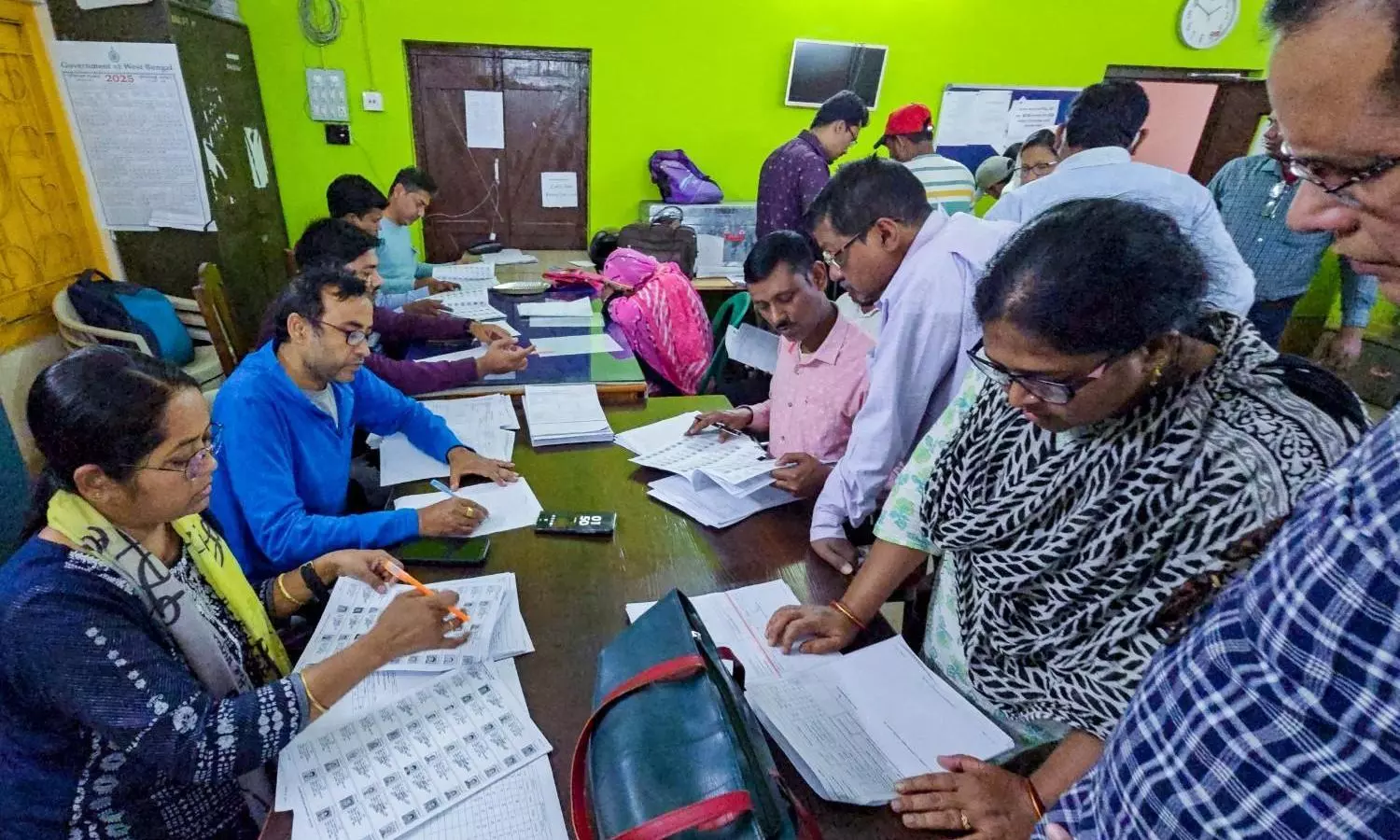
People check their names in the voters’ list after publication of the post-Special Intensive Revision of electoral rolls in the Birbhum district of West Bengal on March 1, 2026. Photo: PTI Photo
Bengal SIR fiasco continues as tribunals clear just 0.26 pc of around 25L appeals
Official data reveals that only 6,581 appeals have been cleared, after the SIR exercise removed lakhs of voters' names right before elections

The Special Intensive Revision (SIR) exercise, which took West Bengal by storm over the past many months, continues to remain in the headlines for the wrong reasons. Official data have shown that the revision-linked appellate tribunals in the state have managed to clear only 6,581 cases or just 0.26 per cent of the nearly 25 lakh appeals lodged against voter-roll decisions made by judicial officials.
Also read: Election Commission announces Phase 3 of SIR across 16 states, 3 UTs
In February, the Supreme Court sought judicial intervention in the revision exercise after finding a lack of trust between the Election Commission and the then Bengal government led by former chief minister Mamata Banerjee over the electoral rolls' preparation. The same month, Mamata appeared before the apex court personally to challenge the EC over the SIR, accusing the poll body of rushing a mass omission of voters on the eve of the polls.
The intensive, document-heavy process culminated in a sudden 12 per cent contraction of the state's total electorate and the hard deletion of over 27 lakh names right before the elections held on April 23 and 29.
Acting on the top court's directions, the Calcutta High Court recommended around 700 judicial officers to examine cases flagged during the revision process. They scrutinised appeals of more than 60 lakh electors identified through the EC’s verification process for alleged inconsistencies in identity-related documents.
Also read: Is West Bengal seeing the rise of ‘bulldozer governance’?
Out of the cases adjudicated by 12 of the 19 tribunals up to May 14, a total of 4,043 appeals were granted, indicating that the names of approximately 61.5 per cent of the resolved cases were reinstated on the electoral rolls, whereas 1,267 appeals were denied, as per the data provided by the EC.
The status of more than 1,200 remaining cases among the disposed matters was not immediately clear from the data.
“The appellate process follows the Supreme Court directives, and we are making every effort to ensure eligible electors receive an opportunity to present their cases,” a senior Election Commission official said.
Another EC functionary said the revision exercise was aimed at improving the integrity of the electoral rolls. “The Special Intensive Revision was undertaken to address discrepancies and ensure greater accuracy and transparency in the voters’ list,” the official said.
Slow progress and voices unheard
The alleged structural paralysis of the grievance mechanism has been heavily compounded by high-profile structural challenges and severe regional imbalances across the state. The joint tribunal tasked with handling Kolkata North and Kolkata South—which currently shoulders an immense backlog of over 51,000 pending appeals—completely came to a halt following the sudden resignation of its head, retired Calcutta High Court Chief Justice T S Sivagnanam, who cited personal reasons.
So far, Kolkata North and Kolkata South accounted for 1,777 disposals together, constituting around 27 per cent of the total cases decided.
The crisis is even more pronounced in the state's border districts. Murshidabad has formally settled just 112 appeals out of more than 6.29 lakh filed, while neighbouring Malda has cleared only 185 cases out of more than 5.26 lakh appeals.
Also Read: From CM's 'right hand' to CM: Suvendu Adhikari set to lead Bengal's first BJP govt
According to officials, the hearings were conducted through both online and offline modes, though physical appearances remained limited.