Bengal now has Gujarat-style goonda law; critics warn of civil liberty risks
Laws with provisions of preventive detention, property attachment powers passed in Bengal; critics warn of curbing of dissent under guise of public safety

With sweeping powers of preventive detention and property attachment, the BJP government’s first major law-and-order legislation in West Bengal has triggered a debate over the balance between public safety and civil liberties.
The West Bengal Public Safety and Control of Anti-Social Activities Bill, 2026, along with the West Bengal Maintenance of Public Order (Amendment) Bill, 2026, was tabled in the assembly on Monday (June 29) and later passed by voice vote after a stormy debate marked by fierce objections from the Opposition.
Presented as a response to political violence, riots, attacks on police personnel and the destruction of public property, the twin Bills have been hailed by the government as long-overdue measures to curb organised crime and violent disorder, and strengthen law and order.
The Opposition and rights activists have, however, denounced the Bills as draconian, arguing that they give the executive sweeping powers that could be used to curb political dissent.
Suvendu’s defence of Bills
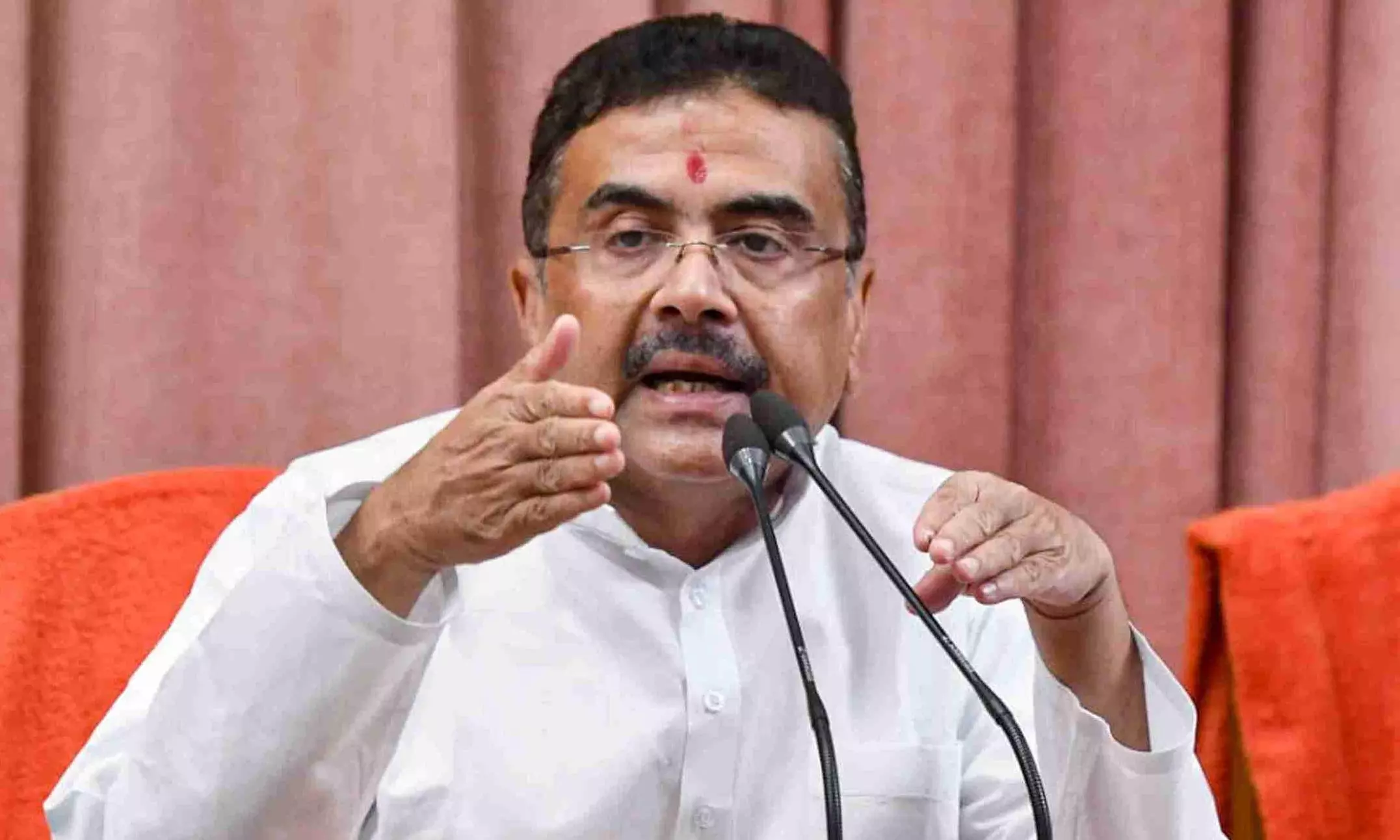
Defending the legislation, Chief Minister Suvendu Adhikari, who also holds the Home portfolio, accused the previous Trinamool Congress government of fostering a culture of lawlessness through vote-bank politics and administrative inaction.
Also read: The unmaking of the Bengali bhadralok is a shift in power, not culture
Referring to incidents ranging from the anti-CAA protests of 2019 to communal violence in Murshidabad, Howrah and other districts, he argued that the state could no longer allow rioters and vandals to escape accountability.
Citing incidents such as the burning of buses during the anti-CAA protests, attacks on railway property, communal violence in Howrah and Murshidabad, and assaults on police personnel, Adhikari argued that successive governments had failed to act decisively against perpetrators because of vote-bank politics.
He maintained that the new laws were aimed at habitual offenders and rioters rather than ordinary political protesters.
Inspired by Gujarat, UP, Maharashtra laws
In a speech that was as much a defence of the legislation as it was an indictment of the previous regime, Adhikari repeatedly stressed that those responsible for damaging public and private property would be made to pay for the losses. If necessary, he said, the government would auction the properties of offenders to recover compensation.
The government argues that existing criminal laws have failed to deter organised violence, habitual offenders and politically backed criminal networks. According to officials, the Public Safety Bill draws inspiration from preventive detention and anti-goonda laws already operating in states such as Gujarat, Uttar Pradesh and Maharashtra.
Also read: Bengal government to implement UCC, says CM Suvendu Adhikari
Yet, even before detailed legislative scrutiny begins, the law has triggered concerns among civil liberties advocates and Opposition parties who argue that it risks upsetting the delicate balance between public order and personal liberty.
About the Public Safety Bill
Unlike ordinary criminal law, which punishes offences after they are committed, the Bill authorises preventive detention. Under the proposed law, the state government may order preventive detention on the basis of a report submitted by a police officer not below the rank of superintendent of police if it is satisfied that such detention is necessary to prevent a “goonda” from engaging in anti-social activities.
Ordinarily, however, such an order may be issued only if the person has either been convicted once of a scheduled offence within the preceding seven years or has been charge-sheeted in at least three separate cases arising from complaints filed by persons other than police officers.
The government has argued that the detention power is not unfettered. Detention orders are subject to review by an Advisory Board headed by a serving or retired high court judge, while the statutory thresholds are intended to ensure that the law targets habitual offenders rather than first-time accused persons.
Critics, however, argue that the law nevertheless grants sweeping powers to the executive.
The Bill also adopts a broad definition of “anti-social activities”. In addition to organised crime, it covers acts that allegedly create public fear, threaten public safety, disturb public order, damage public or private property or facilitate criminal syndicates. Illegal mining, quarrying, sand extraction and certain environmental offences are also brought within its ambit.
Who is a ‘goonda’?
The bill defines a “goonda” broadly to include a person who habitually commits, attempts to commit, abets, promotes, finances or facilitates anti-social activities, either individually or as a member or leader of a group, gang or syndicate.
Also read: Eggless mid-day meals: Bengal BJP government faces first major cultural storm
It also covers persons charge-sheeted for specified organised crime offences under the Bharatiya Nyaya Sanhita and certain other criminal laws, as well as those “generally reputed to be desperate and dangerous to the community”.
The breadth of the definition, particularly the expression “generally reputed to be desperate and dangerous to the community”, could become a point of constitutional scrutiny because it relies on reputation rather than judicial determination.
About Public Order Bill
Alongside it, the West Bengal Maintenance of Public Order (Amendment) Bill, 2026 seeks to create a mechanism for recovering compensation from individuals found responsible for damage to public or private property during riots, violent protests or unlawful assemblies.
Claims Commissions with powers equivalent to civil courts would assess damages and determine liability. In cases where compensation remains unpaid, authorities could attach and auction the properties of those held responsible, the Bill proposed.
For the government, these provisions are necessary to dismantle what it calls Bengal’s entrenched culture of political violence.
For critics, they raise profound constitutional concerns.
Excessive discretionary powers to Executive?
During the Assembly debate, Opposition members argued that the legislation conferred excessive discretionary powers on the Executive and could be used against political opponents under the guise of maintaining public order.
“There are sufficient provisions in the BNS to deal with anti-social activities. This proposed law is more draconian than even the National Security Act (NSA) because it adopts very broad definitions of both ‘anti-social activities’ and ‘goonda’,” said Ranjit Sur, vice-president of the Association for Protection of Democratic Rights (APDR).
Also read: Bengal Budget banks on central funds, offers no roadmap for fiscal constraints: Economist
“Under this law, a government’s intent could be enough to brand any political or mass movement as an anti-social activity. From reading the Bill and hearing the Assembly debate, it appears that the government's intention is to target dissent from the minority community, political opponents and civil society organisations,” he said.
Calling the essence of the Bill unconstitutional and arguing that it confers sweeping powers on the executive, Sur said the APDR would challenge it both in court and through public mobilisation.
The concerns stem from the wording of the Bill. Terms and expressions such as “anti-social activity”, conduct “likely to cause” alarm, fear or insecurity, and acts resulting in a “disturbance of public order” are inherently open to interpretation.
Indian Secular Front (ISF) MLA Naushad Siddiqui alleged that the Bill’s broad language left scope for arbitrary action and could be invoked selectively against political dissent.