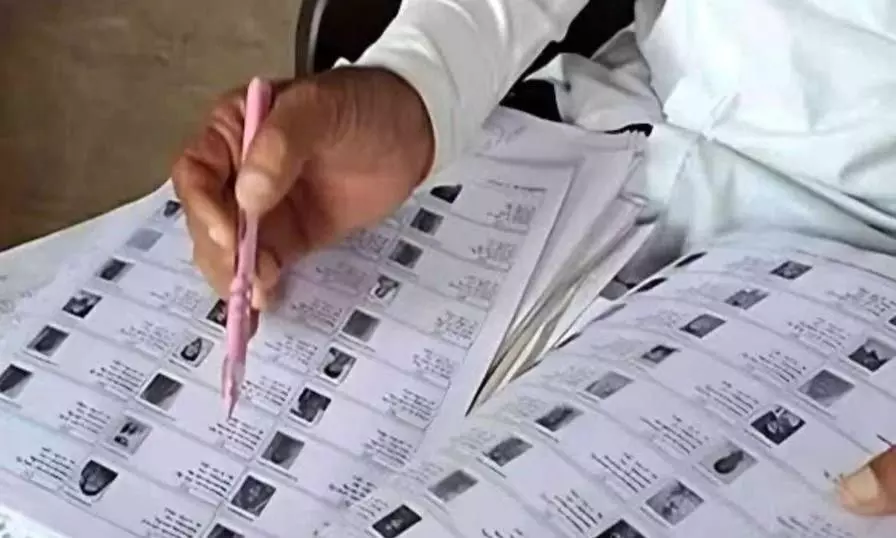
EC’s SIR relief bypasses 22 lakh Bengal voters trapped in tribunal backlog
EC opens fresh enrolment for omitted voters and HC orders relief to Haj pilgrims, but 22 lakh appellants remain stuck in tribunals, with little relief in sight

The Election Commission (EC), in a statement issued after its September 26 meeting, declared that anyone left out during or after the Special Intensive Revision (SIR) of the electoral rolls in the states or Union Territories where the process had already been concluded, could approach the Electoral Registration Officer (ERO) for inclusion. It directed the chief electoral officers (CEOs), district election officers (DEOs), and EROs to facilitate such enrolment, including of young and first-time voters, through a special drive.
This provision, however, will be of no help to the more than 22 lakh people in West Bengal, whose appeals remain pending before the Supreme Court-appointed appellate tribunals. After being taken up by the tribunals, their cases are no longer under the EC’s administrative purview, point out election rights activists.
Haj travel hurdles
The recent Haj cases—on which the Calcutta High Court on Monday (September 28) directed the appellate tribunals to urgently hear appeals—highlighted an immediate consequence of a pending appeal. The petitioners told the court that their inability to establish their electoral-roll status was affecting their efforts to obtain the documents required for the pilgrimage.
Also read: Ex-Calcutta HC judge's name added to Bengal SIR supplementary list after earlier exclusion
Ironically, the EC had stated on record before the Supreme Court that SIR will not determine a person’s citizenship. Therefore, getting travel documents such as visa and passport should not have been related in any way with the electoral roll. Yet, the reality has been totally different, which was highlighted by former editor of The Telegraph, R Rajagopal. While he got his passport promptly after that, thousands of Haj pilgrims from Bengal have not received such favour.
HC’s direction to tribunals
The petitioners told the Calcutta High Court that deletion of their names from the electoral rolls had created difficulties in obtaining passports and visas for Haj. They had already approached the SIR appellate tribunal seeking restoration of their names but were yet to get a hearing.
Sufiya Khatun, who approached the court seeking quick disposal of her appeal before the SIR appellate tribunal, said she intended to undertake Haj but was unable to obtain a passport after her name was deleted from the voter list. She told the court that she had already filed an appeal before the appellate tribunal against the deletion, but the appeal was pending.
Also read: SC unhappy over daily Bengal SIR cases, says it will seek report from HC at once
The Supreme Court had earlier directed the tribunals to give out-of-turn hearings in cases where electors could show an urgent need for relief. Accordingly, Justice Krishna Rao of the Calcutta High Court asked the tribunal to consider the Haj pilgrims’ appeals and decide them within two weeks, if possible.
Little relief in sight
It remains to be seen how far the Haj pilgrims get relief from the High Court order. But what about the 22 lakh people caught in the adjudication process, who are unlikely to get any immediate relief from either the HC order or the EC’s declaration? The High Court’s direction, too, clearly suggests that cases already before the appellate tribunals would continue to be dealt with through the adjudication process rather than the EC’s fresh enrolment route.
Swapan Mandal, general secretary of Votekarmi and BLO Aikya Mancha, said the EC’s latest directive was ambiguous about the fate of those whose names were deleted through the adjudication process and are now pending before the tribunals. “Unless they get relief, this relaxation will not have much impact in West Bengal,” he said.
Ranjit Sur, vice-president of the Association for Protection of Democratic Rights (APDR), also said that the fresh enrolment option could help people whose names were left out during the initial deletion exercise but would not provide a remedy to those whose cases had already been dealt with by judicial officers or were pending before tribunals—which accounts for most of the cases in West Bengal.
30 lakh genuine voters affected in first phase
Once a case has entered the adjudication process, it is no longer simply an administrative matter before the ERO, Sur pointed out. However, the continuous update provision could help genuine voters whose names were dropped at the initial stage of SIR under categories such as absent, shifted or deceased, as well as those affected by duplicate enrolment, he suggested.
Also read: Bengal SIR fiasco continues as tribunals clear just 0.26 pc of around 25L appeals
APDR estimates that around 30 lakh genuine voters may have been affected by deletions made during this initial phase, Sur said. Such voters could apply afresh for inclusion, he pointed out.
He described the EC's latest announcement as creating an “illusion” of a remedy, arguing that it would not essentially alter the position of people whose cases were already before or had been decided by the tribunals.
Will adding more tribunals help?
In West Bengal, more than 37 lakh appeals arising from the SIR process remain pending before tribunals, including 22.21 lakh seeking inclusion to the voter list and more than 16 lakh whose inclusion has been challenged by unknown entities.
According to latest figures submitted by the EC to the Supreme Court, about 1.02 lakh of the more than 38.20 lakh appeals have been disposed of, leaving over 37.18 lakh pending. The EC told the Court that 22.21 lakh of the appeals were filed by voters whose names had been deleted and who were seeking their inclusion in the electoral rolls. The remaining 16 lakh appeals seek exclusion of names that have already been added to the list after the SIR process.
The EC has proposed increasing the number of appellate tribunals in West Bengal from 19 to 42, with one tribunal for each parliamentary constituency. At the existing rate of disposal, reports based on the EC’s figures have estimated that clearing the backlog could take more than 12 years.