Closure notices to 252 Bengal madrasas: 'BJP's big political message to Muslims'
Senior journalist and political commentator Shikha Mukherjee said the action sends “a very, very clear message” that the government intends to “take you on” and further disempower Muslims

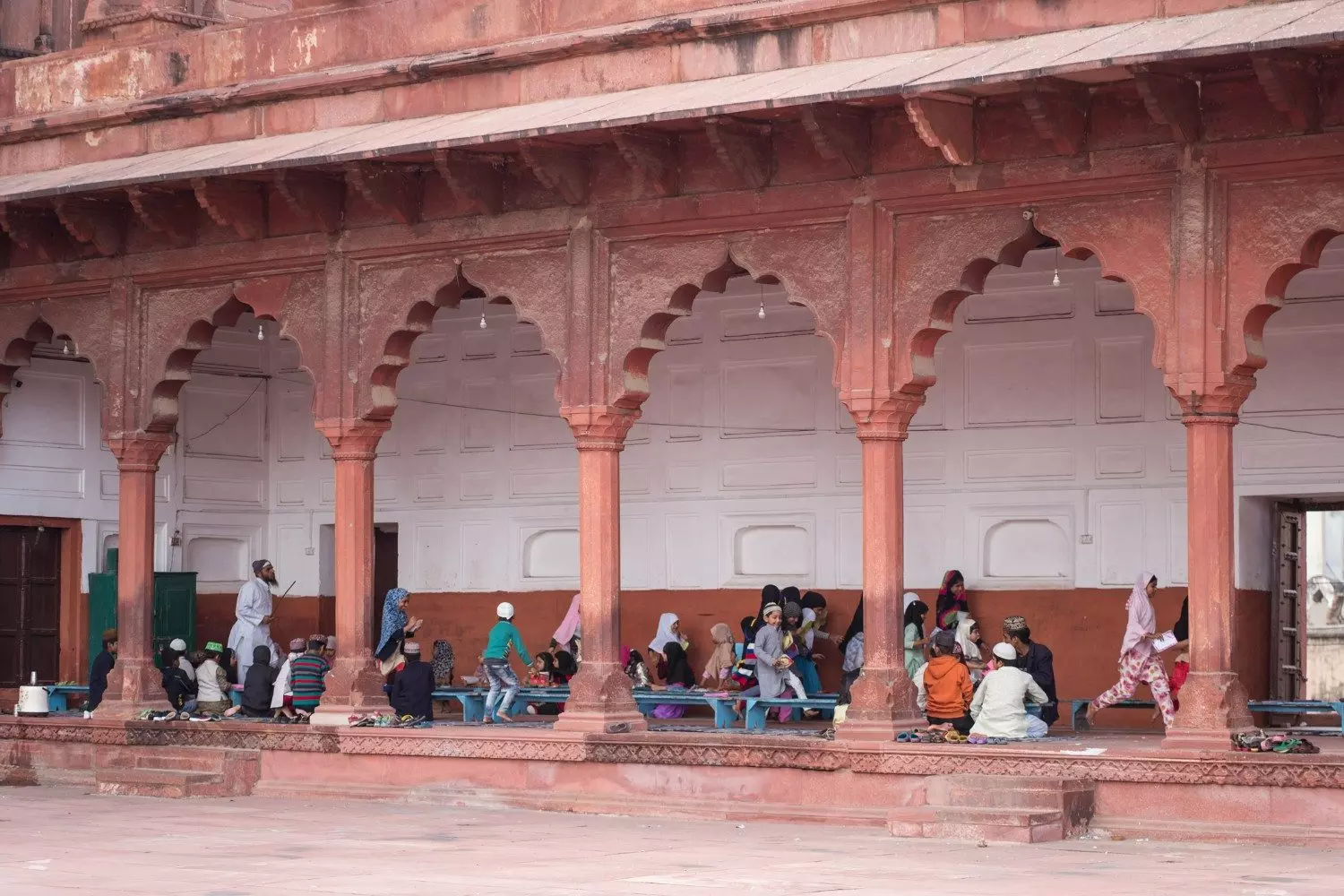
The West Bengal BJP government’s action against unrecognised madrasas has raised questions over whether the move is merely regulatory or carries a larger political message for the state’s Muslim community.
Senior journalist and political commentator Shikha Mukherjee said the action sends “a very, very clear message” that the government intends to “take you on” and further disempower Muslims.
The state has issued closure notices to 252 madrasas and show-cause notices to around 100 others as part of a statewide verification exercise. The move has triggered a political debate over whether the government is trying to overhaul unregulated Islamic educational institutions or use the issue for communal signalling.
What the numbers show
On The Federal's Capital Beat show, Mukherjee pointed to the scale of the madrasa system in West Bengal, saying there are around 4,500 to 4,600 madrasas in the state. Of these, about 2,200 are recognised, either as part of the madrasa education board or as institutions receiving government support.
The remaining roughly 2,500, she said, are unrecognised and include Khariji madrasas, which largely provide religious instruction. Against that backdrop, the 252 closure notices represent around 10 per cent of the unrecognised institutions, she noted.
Also read: Bengal govt orders closure of 252 madrasas over lack of approvals, basic infrastructure
Mukherjee said the scrutiny of madrasas was not entirely new. She recalled that unrecognised madrasas had come under the scanner during the Left Front government as well, particularly amid concerns over activities along the India-Bangladesh border.
She referred to the concerns raised during Buddhadeb Bhattacharjee’s tenure over the alleged export of terrorism from Bangladesh and the role of organisations such as the ISI and Al-Qaeda. Her argument was that the current government was reviving an issue that had previously been raised, but for different political reasons.
A political message?
For Mukherjee, the distinction between regulating unrecognised institutions and portraying madrasas as a security threat is crucial. She said it was possible that some madrasas could be involved in radicalisation, but argued that radical Islam should not automatically be equated with terrorism or anti-national activity.
She said the BJP was using the madrasa issue to communicate a broader political message to Muslims. According to Mukherjee, the move should be viewed alongside what she described as a wider pattern of the political marginalisation of minorities.
She also pointed to the absence of a Muslim member in the Bengal Cabinet, arguing that the madrasa action was part of a larger political signal. Mukherjee said the government was effectively telling Muslims that their institutions and religious instruction would face greater scrutiny.
Trinamool Congress (TMC) spokesperson Shubhankar Bhattacharya broadly agreed with Mukherjee’s assessment, arguing that the BJP’s political strategy was not limited to Bengal. He said the party was continuously laying the foundation for future elections and suggested that issues involving Muslims could become a recurring electoral theme.
The election angle
Bhattacharya linked the timing of the action to the BJP’s broader electoral strategy. He argued that the party would seek to use the issue in other states as well, particularly where elections are approaching.
He said the BJP’s political messaging increasingly centred on the Muslim question, alleging that the party had few development issues to highlight and was therefore relying on an anti-Muslim narrative.
Also read: For India’s sake, reform the madrasas, do not write them off
Bhattacharya also connected the Bengal debate with developments in Uttar Pradesh, arguing that the political themes being used in one state could be replicated elsewhere. He described the madrasa controversy as part of a longer-term electoral strategy rather than simply an administrative exercise.
At the same time, Bhattacharya acknowledged that the government has the authority to regulate educational institutions. He said bringing madrasas under a recognised curriculum and creating a proper registration mechanism could be acceptable, provided institutions were given adequate time and assistance to comply.
Regulation vs branding
The key distinction, according to Bhattacharya, was between regulating an institution and collectively branding an entire category of institutions as anti-national.
He argued that if the government wants madrasas to be registered, it should create a single-window mechanism, provide sufficient time and help institutions complete the process. But allegations linking madrasas collectively to terrorism, he said, would require evidence.
The Federal’s senior journalist Sameer Purkayastha also drew a distinction between regulation and generalisation. He said there was nothing inherently wrong with regulating Khariji or Qawmi madrasas because these institutions operate independently and do not follow a common curriculum under an education board.
According to Purkayastha, the absence of a common curriculum means there is a legitimate reason for authorities to establish who owns these institutions, what is being taught and how they operate.
Education concerns
Purkayastha said the problem goes beyond security concerns. He pointed to the educational and employment limitations faced by students who pass out of some unrecognised madrasas.
Also read: Why in West Bengal, govt-recognised madrasas aren’t the isolated religious hubs as portrayed by BJP
He said certificates issued by such institutions may not be accepted for admission to colleges or for employment outside similar Islamic institutions. In his view, bringing these madrasas into a proper education system could make their students more employable and allow them to pursue higher education.
At the same time, he rejected the idea of describing all Khariji madrasas as breeding grounds for terrorism or anti-social activity.
Purkayastha pointed out that recognised madrasas operating under the West Bengal madrasa education board can have Hindu students and teachers. He argued that this broader madrasa system should not be confused with the unregulated institutions currently under scrutiny.
A narrative battle
Purkayastha also suggested that the timing of the crackdown could be part of a political narrative battle. He noted that the BJP government was facing criticism over what the Opposition described as the saffronisation of education.
Against that backdrop, he said the government could use the madrasa issue to argue that the opposition was defending unregulated Islamic institutions whenever the state attempted to regulate them.
He also noted that notices had reportedly been sent to some unregistered private schools, suggesting that the issue was not confined entirely to madrasas.