World Space Week 2026: How Rocket Revolution is reshaping exploration
Reusable rockets, private launch companies and advances in manufacturing are lowering barriers to orbit and expanding opportunities for space exploration

For decades, getting into space was an expensive and tightly controlled enterprise, largely limited to powerful nations and large defence organisations. That is changing rapidly. Reusable rockets, private launch companies, smaller launch vehicles and advances in manufacturing are bringing down the cost of reaching orbit and opening space to a wider range of countries, companies, universities and researchers.
That transformation is at the heart of World Space Week 2026, being observed from October 4 to 10 with ‘Rocket Revolution’ as its theme. The annual observance marks two milestones in the history of space exploration: the launch of Sputnik-1 on October 4, 1957, and the coming into force of the Outer Space Treaty on October 10, 1967.
Also read | US confirms for first time it has deployed weapons in space; Russia, China react
But ‘Rocket Revolution’ is about more than bigger or faster launch vehicles. It is reshaping how often satellites can be deployed, expanding commercial space activity and creating new possibilities for Earth observation, communications and exploration beyond Earth.
The theme for World Space Week is selected each year by the World Space Week Association (WSWA), in collaboration with the United Nations Office for Outer Space Affairs (UNOOSA). Following earlier themes such as “Space and Sustainability” (2022) and “Living in Space” (2025), the theme for 2026 — “Rocket Revolution” — focuses on major advances in propulsion, launch infrastructure and manufacturing that are reducing barriers to reaching orbit.
Innovation powers space access
Several technological shifts are driving this change, from reusable launch systems and heavy-lift rockets to dedicated small-satellite launchers and advances in propulsion and manufacturing.
Reusability as the norm: Commercial space companies have pioneered and popularised vertical takeoff and landing (VTOL) systems, transforming rockets from single-use expendable machines into reusable launch vehicles.
Heavy-lift rockets: Next-generation vehicles like SpaceX’s fully integrated Starship can carry more than 100 metric tonnes, enabling possibilities such as permanent lunar habitats and missions to other planets.
Dedicated small satellite launchers: A growing number of small launch vehicles allow universities, regional companies and developing nations to launch CubeSats and nanosatellites without waiting years for rideshare opportunities.
Eco-friendly propulsion and advanced manufacturing: The use of 3D printing (additive manufacturing) has reduced production time from months to days, while research into non-toxic, bio-based and methane fuels aims to minimise environmental impact.
These technological transformations are driving modern Earth observation satellite constellations, real-time satellite broadband and interplanetary scientific exploration.
Theme of 2026: ‘Rocket Revolution’
Rocket launches are now faster and more frequent, enabling the deployment of more satellites for communication, weather monitoring, Earth observation and scientific research.
While governments once dominated space exploration, private companies now play a major role, leading to new industries, investments, jobs and innovations.
The greatest impact of the ‘Rocket Revolution’ is that space is no longer limited to a few nations; it has become a more accessible domain for students, researchers and entrepreneurs worldwide.
India’s role in space
India has made remarkable progress in the space sector. ISRO and emerging private space companies are delivering reliable and cost-effective launches. The Satish Dhawan Space Centre at Sriharikota serves as a key launch site.
World Space Week also highlights how space technology benefits society. India’s achievements offer several examples of this, from scientific exploration to commercial satellite launches.
South Pole Moon Landing: Through Chandrayaan-3, India became the first country to land near the Moon’s south pole.
Mars and Solar Missions: Mangalyaan (Mars Orbiter Mission) and the Aditya-L1 solar mission are key highlights of India’s scientific achievements.
Also read | 9 ISRO employee bodies write to chairman, seek clarity on space privatisation plans
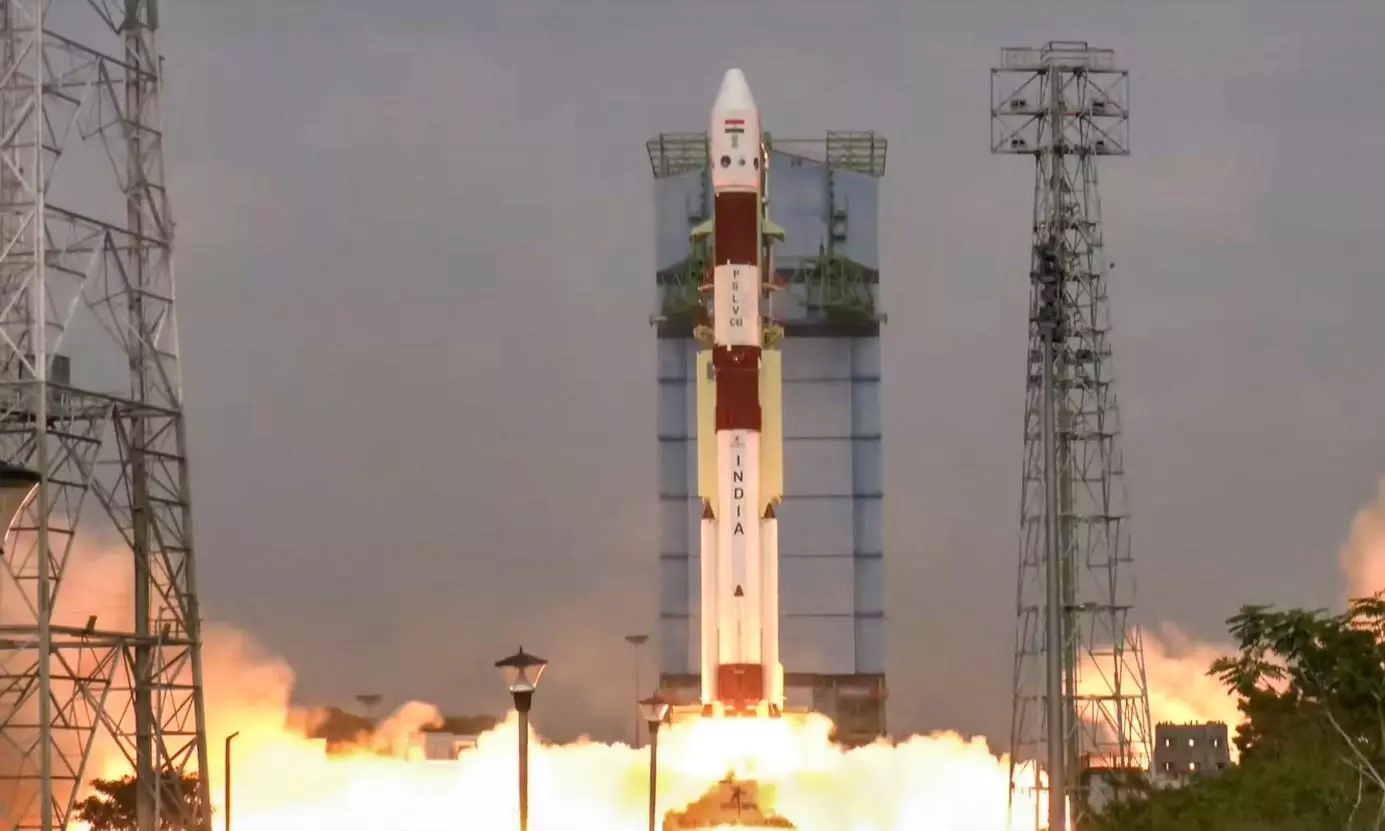
Commercial Contributions: India’s PSLV rockets have launched hundreds of foreign satellites, offering affordable space services to the world.
The road ahead
This rocket revolution is opening new possibilities for exploring the Moon, Mars and deep space. At the same time, challenges such as space debris, safety and environmental concerns must be addressed responsibly.
An opportunity for students
World Space Week is not just a celebration; it is a learning opportunity. Through lectures, exhibitions, quizzes, drawing and essay competitions, students can engage closely with space science.
Outstanding participants may advance to higher-level competitions and, in some cases, even get opportunities to witness rocket launches.
Space is not just for scientists. Many technologies we use daily are rooted in space science, from GPS to agricultural monitoring.
World Space Week is a global science celebration that brings everyone together, fostering the idea: “Let us learn about space — and use it for the benefit of humanity.”