Why Congress has avoided CJP protest despite focus veering to Wangchuk’s survival
Centre’s silence on Wangchuk’s fast turns CJP’s exam‑reform protest into a battle over his survival, forcing Opposition into solidarity while Congress hesitates

As the Centre continues to pay no heed to activist Sonam Wangchuk’s indefinite hunger strike, the Cockroach Janata Party’s (CJP) ongoing protest at Delhi’s Jantar Mantar appears to be taking a curious turn.
The CJP, which began its sit-in protest at Jantar Mantar on June 20 demanding Dharmendra Pradhan’s resignation as the Union education minister and got Wangchuk’s support immediately, is now increasingly concerned about the toll that the hunger strike is taking on its mascot, with the Centre refusing to even acknowledge the stir.
Efforts are being made by CJP members to convince Wangchuk to break his fast. With the Centre deliberately oblivious, the CJP has turned to the Opposition for support, not simply to back its demands but to urge Wangchuk to break bread.
Wangchuk’s indefinite hunger strike
On Tuesday (July 14), the CJP said it had written to “several political leaders across party lines and ideological divides, inviting them to Jantar Mantar to stand in solidarity with the youth of this country and Sonamji”.
Also read: 'Wangchuk's health matters, but movement needs to go national' | Capital Beat
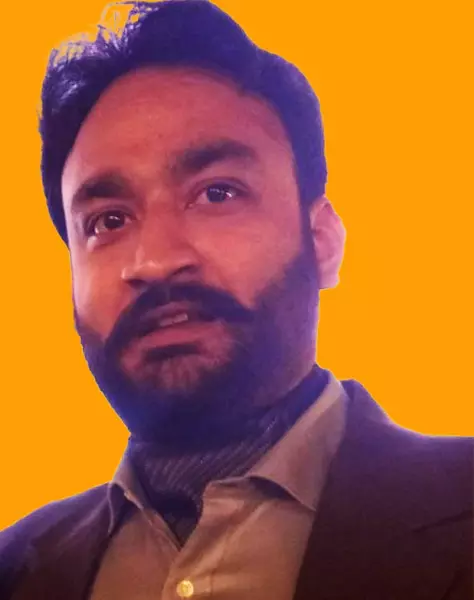
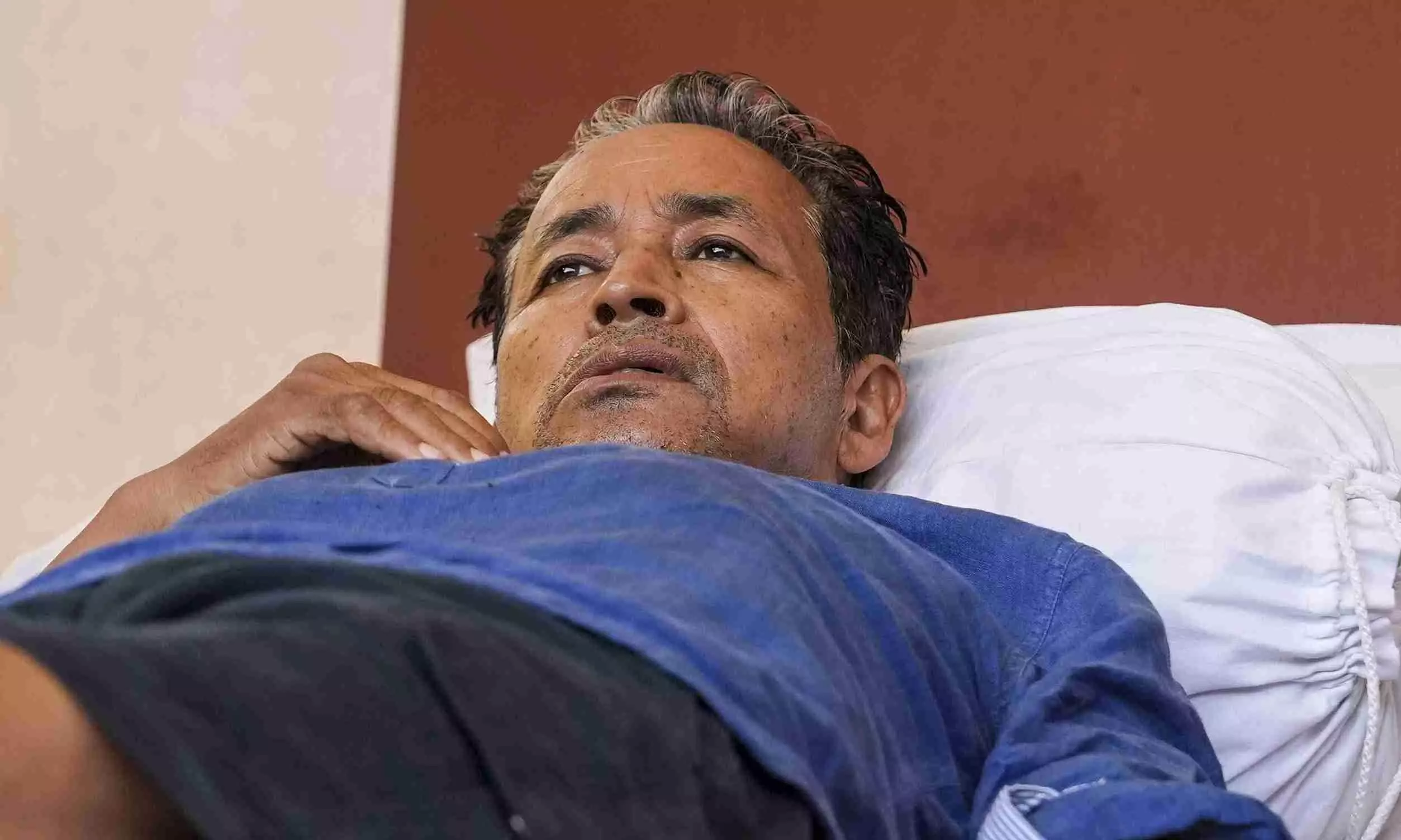
Wangchuk has been on hunger strike since June 28. The CJP’s frontline leaders, including party chief Abhijeet Dipke, spokesperson Saurav Das and Vijeta Dahiya, are not fasting. As Wangchuk’s fast entered its 17th day on Tuesday, Dipke said the activist had “started losing muscle mass and is in immense pain”. Dipke added that he “begged” Wangchuk to end his fast but was told, “Don’t ask me to end my fast; ask the government why they won’t even have a dialogue.”
According to the CJP, Wangchuk has lost 8.5 kilograms in body weight since June 28 and his blood pressure was recorded at 109/70 mm Hg on Tuesday morning.
Narrative pivots from education to Wangchuk
At the protest site and through the social media handles of CJP members and supporters, the narrative is sharply veering away from the Centre’s refusal to engage with the CJP over its demands and towards the urgency to wean Wangchuk off his hunger strike.
In a post on X, Das shared a list of 20 politicians from across the political spectrum, claiming that Dipke and he had written to them on July 9 and July 10 seeking solidarity with the protest. The list featured leaders including BJP chief Nitin Nabin and his predecessor JP Nadda, as well as Samajwadi party chief Akhilesh Yadav, RJD chief Tejashwi Yadav, chief ministers Joseph Vijay, Chandrababu Naidu and Omar Abdullah, AIMIM chief Asaduddin Owaisi, senior DMK MPs Tiruchi Siva and Kanimozhi and Shiv Sena-UBT’s Sanjay Raut. At the top of the list were Rahul Gandhi and Congress president Mallikarjun Kharge.
Asserting that the CJP’s movement “is about an entire generation demanding accountability for examination paper leaks, recruitment failures, and justice and compensation for the families of students who lost their lives at the hands of this corrupt, broken education system,” Das said, “history will remember who stood with the youth when they called for justice.”
Appeals to Wangchuk
Concern for Wangchuk and solidarity for the CJP’s cause has started trickling in from various Opposition outfits.
Also read: Eminent voices urge end to hunger strike as Wangchuk’s health worsens
Akhilesh issued an appeal to Wangchuk to break his fast and dispatched party MP Priya Saroj to meet the activist and his CJP comrades at Jantar Mantar. AAP chief Arvind Kejriwal, who has ensured the attendance of a string of his party leaders at Jantar Mantar over the past few days, also issued a statement urging Wangchuk to end his strike and said that he would visit the protest site on June 16.
Similar appeals to Wangchuk and expressions of support for the CJP’s demands also came in from Shiv Sena (UBT) chief Uddhav Thackeray, Trinamool Congress chief Mamata Banerjee, NCP(SP) leader Rohit Pawar, and Congress veteran Adhir Ranjan Chowdhury, among others from the Opposition.
Opposition scepticism
Sources in the SP and the AAP told The Federal that Dipke had also urged their top leadership to join the CJP’s planned march to Parliament on July 20, when the monsoon session is scheduled to commence.
Yet, as it hesitantly rallies behind the CJP’s protest, the Opposition’s support isn’t entirely without scepticism. Many in the Opposition, particularly leaders from the Congress, believe the CJP’s twin demands for Pradhan’s resignation and payment of Rs 1 crore in compensation to the families of children who died by suicide after their examinations were cancelled due to exam paper leaks take a very “myopic view of the broader challenges facing the education and examination system”.
There is, of course, also a palpable anxiety within several Opposition outfits about the CJP “walking away with credit” if Prime Minister Narendra Modi does decide to remove Pradhan as education minister.
The lingering doubts about CJP
An Opposition MP who visited Jantar Mantar told The Federal that Wangchuk’s declining health and the “resurgence of support” for the CJP protest after the lull that had followed Dipke’s first rally in May has “put the INDIA bloc in a Catch-22 situation”.
“Many of us still have our doubts about the CJP... is it being propped up like Anna Hazare’s movement was, where do they stand on ideology, who is funding them and so on, but then, we also can’t deny that the issue they are raising about exam paper leak is a genuine one, which, in fact, the Congress, SP, DMK and other Opposition parties have also been raising consistently; at our last INDIA bloc meeting also we spoke about it and demanded the education minister’s resignation... If we don’t support the protest, the youth will obviously ask us why we are not going there (sic) when we are also demanding the same thing as the CJP. With Sonam’s fast, it has become even more difficult for us to keep a distance from the protest,” the MP said.
Also read: Day 16: Wangchuk loses 8.2 kg; ‘don’t turn this into battle of egos’, CJP urges Centre
Another senior INDIA bloc leader, who expressed solidarity with the movement on social media, said, “We have been very cautious in dealing with the CJP until now but I think Wangchuk’s fast has changed the situation for both the Opposition and the CJP.”
The leader added, “For the Opposition, it has forced us to keep our reservations aside and express solidarity with the children and for the CJP. His (Wangchuk’s) deteriorating health has triggered an alarm because the Centre is not engaging with them and they are obviously worried about Wangchuk. So possibly they are looking for an exit route by appealing to politicians to express solidarity with him and urge him to break his fast; the only people who are absolutely unmoved are those in power.”
The effectiveness of Wangchuk’s fasts
Another Opposition leader, who claims to be “well acquainted” with Wangchuk, cast a different light on the situation. “He (Wangchuk) has used these protests to create an immense goodwill for himself but, at the same time, if you look at his similar protests of the past, they have always raised high expectations but achieved little; in fact, I would say they have often been counter-productive,” said this leader, a former Union minister.
He added, "Look at what happened to the whole people’s movement of Ladakh from the time he joined it. All the focus moved to what Sonam would do next and not what Ladakhis were fighting for. Then those tragic clashes happened in Leh and innocent Ladakhis died. The Centre put Sonam in jail and everyone felt this was going to be a tipping point. Nothing of the sort happened and then suddenly one day the Centre withdrew its detention orders and Wangchuk came out of prison but does anyone know after that what happened to the Centre’s talks with the Ladakhis? Did the Ladakhis get the assurances they have been demanding? In the CJP’s case too, what had started as a movement for accountability and reform in the education system now looks like a movement to make Wangchuk break his fast.”
A divided Opposition
Even within the Opposition, however, there appears to be a clear divide on how to engage with the CJP. While parties such as the AAP, which shares a direct link with CJP given Dipke’s past association with Kejriwal, as well as the CPM and CPI, have been backing the protest fully from the beginning, others, such as Omar Abdullah’s National Conference, the SP and the NCP-SP, have endorsed the cause that Dipke and his co-travellers espouse. At the INDIA bloc’s meeting last month, Abdullah had even remarked that the CJP “must be doing something right”, as it had captured the public’s imagination and had urged the Opposition coalition to “extend support to their protest”.
Also read: Can Wangchuk’s hunger strike evolve into education reforms movement? | Capital Beat
The outlier, however, has been the Congress—plagued by its typical indecision on whether or not to support the CJP and wary that its endorsement of Dipke would take the sheen off Rahul Gandhi’s parallel but inconsistent outreach to students through his Chhatron ki Goonj initiative.
With the exception of Adhir Chowdhury, no senior Congress leader has, thus far, expressed an unqualified support for the CJP’s protest, let alone visit Jantar Mantar to express solidarity with Wangchuk.
Why no support when Congress protests?
On Tuesday (July 14), as Das put out the list of 20 politicians the CJP had reached out to, many in the Congress sensed a ploy to embarrass Rahul as his name was first on the list.
“This was meant to be a protest to demand accountability from the Centre and from Pradhan. The Congress and INDIA bloc has already been demanding Pradhan’s resignation, aside from other reforms in the education system. They (CJP) had first said theirs is a completely apolitical movement and if politicians want to support it, they should leave their party flags, identities and symbols behind. Now they want us to participate because the government isn’t paying attention. They have put Rahul’s name at the top of the list of leaders they have written to but they will never say a word of support for Rahul and Congress when we launch a protest or campaign,” an AICC office-bearer and Rahul-aide told The Federal.
Congress leader Jignesh Mevani rejected claims that the Congress had ignored the protest but also sought to toss the ball in the CJP’s court. To those asking why the Congress wasn’t participating in the CJP’s protest, Mevani said, “Let us be fair in our view; not even once has any Congress leader questioned Wangchuk or these youths why they didn’t support the NSUI and Indian Youth Congress workers when they protested (on the exam paper leak issue) and faced brutal water cannons and baton charge. Rahul Gandhi launched Chhatron ki Goonj to push for education and exam reforms.”
Rahul’s own battles
Sources said the Congress was also upset that Wangchuk, in an interview to a national daily, claimed that politicians who were not coming to Jantar Mantar to extend support were doing so “out of pettiness” and that “the people of the country will teach them a lesson”.
Also read: CJP announces Parliament march after 23 days of protest; Wangchuk still on fast
“Is this his way of asking for support? Every time the country is faced with a problem, every time this government deals a blow to the Constitution, the first voice that comes against it is that of Rahul Gandhi. On the NEET exam paper leak, Rahul spoke multiple times. The Congress and INDIA bloc demanded the education minister’s resignation. Did these people (CJP) say a word of support for us then? On July 17, Rahul is going to Dehradun to address students at his second Chhatron ki Goonj rally. He did one in Kota last month. Did CJP support it, did they ask its members to attend the rally or is our support supposed to be a one-way street?” shot back Congress MP Imran Masood.