Will Budget 2026-27 give new and old tax regimes a makeover?
With the new tax regime made the default option, people's tendency to save has gone down as there's a lack of tax deduction incentives, say experts

A year ago, when Union Finance Minister Nirmala Sitharaman presented her eighth budget on February 1, she had pleasantly surprised crores of taxpayers with a major relief, i.e., announcing tax exemption for those with an annual income of Rs 12 lakh.
The announcement, in a briefer-than-usual Budget speech, had indeed caused a splash, with both critical takes and praises pouring in.
Also read: Will Modi's electoral juggernaut steer the direction of Budget 2026-27?
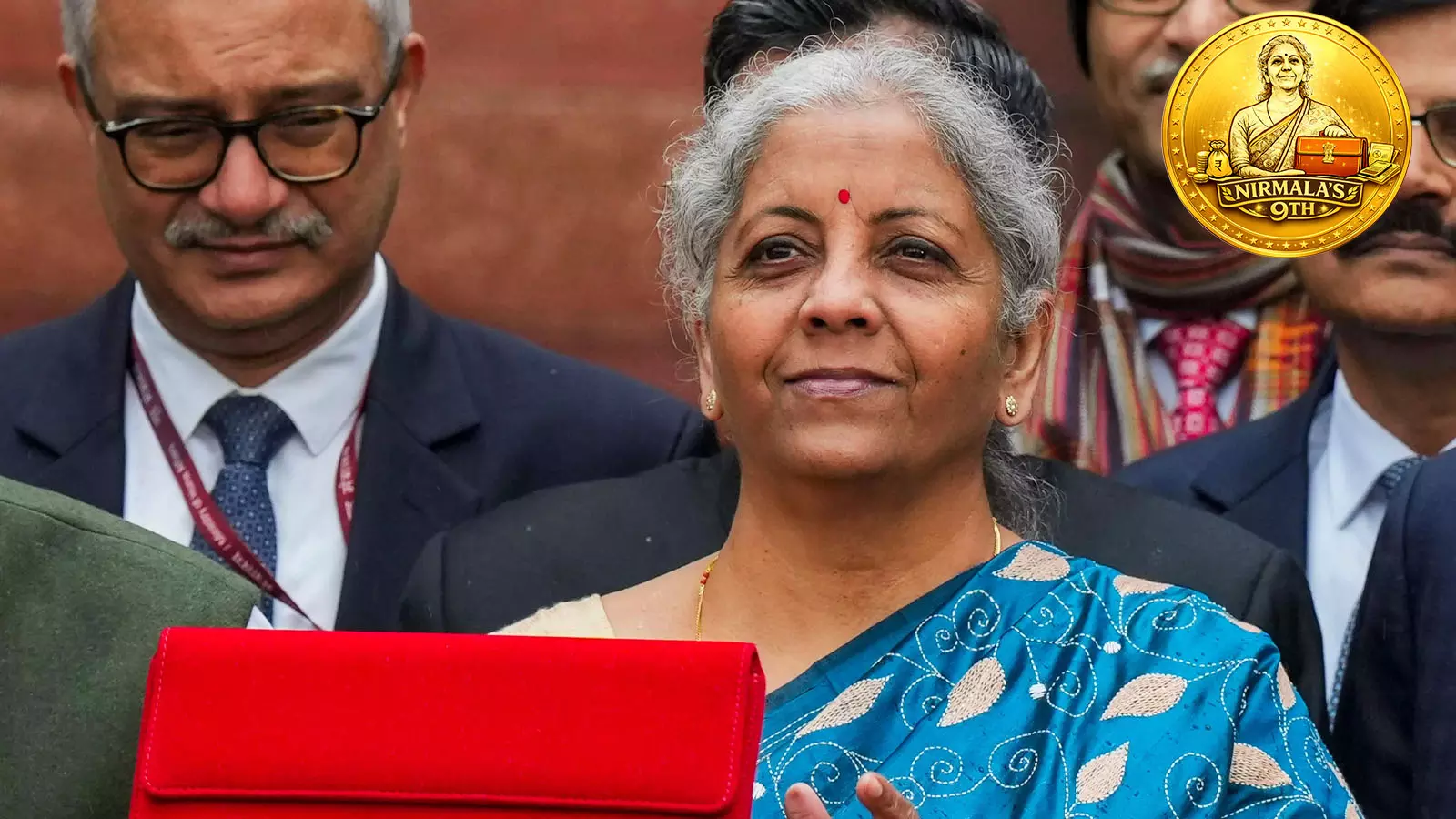
It's now time for Sitharaman to present her ninth consecutive budget, claiming a distinct record. The question is: What will the Narendra Modi government unveil for taxpayers, the salaried class and pensioners this year? Will it give tax relief for domestic savings and investment?
New tax regime
When Sitharaman presented the budget for the 2020-21 financial year, she introduced a new income tax regime. This system took away tax deductions for savings, insurance premiums, mediclaim, or home loan interest. Initially, taxpayers also did not receive the benefit of the standard deduction under the new tax regime. As a result, they largely opted for the old tax regime.
However, while presenting the budget for the financial year 2023-24, the FM announced tax relief for those with an annual income of up to Rs 7 lakh to make the new tax regime more attractive. She also announced a standard deduction of Rs 50,000 under the new tax regime. These announcements were designed to make the newly introduced system more appealing.
No tax on income up to Rs 12L
While presenting the budget in July 2024, after Prime Minister Modi came to power for the third consecutive time, Sitharaman increased the standard deduction limit from Rs 50,000 to Rs 75,000, but only for those taxpayers who opted for the new tax regime.
Changes were also made to the income-tax slabs to provide relief to taxpayers. However, the biggest announcement to make the new tax regime attractive was made in the 2025-26 Budget, when Sitharaman provided complete income-tax relief to those earning up to Rs 12 lakh annually. The benefit of a standard deduction of Rs 75,000 was in addition to this.
Also read: Stormy Budget session ahead as Opposition plans to turn up MGNREGA-SIR heat on govt
“I am now happy to announce that no income tax will be payable on income up to Rs 12 lakh (i.e., up to an average income of Rs 1 lakh per month, excluding income taxed at special rates). After adding the standard deduction for salaried taxpayers, this limit will be Rs 12.75 lakh,” she said in last year's budget speech.
Call to encourage savings
To make the new tax regime attractive, the Modi government has made several changes to it in the last three years. However, the benefit of income tax exemption on investment and savings has not been provided, which experts say has discouraged people from saving and investing.
On December 30 last year, Modi held a meeting at NITI Aayog, where experts mooted tax incentives to encourage people to save more.
However, not all experts agree on this. Chartered accountant and former Income Tax Appellate Tribunal (ITAT) judge Gopal Kedia told The Federal Desh: “I am against giving tax exemptions through savings because it leads to increased legal disputes.”
Also read: Did Budget 2025 keep its promises? Here is a progress report
"People claim tax exemptions by providing false information about savings while filing their ITRs. Or they claim HRA by providing incorrect information, and some even obtain tax exemptions by donating to political parties that don't even exist," he pointed out.
Kedia further said the old tax regime is still available for those who want to avail tax exemptions on savings.
Focus on new tax regime
With the Centre working overtime to make the new tax regime more attractive, it has become the default system. Those who wish to opt for the old one need to select it while filing their ITR.
The old income-tax regime offers very little in the way of relief. Neither the tax rates nor the slabs have been changed. The government only provides a rebate on the tax of Rs 12,500 payable on income between Rs 2.5 lakh and Rs 5 lakh.
However, the benefit of tax exemption on investments and savings under Section 80C continues to be available under the old tax regime. Tax deductions are also available on home loan interest up to Rs 2 lakh, along with tax exemptions on the payment of mediclaim premiums.
Tendency to save on decline
Household savings have been India's greatest strength, and tax exemptions on savings have contributed to their continuous growth. Since 1970, household savings in India have seen a significant surge relative to GDP. From 13 per cent of the GDP in the 1970s, it reached a high of 38 per cent in 2008, which was higher than most developed and BRICS countries, excluding China.
The figure declined to 34.6 per cent in FY 2011-12 and further to 29.7 per cent in FY 2022-23. These figures clearly indicate that people’s savings in India are steadily decreasing. Household savings, which previously constituted a large portion of total savings, are no longer as significant.
Also read: Scrapping of Rail Budget: The original sin behind India’s railway crisis
People are now investing more in mutual funds, equities, gold, and real estate instead of keeping their savings in banks. Will the government introduce provisions for tax exemptions on investments and savings in the new tax regime to encourage saving? Only Sunday will answer.
(This article was first published in The Federal Desh.)