Did Budget 2025 keep its promises? Here is a progress report
Review of India's fiscal performance shows mixed results as consumption growth remains tepid and manufacturing missions face delays ahead of Budget 2026

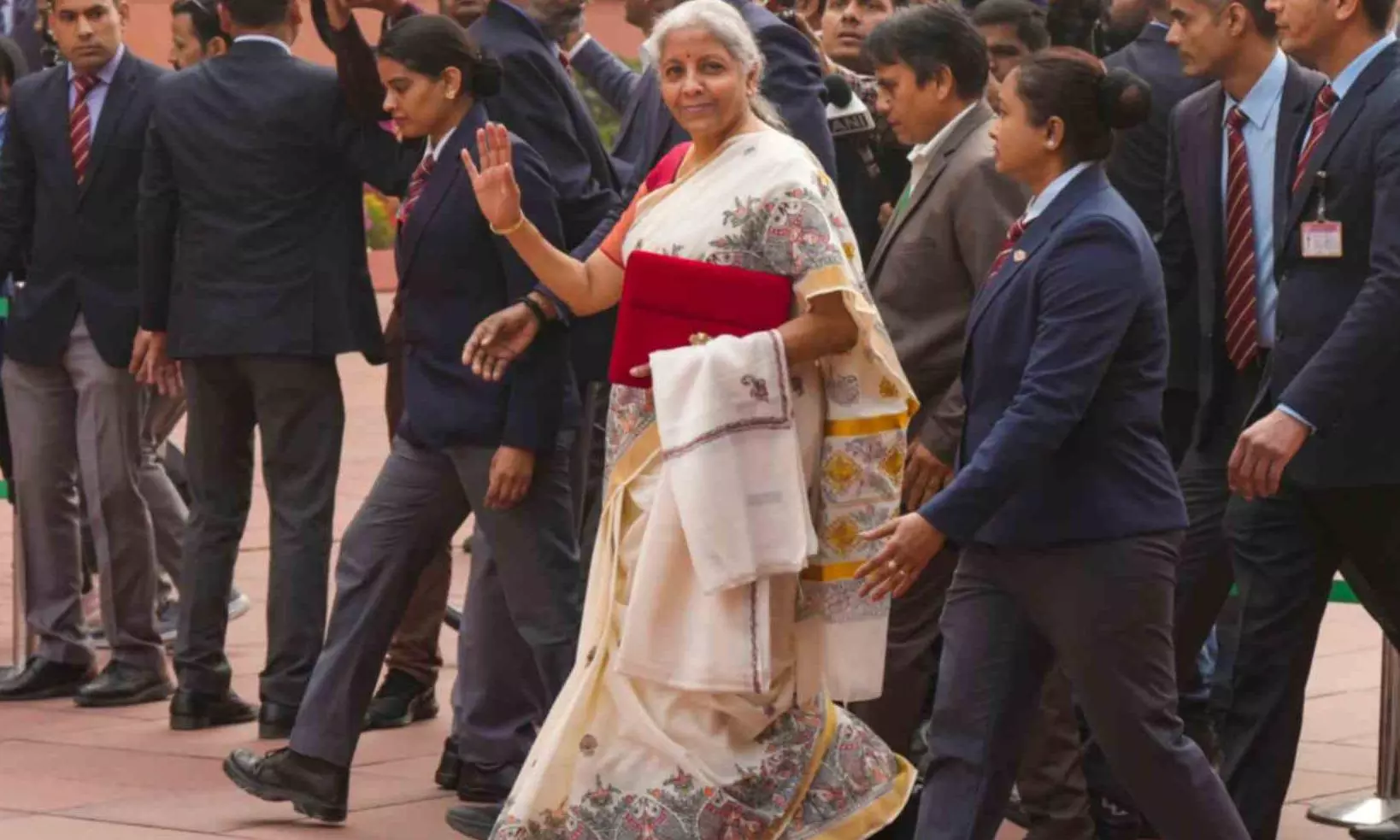
Budget 2025, presented by Union Finance Minister Nirmala Sitharamna, promised to “realise ‘Sabka Vikas’, stimulating balanced growth of all regions” over the next five years. It announced a few new policy decisions and carried forward a few others.
A year down the line, the actual performance will be known only when the Budget statements are presented on February 1, but definitive clues are evident in most cases. Here are a few big-ticket changes promised in the previous Budget and a lookback at how many were carried out.
Boost to consumption
To boost consumption, the personal income tax regime was revised last year, providing tax exemption to the middle class of up to Rs 12 lakh of annual income, up from Rs 7 lakh announced in 2023, with additional exemption of Rs 75,000 in standard deduction for the salaried.
Though the peak rate remained at 30 per cent, above Rs 24 lakh, the rejig in slabs reduced the burden at different income levels. A new simplified income tax regime was also announced.
Update: ‘Real’ growth in consumption (PFCE) went up from 7.2 per cent in FY25 to 7.5 per cent in the first half of FY26 (H1) but advance estimates suggest it will fall to 7 per cent for in FY26 (AE).
Also read: How Budget 2026-27 can revive consumption for inclusive growth
This means, even the mid-budget GST cut of September 2025 is unlikely to sustain consumption growth. Now that the International Monetary Fund (IMF) says growth will moderate to 6.4 per cent in FY27, from 7.4 per cent in FY26 (AE), consumption growth is likely to remain tepid.
Boost to capex
Several new initiatives were announced to boost capex:
(i) Three-year PPP projects by infrastructure-related ministries and states
(ii) Rs 1.5 lakh crore allocated for 50-year interest free loans to states, linked to specific reforms
(iii) Asset Monetisation Plan 2025-30 to mobilise Rs 10 lakh crore from new projects
(iv) Urban Challenge Fund (UCF) of Rs 1 lakh crore to develop ‘Cities as Growth Hubs’ with an outlay of Rs 10,000 crore for FY26
(v) Additional borrowing of 0.5 per cent of GSDP allowed to states for electricity distribution reforms and inter-state transmission capacity
(vi) Amendments in nuclear energy related laws to allow private participation and raise nuclear capacity to 100 GW by 2047 (from 8.8 GW ) and operationalise at least five small modular reactors (SMRs) by 2033, (vii) raise FDI in insurance from 74 to 100 per cent.
Update: ‘Real’ growth in total capex (GFCF) went up from 7.1 per cent in FY25 to 7.6 per cent in FY26 (H1) and is estimated at 7.8 per cent in FY26 (AE).
The Centre’s capex at 58.7 per cent of the budget during April-November is better than the corresponding previous fiscal but states’ capex, which it has been trying to boost, is lukewarm at 38 per cent during the same period, as per an analysis of the CAG’s monthly reports for 21 states. The main reason for states’ poor performance is the higher burden of revenue expenditure.
Also read: Can Budget fix the damage trade protectionism has done to India’s exports?
There is no sign of UCF yet.
The Ministry of Power announced an historic turnaround in the performance of Discoms (power distribution companies) and power departments, together recording Rs 2,701 crore of profit after tax (PAT) in FY25, from a loss of Rs 25,553 crore in FY24. This is the result of decades of efforts.
As for the Asset Monetization Plan 2025-30, the NHAI released its “strategy” on June 9, 2025, with no additional information since then.
The FDI in insurance was raised in December 2025, but is unlikely to make a difference because the response to a hike from 26 to 74 per cent in the past decade didn’t work.
Also read: Budget | Can I-T relief spur squeezed urban consumers to spend more?
Meanwhile, profit-booking and outward investments (OFDI) have led to a massive fall in net FDI inflows – from $22 billion in FY24 to $595 million in FY25. It recovered to $6 billion during April-October 2025 (FY26) but is likely to drop again with net outflow of -$4.5 billion during August-October.
FPIs are fleeing too. From a net inflow of $2.7 billion in FY25, FPIs pulled out a net of -$6.7 billion during April 2025-January 2026 (FY26).
As for nuclear energy, laws have been amended to allow private participation and civil liabilities diluted.
Boost to manufacturing
A new ‘National Manufacturing Mission’ was launched to boost ‘Make in India’ with five focus areas: ease and cost of doing business, future-ready workforce for in-demand jobs, vibrant and dynamic MSME sector, and availability of technology and quality products.
Additionally, duty cuts and exemptions were given to several critical minerals, technical textile products, electronic components, capital goods for EV batteries, telecom equipment etc.
Update: No sign of the new manufacturing mission. The Centre rolled out PLI 3.0 in March 28, 2025, with another outlay of ₹22,919 crore, for electronic components – days after the news hit that PLI 1.0 and PLI 2.0 would be allowed to lapse due to poor performance.
Meanwhile, the manufacturing Gross Value Added (GVA) share is expected to fall 17.2 per cent in FY25 to 17.1 per cent in FY26 (AE), though its ‘real’ growth is expected to go up from 4.5 per cent to 7 per cent during the same period.
Measures to boost exports
In view of the US’s reciprocal tariff threats, the tariff structure was rationalised, which included removing seven tariff rates (from 15 rates). Several tariffs were reduced to benefit US firms, including in areas of technology, automobiles, industrial inputs and waste imports (which continued after the budget).
Others included single cess or surcharge, instead of multiple ones, and exempting social surcharge on 82 tariff lines. A new ‘Export Promotion Mission’ to boost exports through credit, cross-border factoring support and aid for MSMEs was launched to overcome the challenges of non-tariff barriers.
Update: Tariff rationalisation and cut attempted were essentially ad hoc and piecemeal, especially to keep the US in good humour. But it failed and the US imposed 25 per cent reciprocal tariffs. The US now threatens to raise tariffs on basmati and also pulses.
Also read: India's subsidy model fiscally heavy, environmentally damaging: Gulati | AI With Sanket
The Export Promotion Mission was announced only on November 12, 2025, with an outlay of Rs 25,060 crore.
Indian exporters continue to panic given the inordinate delay in resolving the tariff logjam with the US. Goods exports have risen in value terms (not volume) by 2.4 per cent during April-December 2025 (FY25), which is no indicator of a rise. Total export’s share is falling from 21.6 per cent in FY25 to 21.4 per cent in FY26 (AE).
Meanwhile, Arvind Panagariya, chairman of the 16th Finance Commission, wrote in a business daily on January 19, 2026, that India must “roll back” custom duties to uniform 7 per cent – “immediately” for all duties of 25 per cent or less and more than 25 per cent (some “at obscene 125 per cent and 100 per cent”) over three years. Eliminating quality control orders (QCOs) and restraining anti-dumping and counter-veiling duties are his other major suggestions to improve trade.
Ajay Srivastava of the Global Trade Research Initiative (GTRI), recommends switching to zero duty on most industrial raw materials and key intermediates, while adopting a low, standard duty of around 5 per cent on finished industrial goods over the next three years. He also calls for eliminating inverted duty structures which erode domestic competitiveness.
Fiscal consolidation
Promise to continue fiscal consolidation by reducing central government debt to 56.1 per cent of GDP in FY26, from 56.1 per cent in FY25 (RE) and fiscal deficit to 4.4 per cent of GDP in FY26, from 4.8 per cent of GDP in FY25 (RE).
Update: While the actual status would be known after the budget documents are presented, going by the [recent] trends, both are likely to go down.
What to expect from Budget 2026
Going by the progress, a few steps are warranted.
In the backdrop of the IMF’s projection of moderating growth in FY27 to 6.4 per cent from 7.4 per cent in FY26 (AE), Budget 2026 must aim to boost consumption. More cash handouts are not the solution; the focus must shift to quality jobs and better wages/salaries and social security.
Also read: India will grow at 7.5–7.8 pc this fiscal, 6.6–6.9 pc in FY27: Deloitte
Ways must be found to raise private corporate capex, given that India Inc is “swimming in excess profits” and also getting multiple subsidies. One option could be to withdraw all subsidies – like the PLIs, ELIs and corporate tax cuts – to signal that there can’t be free lunches anymore.
Growth in manufacturing GVA may be rising but that of manufacturing production (IIP) averages 3 per cent in the past decade of FY16-FY25 – raising doubts about the manufacturing GVA numbers.
Instead of subsidies, boost to manufacturing calls for dismantling the national champion or crony capitalist model to provide free and fair competition. The R&D spend needs to be scaled up significantly – from less than 0.7 per cent of GDP to, say China’s 2.7 per cent, to compete globally in frontier technologies.
Tariff and non-barriers must be dismantled completely.
Given that India has set up renewable capacity of over 50 per cent of the total but actual electricity generated is only 24 per cent due to lack of infrastructure for evacuation and distribution priority must be to utilise the existing resources. Nuclear energy is highly costly and there is no need for it in the current situation.