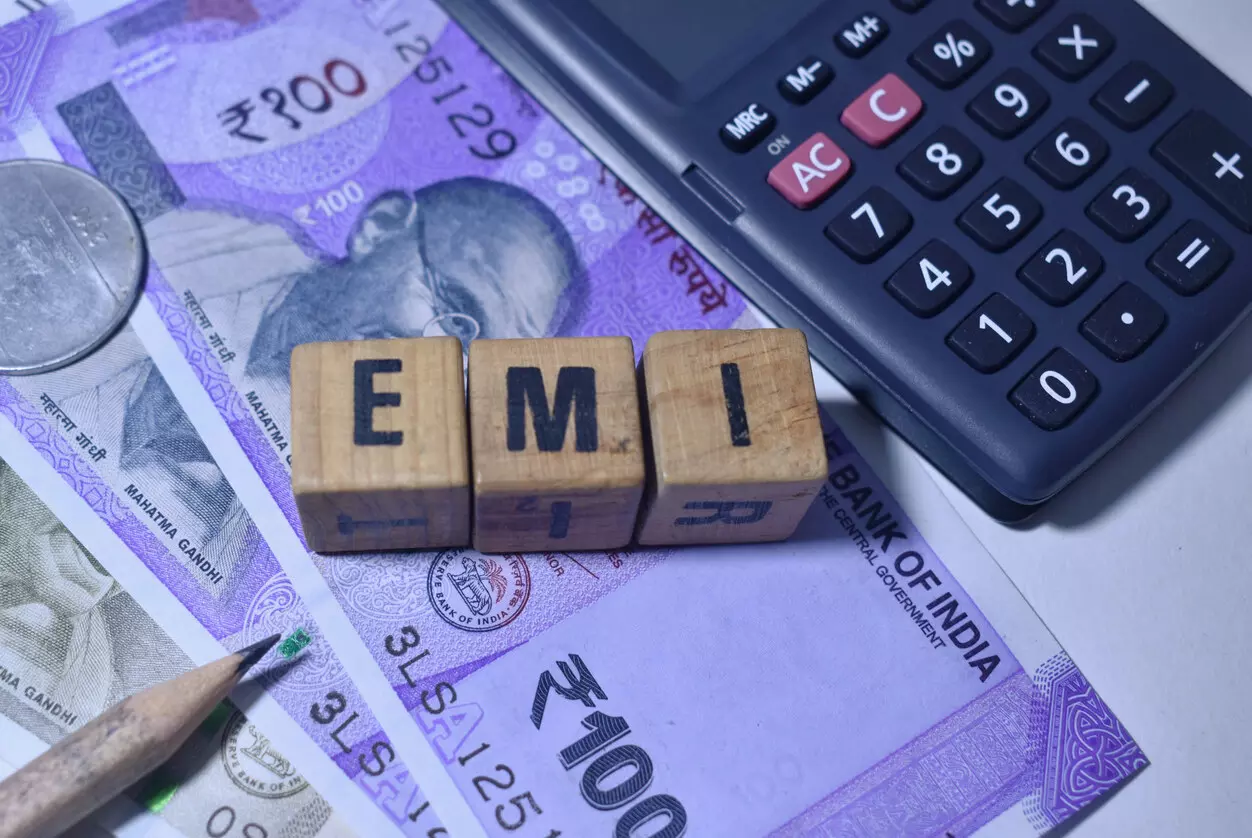
Loans may not get cheaper soon as global rate pressure keeps India on tenterhooks
SBI Research says rising US govt borrowings could keep global interest rates high; predicts India’s govt bond yield to remain at 7 pc by March 2027

Families seeking cheaper home loans, lower EMIs, and relief from borrowing costs may have to wait longer. A new report by SBI Research warns that rising government borrowing in the US could keep interest rates high across global markets, with India also facing the impact.
The report expects India's 10-year government bond yield to remain between 6.75 per cent and 7 per cent by March 2027. It also flags the possibility of pressure on the rupee if US bond yields rise sharply and investors move their money towards American investments.
For an ordinary Indian household, this matters because the cost of borrowing in the economy may not come down as quickly as expected. While the report does not predict an immediate increase in home loan or car loan rates, its assessment suggests that cheaper credit may remain difficult to achieve in the near term.
Impact of heavy US borrowing
The concern begins in the US, where the government is borrowing heavily to meet its expenditure. According to SBI Research, the gap between the supply of US government bonds and investor demand has widened to around $304 billion, compared with approximately $141 billion in 2015.
In simple terms, the US government is offering more bonds than investors are willing to buy at existing returns. To attract buyers, it may have to offer higher returns, pushing up interest rates.
Also read: Why banks are not raising FD rates despite RBI’s repo rate hike
SBI expects the yield on the US 10-year government bond to settle around 4.75 per cent, but warns that it could temporarily rise to 5.25-5.35 per cent.
Higher returns on US government bonds can make them more attractive to global investors. This could affect investments in countries such as India, as some foreign investors may prefer moving their money to the US. Such movements can put pressure on Indian financial markets and the rupee.
Costlier imports may trigger price rise
For India, a weaker rupee would mean that imported goods become more expensive. This is particularly important for a country that imports a large part of its crude oil requirement. A fall in the rupee can increase the cost of imports, putting pressure on businesses and potentially adding to the prices consumers pay. SBI, however, expects the rupee to have an appreciating bias, partly on the possibility of a weaker US dollar. This outlook could change if American bond yields rise sharply.
Also read: How RBI rate hike impacts your EMIs, FDs, investments: Sahaj Money founder explains
India is also dealing with a gap between government borrowing and investor demand. SBI estimates that the supply of Indian government bonds stands at Rs 21.40 lakh crore, against demand of Rs 19.88 lakh crore, leaving an excess supply of around Rs 1.52 lakh crore.
However, the report points out that government measures, including bond switches and buybacks, have already reduced the borrowing requirement by around Rs 1.23 lakh crore.
What’s in store for investors?
This is one reason SBI believes India is relatively better placed than the US to manage its borrowing pressure. It expects the Indian 10-year government bond yield to settle between 6.75 per cent and 7 per cent by March 2027. The report says this range could remain possible even if the RBI raises its repo rate by 0.50 percentage point to 6 per cent. This is an assessment of a possible scenario, not a prediction of an RBI rate increase.
Also read: US Fed Reserve keeps rates unchanged despite elevated inflation, gives little signal of next move
For savers and investors, the situation has both advantages and disadvantages. Higher bond yields can mean better returns for people investing in newly issued government securities. However, those already holding long-term bonds or investing in long-duration debt mutual funds could see the value of their investments fall when market yields rise.
Households must plan better
The report also highlights the growing debt of America's seven largest technology companies, known as the Magnificent Seven. Their combined debt increased from around $399 billion in 2025 to $578 billion by mid-2026. SBI estimates that higher interest rates could put $1.67-2 trillion of their market value at risk under its valuation model.
The larger message from SBI Research is that India may be better placed to manage the situation, but cannot remain untouched by global developments. For households, this means planning loans and investments carefully rather than assuming that interest rates will fall sharply in the coming months.