







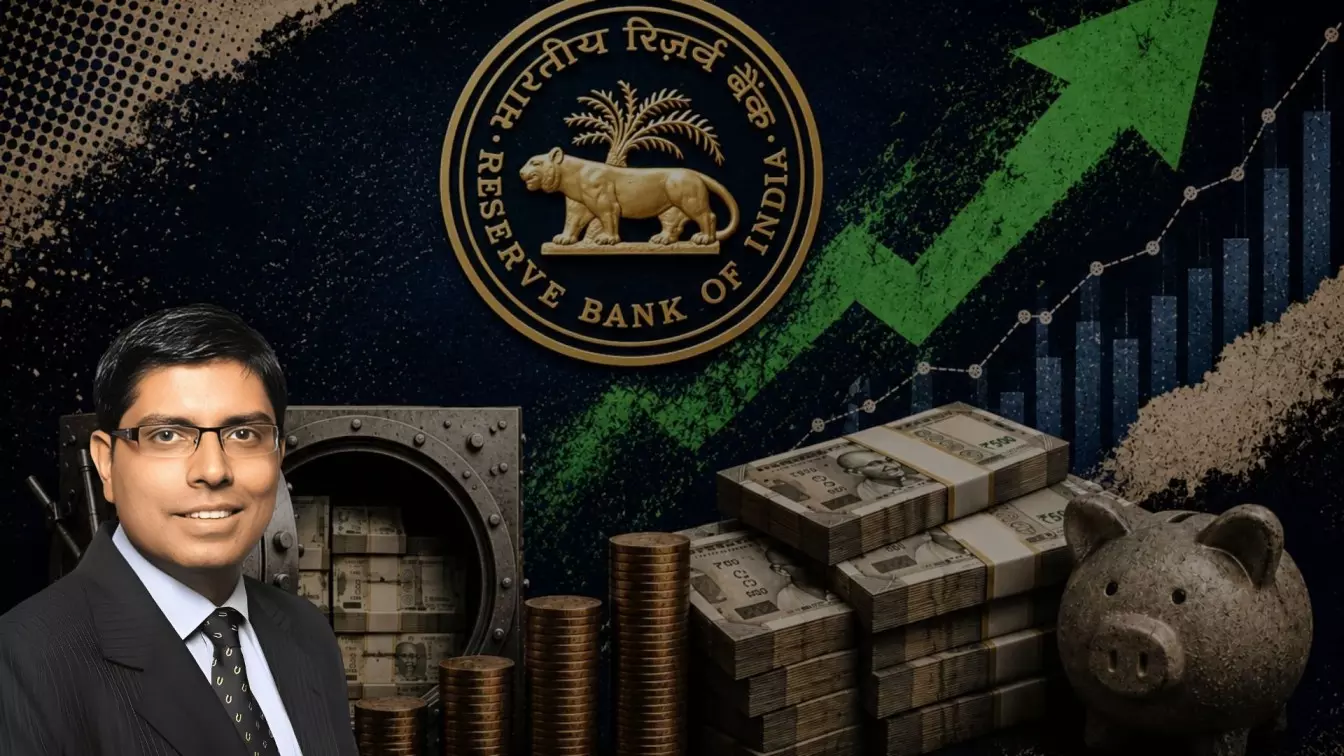
How RBI rate hike impacts your EMIs, FDs, investments: Sahaj Money founder explains
SEBI-registered advisor Abhishek Kumar decodes what a 25 Bps hike means for home loan borrowers, fixed deposit investors, and portfolio strategy

“Prioritise on safety. First check whether you have a sufficient emergency fund that can sustain at least six months of expenses before rebalancing,” is Abhishek Kumar, SEBI-registered investment advisor and Sahaj Money founder's advice for a middle-class family navigating higher EMIs and planning a viable asset allocation.
His advice comes as the Reserve Bank of India (RBI) raised the repo rate by 25 basis points to 5.5 per cent, signaling a shift toward calibrated tightening.
The RBI’s decision carries direct implications across household budgets, home loan tenures, fixed deposit returns, and portfolio strategies. The Federal spoke to Abhishek Kumar, founder of Sahaj Money, to understand how investors and borrowers should navigate this changing interest rate environment.
With the repo rate up by 25 basis points, how soon will existing home loan borrowers see their floating rate EMI increase, and should they look at extending their loan tenure instead of increasing the monthly payout?
We expect that because most of the loans these days are benchmarked to the repo rate as an external benchmark, known as EBLR (External Benchmark Lending Rate). Banks are required to reset these at least once a quarter. So most borrowers will see the new rate reflecting in their EMIs within the next one or two months. However, older loans that are on the MCLR (Marginal Cost of Funds-Based Lending Rate) regime move only on their reset date, which is usually between six to 12 months. Those borrowers will feel the impact later on.
The exact impact depends on the loan tenure and amount. For a ₹50 lakh loan for a 20-year period, a move from 7.25 per cent to 7.5 per cent could roughly add around ₹750 to ₹800 a month to the EMI. That is currently manageable for most households.
When one increases the tenure of the loan, it actually increases the overall interest paid over the period of the loan. We generally suggest avoiding tenure extension if you can afford it; try to increase your EMI rather than your tenure. If that is not possible, then perhaps extend it, but when you receive an annual bonus, try to prepay the loan to bring the tenure back down.
For prospective home buyers looking to lock into a loan today, does this rate hike signal the peak of the interest rate cycle, or should they prepare for home loan rates to cross the 9 per cent mark soon?
I would not bet that this is the peak for the interest rate cycle at this stage because there are a lot of geopolitical issues at play and oil prices are rising. If that continues, it will spill over to higher inflation in the economy, forcing the RBI to reduce money supply and keep increasing the repo rate going forward.
Considering that the repo rate was at 5.25 per cent previously, home loan rates were around 7 per cent to 7.5 per cent. After the latest rate hike, it will be around 7.8 per cent for most borrowers. The repo rate would need to go up by almost 150 basis points to reach the 9 per cent mark. That happened in 2022 when inflation was running at 7 per cent to 10 per cent. Unless that kind of scenario happens in quick succession, we will not reach 9 per cent very soon, though it remains a possibility in a connected world.
Fixed deposit rates usually rise after a repo rate hike. How quickly will banks pass this benefit to savers, and should senior citizens lock in long-term fixed deposits now or wait for further hikes?
Deposit rates in my expectation will rise gradually over the next one to six months. The speed of that change will vary from bank to bank based on their individual CASA ratio and deposit levels. If a bank is unable to grow its deposits, it will increase interest rates to retain existing depositors or attract new ones.
While loan rate transmission is much faster, deposit rate changes take time. Since 2017-19, floating rate loans have been mechanically linked to external benchmarks like the repo rate, so loan rates adjust automatically. Fixed deposits work differently—there is no set RBI mandate requiring banks to offer a minimum interest rate linked directly to the repo rate; it remains a contract between the depositor and the bank.
Which specific sectors should equity investors overweight or underweight in this new calibrated tightening phase?
On the overweight side, banks look stronger because of their low-cost deposit base, such as higher Current Account and Savings Account (CASA) ratios. Banks are in an advantageous position because their loan rates revise quickly while deposit costs adjust slowly, giving margins a near-term uplift. However, investors must be selective as not every bank shares the same CASA ratio. Export-oriented sectors like IT and pharmaceuticals also stand to benefit with rupee depreciation against the dollar, alongside upstream oil and gas producers enjoying decent refining margins.
On the underweight side, real estate and auto stocks face the brunt because most buyers purchase these assets on loans. Rising EMIs combined with higher crude prices create a double whammy for auto buyers, as maintenance costs rise along with borrowing costs. I advise retail investors not to attempt sector rotation on their own, but rather use mutual funds and let professional fund managers do that job.
With 10-year G-Secs climbing to 7.22 per cent, how should retail investors view debt mutual funds right now, and is this a good time to enter short duration funds?
Short duration and money market funds essentially serve liquidity needs. Investors should look at their liquidity events rather than chasing returns in the short term. Because these funds hold shorter maturity bonds, returns will remain limited as the RBI keeps raising rates.
I would not suggest going for long duration or gilt funds right now, because when interest rates rise, long-term bond prices fall. A good time to increase allocation to long-term debt funds will be when the RBI clearly signals a pause in rate hikes.
If retail investors move their money to debt now for a 7 per cent to 8 per cent return, aren't they risking missing out on the next big stock market rally?
That is always a possibility, but everyone has to weigh that against their own risk appetite. If an investor does not have the appetite or preference for equity at this stage, they should not force it. Asset allocation should be based on individual risk preference rather than chasing momentum or trying to shift between asset classes constantly.
Should a common investor rebalance their portfolio from equity to debt right now given rising fixed income yields and oil-led valuation pressures?
It depends on how their current portfolio is structured. If an investor had a target allocation of 60 per cent in equity and that percentage dropped significantly due to recent poor market performance, it might actually be a good time to move money from debt into equity. Conversely, if a new investor has a very high equity allocation that exceeds their risk tolerance, shifting corpus from equity to debt can help them withstand market fluctuations and prevent panic if markets fall.
If you had to give a simple, actionable asset allocation strategy to a middle-class family navigating higher EMIs, where should they put their next ₹10,000?
Safety comes first. First, verify that you have a sufficient emergency fund covering at least six months of expenses. Second, ensure adequate risk coverage through term insurance and health insurance.
Once those basics are taken care of, invest a portion into equity according to your risk appetite, with other portions going into short-duration bonds or recurring deposits. Additionally, try to prepay existing loans to build the habit of paying off debt early, reducing the overhang of EMIs during market downturns or changing job environments. A small allocation to gold also makes sense for a well-rounded portfolio.
