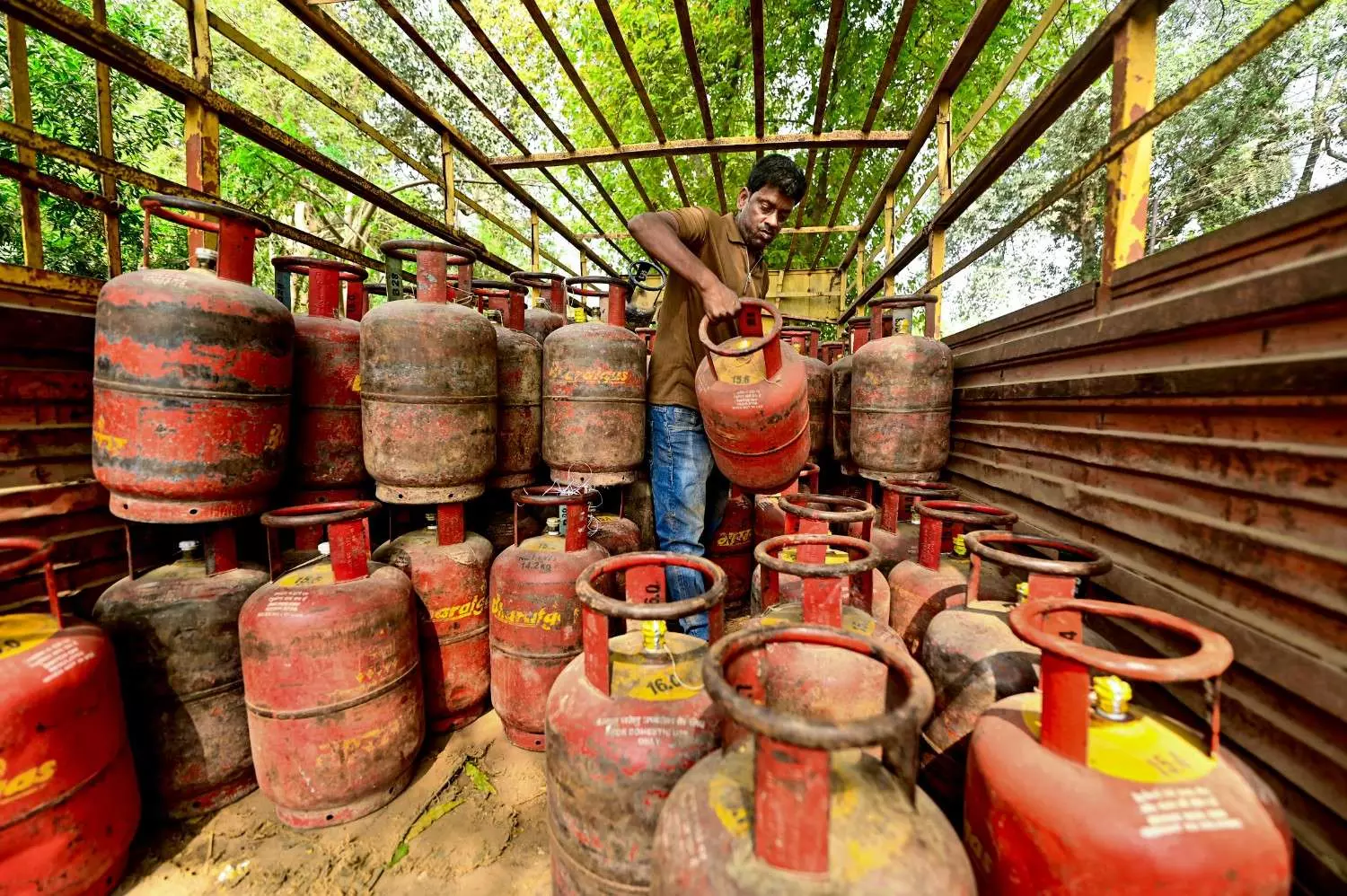
The state government and organisations of the hospitality sector should get together to take remedial action
The shortage of cooking gas, LPG, at commercial eateries affects different states and towns differently. It is a particular problem in Kerala, where a fair number of households depend on food cooked outside the home, at least for one major meal. The most vulnerable among them — those who are simultaneously poor, old and without a spouse or offspring living alongside — are taken care of by the government’s functional social security schemes, which include bringing them to day-care centres where they spend time together and are served free meals.
Kerala has the largest proportion of senior citizens in its population among all states: 16 per cent, as compared to the all-India average of less than 11 per cent. Many of them can afford to cook food at home from a financial perspective, but choose to arrange for cooked food to be sent to them. Often, such timely delivery of cooked food is done by informal family enterprises, otherwise by organised eatery businesses. In either case, the shortage of cooking gas constrains those supplies.
40 pc of eateries shut down
Kerala has the added problem that immigrant labour from North and East India constitutes a sizeable share of the workforce in eateries across the state. The local people call them Bengalis, but that is a generic term and covers migrant workers who are not from South India. Voters from West Bengal have a tendency to go back to vote, come election time. So, Kerala’s eateries could face a shortage of cooking gas and of workers. The Economic Times reported that 40 per cent of eateries in the state have shut down.
Also read: Over 2 million tonnes of Indian LPG, LNG cargo stranded in Persian Gulf
Households in which men and women both work outside the home also regularly consume at least one meal outside the home. Hostels are affected. Hospitals often see meals supplied by charitable foundations, which also need cooking gas. So do temples and crematoriums.
India’s long-term solution is to switch from liquid petroleum gas and natural gas to electricity as the fuel for cooking. And the most efficient way to cook with electricity is with the induction stove
Taking care of the cooking gas shortage is far easier than the shortage of natural gas. While 60 per cent of India’s LPG is imported at present, it is possible to substitute with local production, with local refineries producing more of cooking gas at the expense of other fuels. India will have to import additional quantities of crude, at whatever price, and produce additional quantities of cooking gas and other fuels.
This could take time. But eating food is not something that can wait, especially for the old and the infirm. Even if someone can afford to subsist on food supplied from outside the home at present, the rise in fuel costs can upset this financial math.
India should switch from LPG to electricity
In other words, in addition to the general problem of cooking gas shortage in the country, Kerala could potentially face a hunger problem that the state has, by and large, been immune to for some time. This calls for state intervention. The state government might, in fact, be happy to step in to solve the food problem just ahead of the elections to the state legislature, now announced for April 9.
Also read: LPG crunch: Centre links higher commercial supply to faster PNG rollout by states
What can the government do? Let us appreciate that this is the only state where food and shelter were organised for immigrant workers — guest workers, they were called — during the time of Covid. A functional system of governance, with government functionaries working in tandem with volunteer workers, often drawn from political parties, women’s self-help groups, and mass organisations affiliated to political parties, can deliver state-initiated services with remarkable speed and efficiency in the state.
Traditional electric stoves are energy-inefficient, but, in the short term, could come in handy. The government’s main challenge would be to procure additional electricity from power exchanges and strengthen the grid to withstand the surge in load
In addition, practically all sections of society are organised. There would be multiple organisations of restaurant owners, restaurant workers, and so on. It should be possible for the government to leverage this organised functional readiness to provide speedy solutions to the fuel shortage.
India’s long-term solution is to switch from liquid petroleum gas and natural gas to electricity as the fuel for cooking. And the most efficient way to cook with electricity is with the induction stove. If the Central government sees the wisdom of delinking the basic task of cooking food from the risk of war, supply disruptions and foreign currency fluctuations, it would encourage people to shift to electric cooking, moving away from imported hydrocarbons (India imports close to 90 per cent of its crude oil, half its natural gas and 60 per cent of its cooking gas).
India has enough coal, sunlight and wind power to generate enough power to meet all cooking and other electricity needs, including for mobility.
Govt needs to act fast
That is in the medium term. What about the short term? The government and restaurant associations can join hands to place firm, assured orders for induction stoves and cooking vessels suitable for induction stoves (they need ferromagnetic bottoms, all cast iron and most stainless steel vessels qualifying) from local manufacturers and identified foreign suppliers. For the medium term, the government should incentivise local startups to produce all the different parts of induction stoves, ranging from the copper coil that induces the all-important magnetic field to the glass-ceramic stovetop that will not shatter.
Also read: LPG shortages remain ‘worrisome’ despite stable crude supply: Govt
Traditional electric stoves are energy-inefficient, but, in the short term, could come in handy. The government’s main challenge would be to procure additional electricity from power exchanges and strengthen the grid to withstand the surge in load that would kick in when lots of people start cooking at the same time.
Here too, coordinated organisation of effort can stagger the cooking to minimise too heavy a load being placed on the grid. Families and restaurants can be asked to cook at different times of the day.
Kerala has the organised, institutional capacity to overcome the cooking gas shortage. The government should deploy it in action, and fast.
(The Federal seeks to present views and opinions from all sides of the spectrum. The information, ideas or opinions in the articles are of the author and do not necessarily reflect the views of The Federal.)