India’s triumph in the 2026 T20 World Cup will be remembered for many reasons. It was the dominance in the final, the composure under pressure and the seamless transition into a new era of players. But, perhaps the most interesting takeaway from this victory lies in the kind of cricketers India is now producing and trusting in the shortest format.
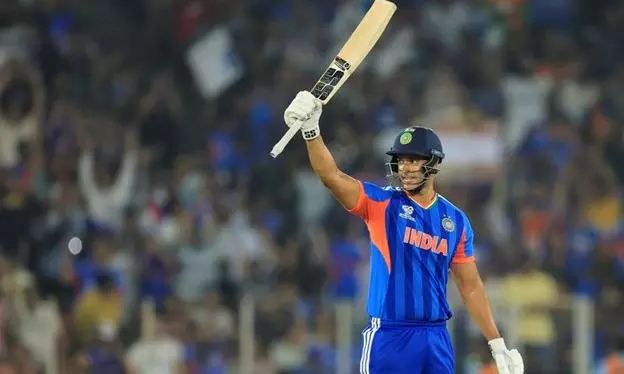
If one player captures the essence of this new T20 identity, it is Shivam Dube. While much of the spotlight during the tournament fell on headline performances from the likes of Sanju Samson and Abhishek Sharma, Dube’s contributions quietly shaped several crucial moments of India’s campaign. For years, Indian cricket revolved around clearly defined stars.
Batting depended heavily on the reliability of players like Virat Kohli and Rohit Sharma, while the middle order was often built around experience.
Dube's rise
But, after the 2024 T20 World Cup, when stalwarts such as Kohli, Rohit and Ravindra Jadeja stepped away from the format, India began building something different. The new blueprint required players who could hit big, adapt quickly to different match situations and contribute in multiple phases of the game. Shivam Dube fits that template almost perfectly. In many ways, he represents the new template of India’s T20 cricketer, a tall power hitter, a middle-order accelerator, a flexible batter and a useful bowling option.
Dube’s rise is about role clarity. A tall, left-handed power hitter, he operates primarily in the middle order, the most demanding position in modern T20 cricket. When he walks out to bat, the game is rarely stable. Sometimes the team needs consolidation, and sometimes sheer power. In this World Cup, Dube repeatedly showed that he could deliver exactly what the team needed.
Across the tournament he played several crucial cameos that changed the momentum of games. Against the Netherlands in the group stage, he smashed a quickfire half-century that lifted India to a commanding total and set up a comfortable victory. It was an innings that demonstrated his ability to impose himself on bowlers even when arriving late in the innings.
The chase had entered a tense phase in the Super Eight clash against the West Indies, effectively a quarterfinal for India. The pressure was building even as Sanju Samson was holding the innings together. Dube walked in with the equation tightening and immediately eased the tension. In a brief stay, he struck two crisp boundaries in just four balls, scoring eight runs at a strike rate of 200.
Then came the final in Ahmedabad. India had already built a strong platform, but the innings briefly slowed down towards the end. Dube walked in at that moment and produced a short but explosive burst of hitting, smashing Matt Henry for a flurry of boundaries and pushing India’s total beyond 250. Those late runs ensured that New Zealand were chasing something almost impossible.
Tactical asset
It was exactly the kind of contribution that defines modern T20 cricket. In the shortest format, impact often matters more than volume. A batter who scores 25 runs in eight balls at the right moment can sometimes influence a match more than someone who spends 40 balls at the crease. Dube has quietly become one of India’s most reliable impact players.
His game is built around power and clarity of intent. Over the last few years, he has significantly improved his strike rate, particularly against pace bowling, turning himself into a formidable hitter in the middle and death overs. But what truly strengthens his place in the team is versatility.
More importantly, Dube is not just a finisher. He can float up the order if the situation demands it, and he also provides useful medium pace with the ball. He produced another brisk cameo in the semifinal against England. Promoted to number 4, his 43 off 25 balls ensured that India maintained momentum.
In a format where teams constantly search for balance, a player who can contribute in multiple roles becomes extremely valuable. That is why the Indian team management increasingly sees him as more than just a batting option. He is a tactical asset.
In many ways, this multi-dimensional approach defines the modern T20 side. Shivam Dube fits seamlessly into this structure. Like Pandya, he gives the team flexibility, allowing the captain to stretch batting depth while still retaining bowling options.
Broader direction
Dube’s role also reflects the broader direction of India’s T20 side. This is no longer a team built around one or two superstars. Instead, it is constructed around several players who can influence matches in different ways.
Take Abhishek Sharma, for example. His fearless stroke play at the top of the order represents the aggressive mindset of the new generation. His explosive start in the World Cup final set the tone for India’s massive total and showed how the team now prioritizes attacking cricket from the very beginning.
Sanju Samson, who emerged as one of the tournament’s standout performers, brought a different dimension to the top order. His ability to combine elegance with power gave India stability as well as acceleration. Then there is Suryakumar Yadav, whose leadership has helped shape this new identity. Around them are players like Rinku Singh, Tilak Varma and Axar Patel, each of whom adds a specific skill set to the side, finishing ability, aggressive middle-order batting or multi-dimensional utility.
The result is a team where almost every player can influence the match in more than one way.
Compelling story
What makes Dube’s story even more compelling is the journey behind it. When he first entered the Indian team in 2019, expectations were high but performances were inconsistent. For many cricketers, that might have been the end of the road. But the Indian Premier League (IPL) offered him a second chance. Playing for Chennai Super Kings, Dube reinvented his approach to batting.
Under the calm guidance of MS Dhoni and the CSK environment, he developed into one of the most destructive middle-order hitters in the league. His confidence grew and his power-hitting became more consistent. Those seasons in the IPL transformed his career. When he returned to the Indian side, he was a specialist in a clearly defined role, a middle-order enforcer who could shift momentum in a matter of overs.
As India looks ahead to the next phase of its white-ball journey, including the 2028 T20 World Cup and the possible return of cricket at the Los Angeles Olympics, players like Dube will continue to define the shape of the team.
(The Federal seeks to present views and opinions from all sides of the spectrum. The information, ideas or opinions in the articles are of the author and do not necessarily reflect the views of The Federal)