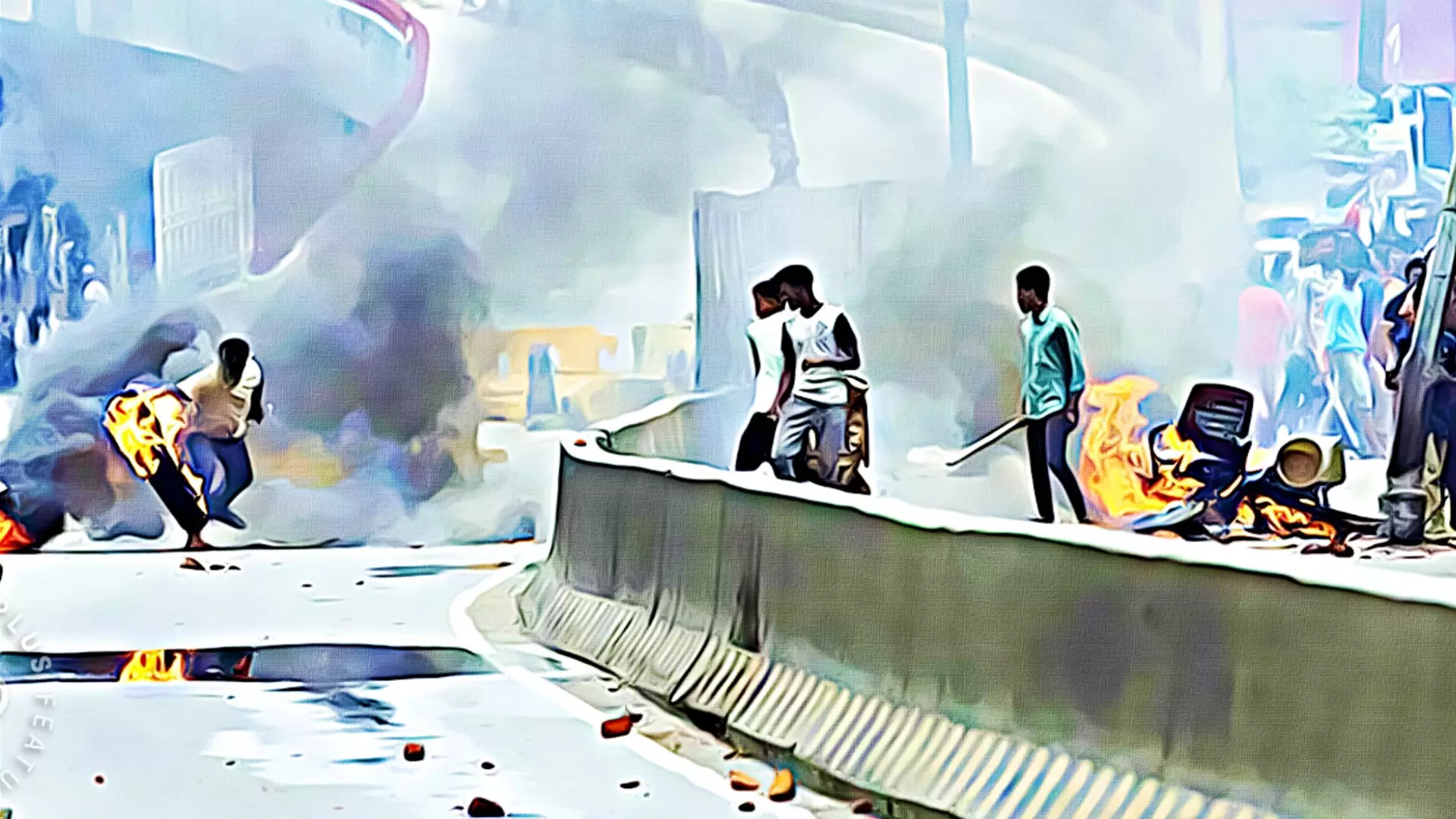
When mobs mobilise in minutes and violence masquerades as faith, democracy erodes one incident at a time. Representational photo
Digital platforms, economic exclusion fuel violence; in India from lynchings to mob attacks cruelty is being normalised, history will judge our silence
Religious violence in South Asia is no longer an aberration. It has become disturbingly routine.
Attacks on people celebrating Christmas, lynchings triggered by rumours, mobs mobilised within hours through social media — these are no longer isolated incidents but recurring features of the region’s public life. When violence acquires such regularity, the failure is not merely of policing or intelligence.
This is the collapse of moral imagination — the capacity of a society to recognise the humanity of the other before designating an enemy. That this collapse now spans the subcontinent, including India’s immediate neighbourhood, should deeply unsettle us. It marks a civilisational regression in a region that once produced some of the world’s most searching critiques of religious arrogance and moral certainty.
Religion as moral cover
South Asia was never a civilisation of blind faith. Its philosophical traditions distrusted absolutes. The Upanishads elevated doubt to wisdom. Buddhist thought warned against rigid belief as a source of suffering. Sufi poets exposed the cruelty hidden within moral vanity and Bhakti saints dismantled hierarchy in favour of inward devotion and compassion.
These traditions did not merely coexist; together they formed a moral ecology skeptical of power, wary of certainty, and hostile to cruelty masquerading as faith. What we are witnessing today is not their betrayal.
The engine driving contemporary religious violence is not theology. It is power. No scripture commands lynching. No faith sanctifies the burning of homes or the murder of innocents. Violence erupts when religion ceases to restrain the ego and instead legitimises it; when belief fuses with political authority and sheds self-criticism. At that point, cruelty acquires moral cover.
Also read: How de-secularisation may slowly steer India away from electoral democracy
Killing becomes “defence”. Hatred is rebranded as courage. Piety recedes. This is not the story of one religion turning upon another but a story of what happens when any faith claims the authority to judge, punish and erase.
Religious mobilisation
This transformation is unfolding against a demographic backdrop that makes it especially volatile.
South Asia is extraordinarily young. India, Pakistan and Bangladesh together have hundreds of millions, under the age of thirty entering labour markets that cannot absorb them and education systems that fail to equip them. This is not merely an economic challenge; it is a moral emergency. When education fails to cultivate critical thought and employment fails to provide dignity, young people become acutely vulnerable to ideologies that promise instant belonging, simple explanations and visible enemies.
Religious mobilisation offers all three.
A young person without prospects but with a smartphone can now be recruited into grievance within hours. Economic exclusion is repackaged as civilisational injury. What once required years of ideological conditioning now happens through algorithmic feeds in weeks. Across the region, lynch mobs skew young.
A young person without prospects but with a smartphone can now be recruited into grievance within hours. Economic exclusion is repackaged as civilisational injury.
Vigilantes who vandalise temples, attack churches or enforce religious codes are disproportionately young men handed identity as compensation for exclusion
Digital technology has turned this volatility into an accelerant. Rumour today travels at lethal speed. What once took days now reaches millions in minutes. The killing of a Hindu boy in Bangladesh following social-media rumours is emblematic: unverified claims harden into fact before investigation or restraint can intervene.
Also read: Hasina’s death sentence pushes Bangladesh to brink of civil war
Social media does not merely amplify prejudice; it manufactures it.
Morally indefensible
For India’s urban, educated middle-classes, the temptation unfortunately is to treat this violence as episodic excess. That temptation is morally indefensible. Democracies rarely collapse through dramatic coups. They erode through silence, through rationalisations offered in the name of stability, through thresholds of cruelty lowered one incident at a time.
In the digital age, this erosion no longer takes decades. It can unfold within a single news cycle.
The evidence is overwhelming. In India, lynchings of Muslim men over rumours of cow slaughter have formed a grim pattern in which rumour replaces evidence and crowds assume judicial authority. Assaults are recorded and circulated as celebration. Churches have been attacked, nuns assaulted and priests beaten under the guise of preventing conversion. Dalits are brutalised when caste hierarchy is defended as religious tradition, their suffering live-streamed for mockery.
In Bangladesh, violence against Hindus has assumed disturbing regularity — temples vandalised, homes burned, families displaced — hollowing out the secular promise on which the nation was founded. In Pakistan, intolerance has been institutionalised: Hazara Shias targeted, Ahmadis criminalised, blasphemy accusations transformed into death sentences by mobs primed online.
Sri Lanka and Myanmar demonstrate the logical end of this trajectory, where persecution ceases to be excess and becomes policy.
Normalisation of cruelty
India’s danger is not descent into an imported theocracy. Our society is too plural, too argumentative, too constitutionally layered. The greater danger is subtler and more enduring — the normalisation of cruelty, locally justified, culturally rationalised, digitally amplified and politically protected.
This drift is not uniquely South Asian. Across the world, ultra-nationalism and strongman politics have rediscovered religion and culture as instruments of control. Faith is reduced to obedience. Dissent becomes betrayal. India’s vulnerability lies in unresolved historical trauma, deep inequality and layered identities that allow global authoritarian impulses to acquire local religious form.
This moment demands clarity. There can be no equivocation, no calibrated ambiguity, no cynical weighing of electoral gain against moral cost. Governments must stop pussyfooting but treat communal violence as a constitutional and civilisational emergency.
The greater danger for India is subtler and more enduring — the normalisation of cruelty, locally justified, culturally rationalised, digitally amplified and politically protected
Protecting any such act of violence is vile, it’s immoral. The rule of law must operate without religious preference. Hate crimes must be investigated swiftly and prosecuted visibly. Police must be insulated from political command. Courts must recognise that delayed justice is indistinguishable from complicity. Education must resist ideological capture, but it must also acknowledge that young people’s real classrooms are digital. History taught as grievance produces rage and mobs.
Religious institutions must reject violence committed in their name. Media and civil society have responsibilities too, but the real battlefield lies on digital platforms where outrage is monetised and division rewarded.
Above all, economic opportunity must be created at scale. Societies that abandon millions of young people to joblessness while equipping them with smartphones are engineering their own destruction. When dignity disappears, religion becomes the most efficient language of mobilisation.
India stands at a moral crossroads. It can continue to deploy religion as a language of fear and power, amplified digitally and aimed at a restless youth. Or, it can reclaim religion as a discipline of restraint and shared citizenship, while building the economic and educational foundations that give young people hope rather than enemies.
History will judge us not by the faith we proclaim, but by the cruelty we tolerate.
(The Federal seeks to present views and opinions from all sides of the spectrum. The information, ideas or opinions in the articles are of the author and do not reflect the views of The Federal.)