



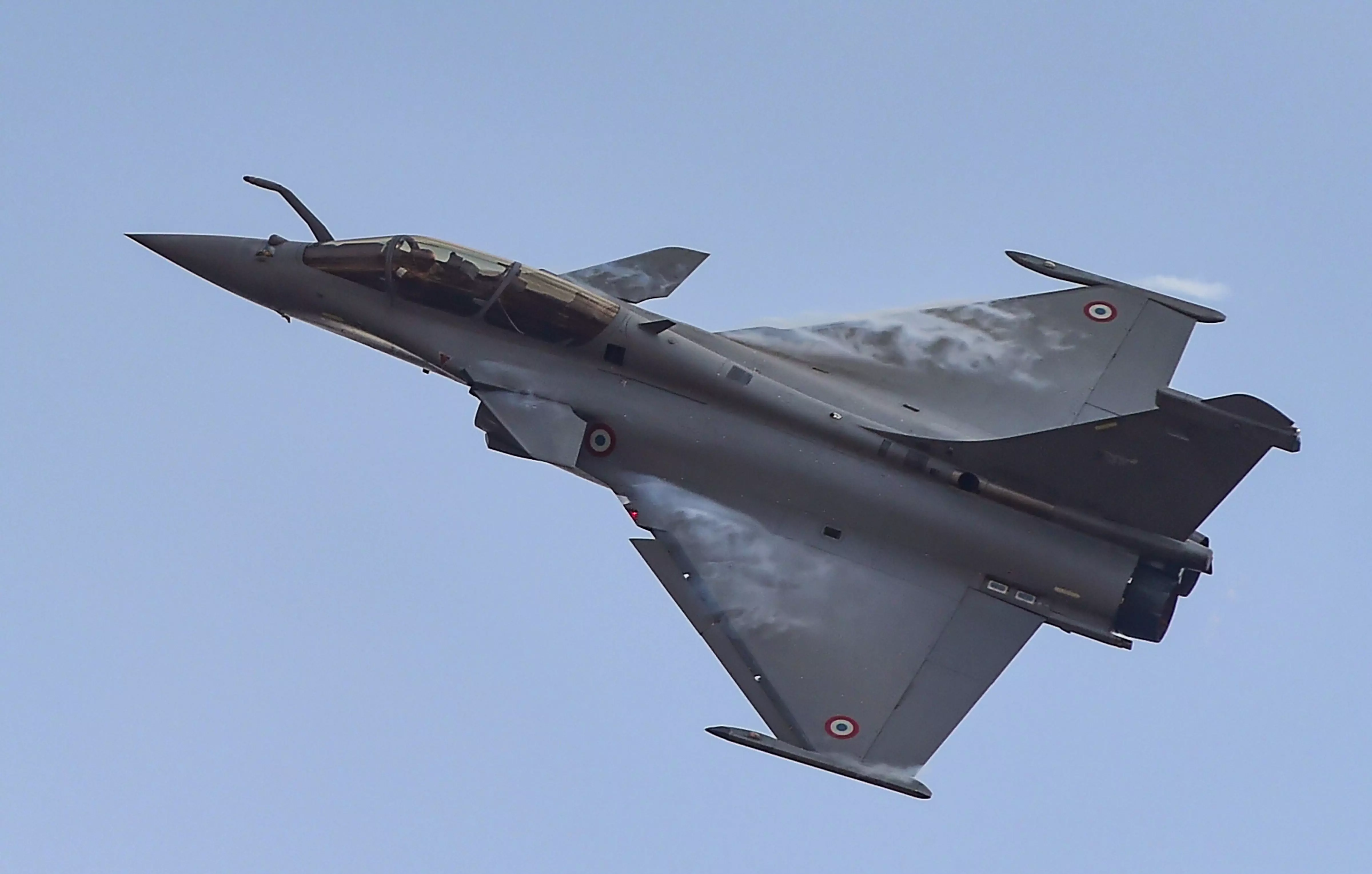
India's latest decision raises big questions about delays in 'Made-in-India' fighter planes
In April 2015, Prime Minister Narendra Modi announced that India would buy 36 Rafale jet fighters in fly-away condition instead of the previously agreed 126. It was declared as a government-to-government agreement. No reasons were given for the surprise announcement.
The cost shot up because the India-specific enhancements were now confined to the 36 aircraft instead of 126. The agreement was signed in September 2016, and the delivery was spread between 2019 and 2022. The then Chief of Defence Staff, B.P. Rawat, had countered the arguments of Air Force veterans that fighter jets are not necessary in an age of missiles. The missiles, it seems, are now getting overtaken by drones serving as mini-bombers.
Also read: Su-57, F-35 top list as India eyes 5th-gen fighter jets
Ten years after the drastic decision not to buy 126 Rafale fighters, the Defence Acquisition Council (DAC) has given approval to the Air Force’s request for the purchase of 114 Rafale fighters on February 13. Twenty of them will be purchased in flyaway condition and inducted into the air force by 2030. The remaining jets will be built in India, in collaboration with Hindustan Aeronautics Limited (HAL) in Bengaluru.
It is an idea no one can quarrel with, but it remains half-baked if the government does not follow up with the necessary action to build thenecessary research and development.
The 36 fighter jets cost Rs 59,000 crore in 2016. The estimated cost of the 114 fighter jets is Rs 3.25 lakh crore. India wants Rafale to use 50 to 60 per cent of the local components. It would then become, under the defence procurement policy criteria, a Made-in-India Rafale jet.
Rafale-Tejas dilemma
In the intervening decade between the cancelled 126 Rafale fighter jet deal in 2015 and the proposal to buy 114 in 2026, the general buzz was that India’s own light combat aircraft (LAC), which goes back to the 1980s, would serve in place of the Rafales. There was, of course, the limited capacity of HAL to produce enough Tejas jets to replenish the dwindling fighter squadron strength of the Air Force. There was also the fact that both Tejas Mark 1A and Mark II need GE engines. The new thinking seems to be that the Air Force will have both Tejas and Rafale jet fighters to strengthen its fighter squadron strength. And in the second half of 2030s, the production of Advanced Medium Combat Aircraft (AMCA) is expected to roll out.
There must have been internal deliberations about the Tejas/Rafale dilemma, and it could be the case that it was felt that the Air Force cannot do without a multi-role fighter aircraft like Rafale, and that the technology up-gradation that would happen with the induction and production of Rafale is a necessity.
Also read: Mystery deepens over India’s rush to buy untested Tejas jets
What is evident is a shift in stance with regard to the acquisition of the jet fighter. Before zeroing in on Rafale, there was a choice to be made between Sweden’s Gripen, Russia’s MiG-35, and the United States’ Super Hornet. The IAF chose Rafale in 2012, but the purchase negotiations were not finalised by the time the BJP-led NDA came to power in 2014. The conditions of the deal, as laid down in policy, were that 18 aircraft would be bought in flyaway condition, and the rest would be manufactured in collaboration with HAL. According to the 2012 deal, HAL's Rafale production would have started by 2017.
‘Made-in-India’ defence manufacturing
The abrupt decision not to buy the 126 Rafale aircraft has not been fully explained by either the government or defence experts. The government rationalised its 2015 decision by citing the cost factor. It told the Supreme Court in response to a petition in 2018 that ‘in-built inflation’ factor and the rupee-euro exchange rate variations “impacted the cost of acquisition”. It seems a weak rationalisation. The thinking of the Modi government was to break the framework of purchasing arms abroad, and develop India’s domestic production.
It is an idea no one can quarrel with, but it remains half-baked if the government does not follow up with the necessary action to build thenecessary research and development. It would have required investments on a large scale. India has been building its own naval vessels. Its missile programme has been successful, which was reflected in the USD 370 million Brahmos sale to the Philippines.
Also read: Explainer: The 'scandal' surrounding India's Rafale deal with France
It would appear that the Modi government was desirous of building an indigenous aircraft capacity, and it wanted to take off from the existing Tejas light combat aircraft. The Air Force veterans were convinced that India needed a more sophisticated and more powerful fighter jet. The counterargument to the official line was that the age of fighter jets was over. The new proposal to acquire 114 Rafale jets is a case of going back to the earlier position of 2007 of the need for the medium multirole combat aircraft. In the long run, India will have to build its own fighter jets.
Defence indigenisation
The Modi government’s earnestness to build India’s own military power through domestic production does not seem to translate into the broader framework of creating the research and industrial infrastructure. The Tatas, the Ambanis and the Adanis may be the big players in the manufacturing sector, but they are literal babes in the woods when it comes to developing defence production. There are as yet no initiatives to create the capability from design and engineering to production facilities. Desire and intention are necessary but they are not sufficient. The U-turn on the Rafale deal is a course correction. But it is a costly one in terms of time and costs.
Also read: Tejas 'Made in India'? HAL veteran breaks down the truth
There is no point in shying away from a realistic assessment of what India can and cannot do in terms of defence manufacturing. The experts in the government and outside are surely aware of the challenges. The response needed is not silence but a clear plan to strengthen defence research and development. University science departments should be drawn into the projects.
Private-sector defence manufacturers can then enter the field and connect withresearch centres. The pattern as it now exists is to depend on the transfer of technology clause while purchasing the fighter jets, and then to indigenise them.
(The Federal seeks to present views and opinions from all sides of the spectrum. The information, ideas or opinions in the articles are of the author and do not necessarily reflect the views of The Federal.)
