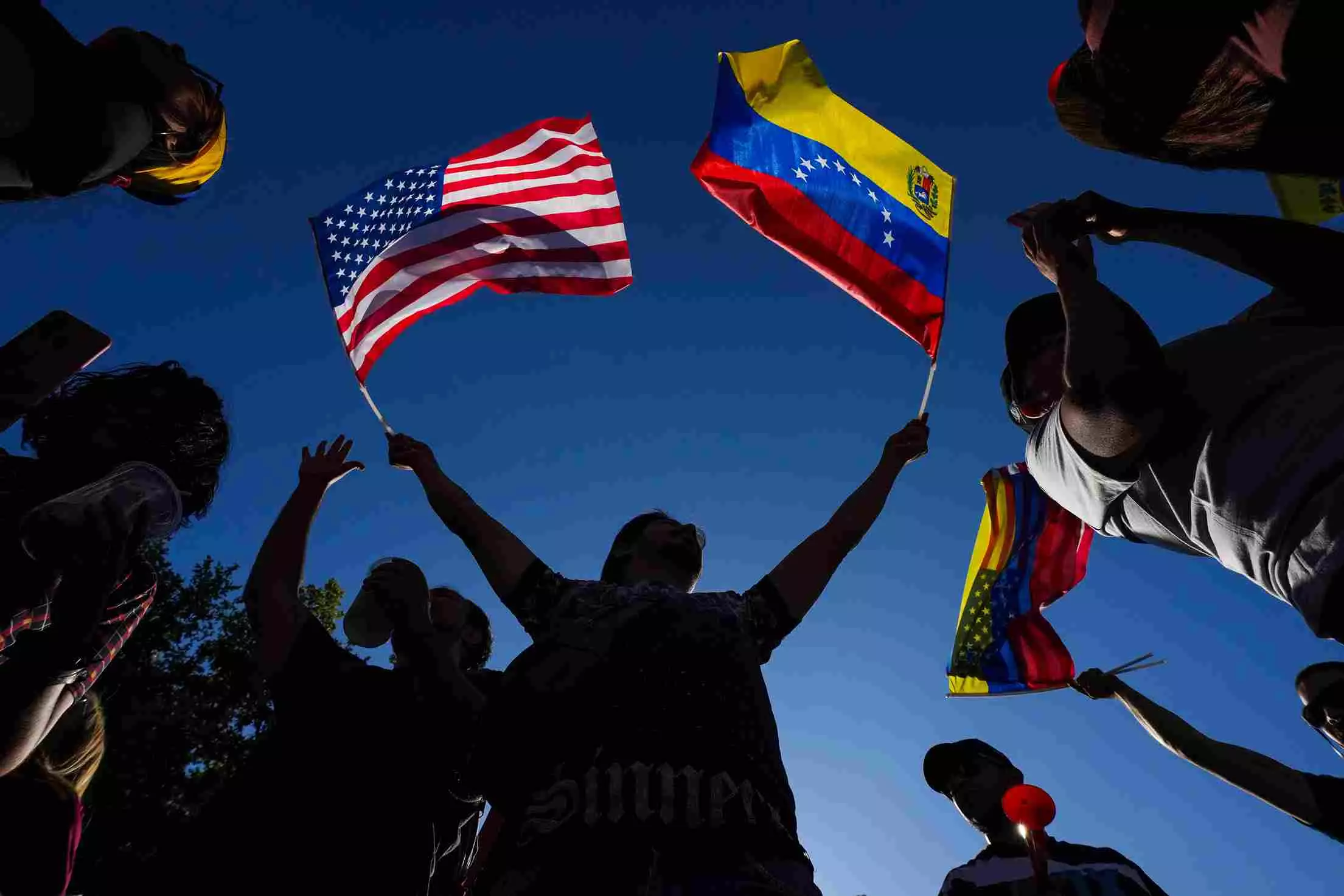
Though Donald Trump’s move caught Nicolas Maduro napping, the possibility of something like this had always been discussed in Venezuela
By attacking Venezuela and kidnapping its President Nicolas Maduro and his wife Cilia Flores, the United States has once again displayed its wilful disdain for international law and for the sovereignty of fellow nations. US President Donald Trump has probably stoked a hornet’s nest with the kidnapping of Maduro, and his intention to occupy Venezuela and take over its oil resources. Turmoil seems inevitable in this oil-rich Latin American nation.
Also read | Trump’s Venezuela gambit revives naked American imperialism
President Maduro, in chains at a US detention centre, may appear like a defeated gangster in a Hollywood movie. But the reality is far more complex. For one, Maduro did not become president by seizing power in Venezuela. He was the chosen successor following the death of his iconic predecessor Hugo Chavez in 2013 due to cancer.
Roots of Chavista power
And, the force that got both into office was a massive social movement that, among other things, was anti-imperialist (read anti-US), pro-worker, and stood for the rights of the marginalised. In the process the Chavistas (as the supporters of Chavez are called, that includes Maduro) angered the well-entrenched, powerful, pro-US business sections within Venezuela, by edging out transnational directors in its already nationalised oil industry.
The Federal offers extensive coverage of the Venezuelan crisis, in text and video. Read the What's Brewing section for quick updates and the Perspective section for incisive opinion pieces.
Chavez who was elected president in 1998, turned out to be a strident anti-US voice in the Latin American region that has been dominated by Washington DC for over a century. So, when Maduro succeeded Chavez in 2013, it was not as if one tinpot dictator of a banana republic had replaced another. In a democratic political process, Venezuelan supporters of Chavez facilitated the smooth transition from one dispensation to another.
Trump, after the “capture” (read kidnapping) of Maduro, had said that Executive Vice-President Delcy Rodriguez, who has formally taken over the reins of power, had indicated she would work with the US to facilitate a smooth transition.
Regime change meets resistance
But Rodriguez in her first reaction, contrary to Trump’s view, seemed as forceful and critical about the US’s actions. She demanded that Maduro and his wife be released immediately, terming the US action as a brazen violation of international law and Venezuelan sovereignty.
At this stage Venezuela is teetering on the edge. Trump’s intervention, which began a couple of months ago, targeting ships off the port of Venezuela moved into the next stage with the kidnapping of Maduro. But, from here on, the path is unclear.
If the initial response of the ruling Chavistas is anything to go by, there is bound to be intense opposition to regime change. Even if Vice-President Rodriguez is forced to play ball with Trump, she may come up with stiff resistance from the rank and file of the ruling dispensation, which is by no means a small number.
Under the umbrella of the United Socialist Party of Venezuela, the ruling Maduro dispensation has been projected by the right-wing, pro-US opposition as a dictatorship with no support beyond a coterie of officials around the now-kidnapped president.
US misreads Venezuelan politics
But a look at recent history shows that the US has repeatedly attempted to dislodge Chavez and Maduro, but to no avail. This is because of the unique nature of politics that brought Chavez, and later, Maduro to power through elections.
Also read | Trump reveals how Maduro was captured, and US plans to ‘run’ Venezuela, sell its oil
Over the nearly three decades that the Chavez and Maduro governments have been in power, they have been backed by a well-organised grassroots network across urban neighbourhoods and rural areas. They are highly politicised and comprise cooperatives, local production and supply networks, peasant-driven markets, besides a score of NGOs who drive the support for the Chavistas. The networks are also well stocked with small weapons ready to be used under threat.
Despite this, Trump finally moved in and kidnapped Maduro. Though Trump’s move caught the President and his supporters napping, that something like this can happen, has always been discussed in Venezuela. After the initial shock, it is a matter of time before the Chavistas organise themselves to resist the US and its actions.
Two paths, rising stakes
So that leaves two dominant possibilities. One, that Vice-President Rodriguez is willing to negotiate some kind of settlement with Trump and then tries to convince the rank and file that a peaceful transition would be in the best interests of Venezuela.
Second, forced by popular pressure, Rodriguez may go all out resisting the US, in which case, Venezuela will be engulfed by turmoil as the right-wing will not want to lose the opportunity to occupy the government at a time when the Maduro government appears vulnerable.
What gives credence to views that it will not be easy for the US to browbeat Venezuela into submission is the incredibly long list of attempts in the last 25 years to depose first, Chavez himself and then Maduro.
In 2002, Venezuelan business backed by a section of the military, did indeed overthrow Chavez in a coup. But that did not last long. Massive public protests reinstated the deposed president. Following this, the US-run petroleum companies in Venezuela went on strike to undermine the economy and oust Chavez, but failed.
No quick collapse ahead
A few years later, in 2019, allegations surfaced of a US plot to overthrow the Maduro government using mercenaries and defectors from the Venezuelan military. But this did not happen. A year later, in Operation Gideon, US-trained rebel Venezuelan soldiers attempted to overthrow Maduro, and failed again.
Also read | What we know about Venezuela’s oil, which Trump wants to ‘fix’ and sell
Last year, under Trump, the US engaged in a massive military buildup and exercises to intimidate the Maduro government. This was followed up by attacking Venezuelan ships using drug trafficking as the reason. That eventually led to the kidnapping of Maduro on January 3.
Besides these overt attempts, the US for the last at least 25 years has generously funded the Venezuelan opposition with a view to destabilising the government in Caracas. It has routinely imposed sanctions on Venezuela’s oil sector and targeted specific officials, but to no avail.
On Saturday, the US Special Forces may have successfully executed their plans in kidnapping Maduro, but this is just another beginning. To expect the Venezuelan government to collapse like a pack of cards would be wishful thinking.
(The Federal seeks to present views and opinions from all sides of the spectrum. The information, ideas or opinions in the articles are of the author and do not necessarily reflect the views of The Federal.)