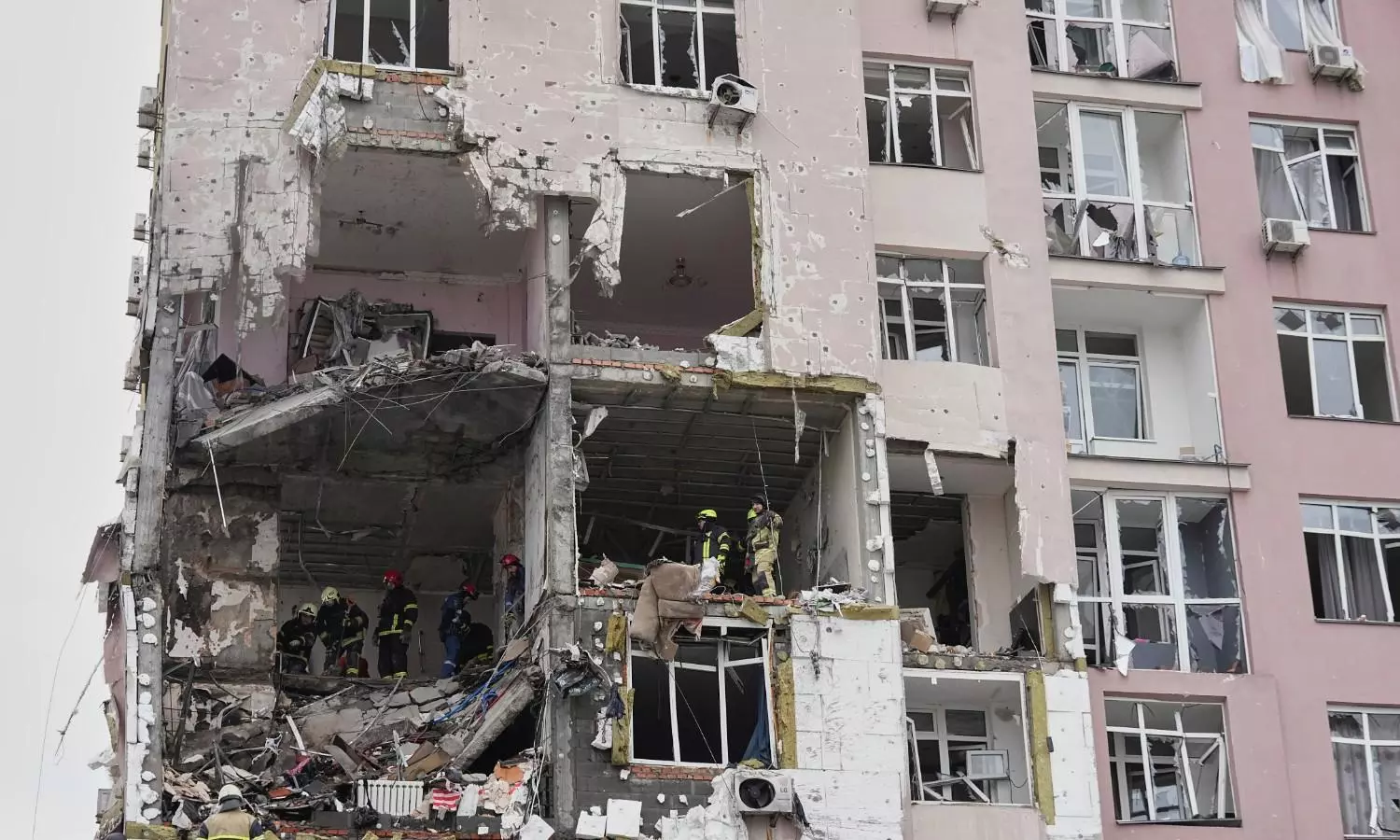
Nato allies have not reacted directly to Russia’s aggressive moves, as that is bound to spiral into a major conflagration. But for how long?
Nearly five years ago, when Russia invaded Ukraine, there were fears that it would trigger a Third World War. The apprehensions remained but subsided once Donald Trump, vowing to end the war, was voted into office as US president. With Trump failing, the war has started to metastasise and may even spread to other parts of Europe, if recent episodes in the conflict are any indication.
Ukraine’s attacks extend the conflict
The latest attack by Ukraine on a state-of-the-art Russian naval destroyer berthed off the Libyan coast is perhaps the farthest that the war has spread to – even beyond Europe into Africa.
Whether Ukraine has broken any unwritten rules of engagement by targeting Russia in neutral territory is open to debate. But Zelenskyy has justified the attack, stating that any Russian military target was fair game, and that such attacks would continue.
Also Read: Five ways the Russia-Ukraine war has changed the world forever
Prior to the attack on the naval destroyer, suspected Ukrainian drones targeted a Russian cargo ship in the Gulf of Finland.
Russia, meanwhile, has been suspected of indulging in cyber-attacks across Europe.
Russian drones have repeatedly violated Ukraine’s neighbours Moldova and Romania’s airspace.
Suspected Russian actions raise tensions across Europe
A slew of violent incidents in Poland have directly implicated Russia – including arson in a Warsaw mall in 2024, the alleged sabotage of the Warsaw-Lublin rail line last November, and a Russian cruise missile that crashed there in June this year, among others.
Russian President Vladimir Putin, who may have expected a quick finish to his aggression on Ukraine, given the previous experience with Georgia, could not have miscalculated more
The Baltic states – Estonia, Latvia and Lithuania – all part of NATO, have also been subject to suspected Russian cyber-attacks, drone incursions and threats to critical infrastructure.
Also Read: Ukraine ready to consider India's ceasefire proposal: FM Sybiha
A big power like Germany too has not been spared, with several incidents in that country linked to Russia since the Ukraine war. These include alleged assassination plots against figures in the German arms industry, a cyber-attack on its air traffic control systems and thousands of suspicious overflights through last year.
Last week, a Russian cruise missile was among three projectiles that landed in Poland, even as an Anglo-French military exercise in support of Ukraine was being conducted around 100km away.
Putin and Zelenskyy misjudged the war
Russian President Vladimir Putin, who may have expected a quick finish to his aggression on Ukraine, given the previous experience with Georgia, could not have miscalculated more.
As for his Ukrainian counterpart, comedian turned politician Volodymyr Zelenskyy, his political inexperience seemed to have led him to believe that the backing of the United States and the Nato nations in Europe would guarantee a defeat for Russia -- one reason why he was not keen on continuing negotiations in the weeks following the outbreak of the conflict, when the window for peace was still open.
Also Read: Ukraine in Iran-like military tactics strikes Russia where it hurts
Both leaders have been proved wrong. The war has reached a stalemate. Putin, who aimed to capture Ukraine’s entire eastern Donbas region to build a buffer for Russia, finds himself stuck, having only partially fulfilled his task – neither able to go forward nor willing to back off.
After all these years of fighting that has taken a toll on both Ukraine and Russia, the danger is that older, bigger differences and mutual suspicion between Russia and other nations in Europe that appeared to have subsided after the end of the Cold War are resurfacing
Ukraine, which bore the brunt of Russia’s more powerful military for at least the first two years, turned to hybrid warfare, complexly changing the character of the conflict. More importantly, Zelenskyy managed to halt Putin in his tracks from further occupation. And that is where it stands.
Trump’s proposals deepen the impasse
So far, the Nato countries have not reacted directly to Russia’s aggressive moves, as that almost certainly will spiral into a major conflagration in no time. Instead, they have upped their financial and military support for Ukraine, frequently assuring Zelenskyy of their commitment to his cause. In fact, it is Europe’s support for Ukraine that has enabled it to resist Trump’s pressure to capitulate to Putin’s demands.
The dubious role of the US president, shifting his loyalties to Putin over Zelenskyy, far from bringing peace, may have proved counter-productive. He has gone on record stating Ukraine should not insist on getting back Russian-occupied territory in the eastern Donbas region in return for an end to the war.
Also Read: Ukraine attacks Russia’s oil hub; 12 killed, 39 injured
Since this was rejected outright by both Zelenskyy and Nato allies in Europe, Trump modified it by saying that in return Ukraine would be absorbed into NATO. Now, this is a red flag for Putin, as it was this issue that provoked him to invade Ukraine in the first place. For Putin, NATO on the doorstep of Russia is an existential threat, so there is little chance of his agreement to this proposal.
In the case of Zelenskyy, it is difficult to comprehend his acquiescence to any peace proposal that involves giving up occupied territory to Russia, Trump or no Trump.
Risk of a wider European war grows
After all these years of fighting that has taken a toll on both Ukraine and Russia, the danger is that older, bigger differences and mutual suspicion between Russia and other nations in Europe that appeared to have subsided after the end of the Cold War are resurfacing.
Nato leaders have repeatedly expressed their view that giving in to Putin’s demands will mean the end of Europe, and this is a primary reason for their staunch backing of Ukraine. Many leaders have made no bones about saying they view Zelenskyy’s war as their own – an indication that the line dividing the Ukraine-Russia war and a larger European war is alarmingly thinning as the war drags on.