If Iran could stall the world’s superpower, USA, and a military powerhouse, Israel, by tweaking the rules of engagement, why not Ukraine against Russia?
Something strange is happening in the Russia-Ukraine war. Nearly 4.5 years since the conflict began, for the first time, Russia appears to be on a slippery slope against a resurgent Ukraine that appears to have taken a leaf out of Iran’s military tactics.
Russia has so far captured vast swathes of land to its west along the Donbas region, amounting to around 20 per cent of Ukrainian territory. During the course of the war, Russia has consistently exhibited superior firepower, even coming close to taking over the Ukrainian capital Kyiv – in the initial weeks of the war.
For much of the initial period of the war, Ukraine, besides losing territory, suffered enormous damage to its infrastructure; many died, scores were injured and thousands had to flee their homes – unable to defend against Russian attacks. The balance was tilted in favour of Russia. It seemed a matter of time before the war ended in Vladimir Putin’s favour. When Donald Trump returned as US president for the second term last year, he vowed to resolve the war through negotiations.
Russia's early advantage
The manner in which Trump went about attempting a peace deal clearly reflected the overall assessment that Ukraine was on the losing side, and that it would be better for President Volodymyr Zelenskyy to give in to Russian demands (of holding on to occupied territory) and end the war.
Also Read: Russia strikes Kyiv, kills nine in overnight missile and drone attack
This was seen in the extraordinary public spat in the Oval Office of the White House between Zelenskyy on the one side and, on the other, Trump and his deputy JD Vance, a few days after the US president took office. In the hot words that followed, the US president rebuked his Ukrainian counterpart’s perceived intransigence, saying he had “no cards left to play with”.
Trump could not have put it more bluntly to Zelenskyy – either settle the war or be prepared to lose. “You are gambling with World War III”, he remarked, to drive his point home. The shouting match occurred on February 28, 2025. Coincidentally, on the same date this year, the US and Israel militarily attacked Iran. And it appears to have had an unintended consequence on the Russia-Ukraine war.
Iran's unexpected lesson
Though militarily no match for the combined power of Israel and the US, Iran, with its unexpected and unconventional strategy of retaliation, stalled the aggressors’ plans. Both Washington and Tel Aviv did not anticipate Iran’s counter – to target US assets in the Middle East region. And, more crucially, in an unprecedented move, block the Strait of Hormuz that throttled the global economy – impacting the US market itself, much to Trump’s consternation.
Also Read: Trump, Zelenskyy discuss Patriot missile production as US deepens Ukraine defence support
Appearing to take a leaf from Iran’s strategy, Zelenskyy, who was frequently shuttling between Europe and the US trying to convince NATO allies to give him bigger and better weaponry, changed track. If Iran could stall the world’s superpower and a military powerhouse by tweaking the rules of engagement, why not Ukraine?
There has been no official comment from Kyiv linking Ukraine’s strategy to that of Iran. In fact, both are on the wrong side of each other. Iran is backed by Russia while Ukraine is supported by the US. Ukrainian missiles a few days ago struck an Iranian cargo vessel in the Caspian Sea, and there were fears it would set off a new war front. However, Ukraine apologised, and the issue died down.
Kyiv changes strategy
But Iran’s strategy is being watched and examined around the world, which includes Ukraine. With Kyiv in a similar position vis-a-vis Russia, it has adopted an Iran-like tactic to resist its powerful neighbour.
Also read: Five ways the Russia-Ukraine war has changed the world forever
Though Ukraine had used military drones targeting Russia much before the Iran war, it had not scaled it up. The first noteworthy Ukrainian drone attack was Operation Spider Web”, more than three years into the war, in June 2025, when 117 remotely-controlled drones were smuggled deep into Russia in bits and pieces, reassembled and then directed to attack a range of targets including high-security air bases that housed top-of-the-line bombers including nuclear-capable fighter aircraft.
The spectacular “Spider Web” operation may have been a direct response to Zelenskyy’s humiliation by Trump and Vance at the Oval Office. This, by itself, however, did not fundamentally alter Ukraine’s military strategy. But, now in recent months, similar to Iran’s resounding fightback using home-made drones and ballistic missiles, Ukraine appears to be following suit, to a point where it has changed the course of the war, attacking Russia where it hurts.
Drone war expands
Ukrainian drones and missiles, by all accounts, have caused havoc in Russia by blowing up military-industrial complexes, oil refineries, key infrastructure within the cities of St Petersburg and Moscow, besides airfields and crucial supply lines.
Also read: Russia snubs Ukraine's unilateral ceasefire, firing dozens of drones
Ukraine claims it has destroyed around 45 per cent of Russia’s oil refining capacity, including scores of storage tanks, with the total loss estimated at around USD 15 billion.
In Russia, common people saw the war with Ukraine as something that was happening outside their borders, far away. But now, they are experiencing the war first-hand with drones bombing civilian targets, including the warehouses of the country’s consumer e-commerce giant Wildberries near Moscow and St. Petersburg.
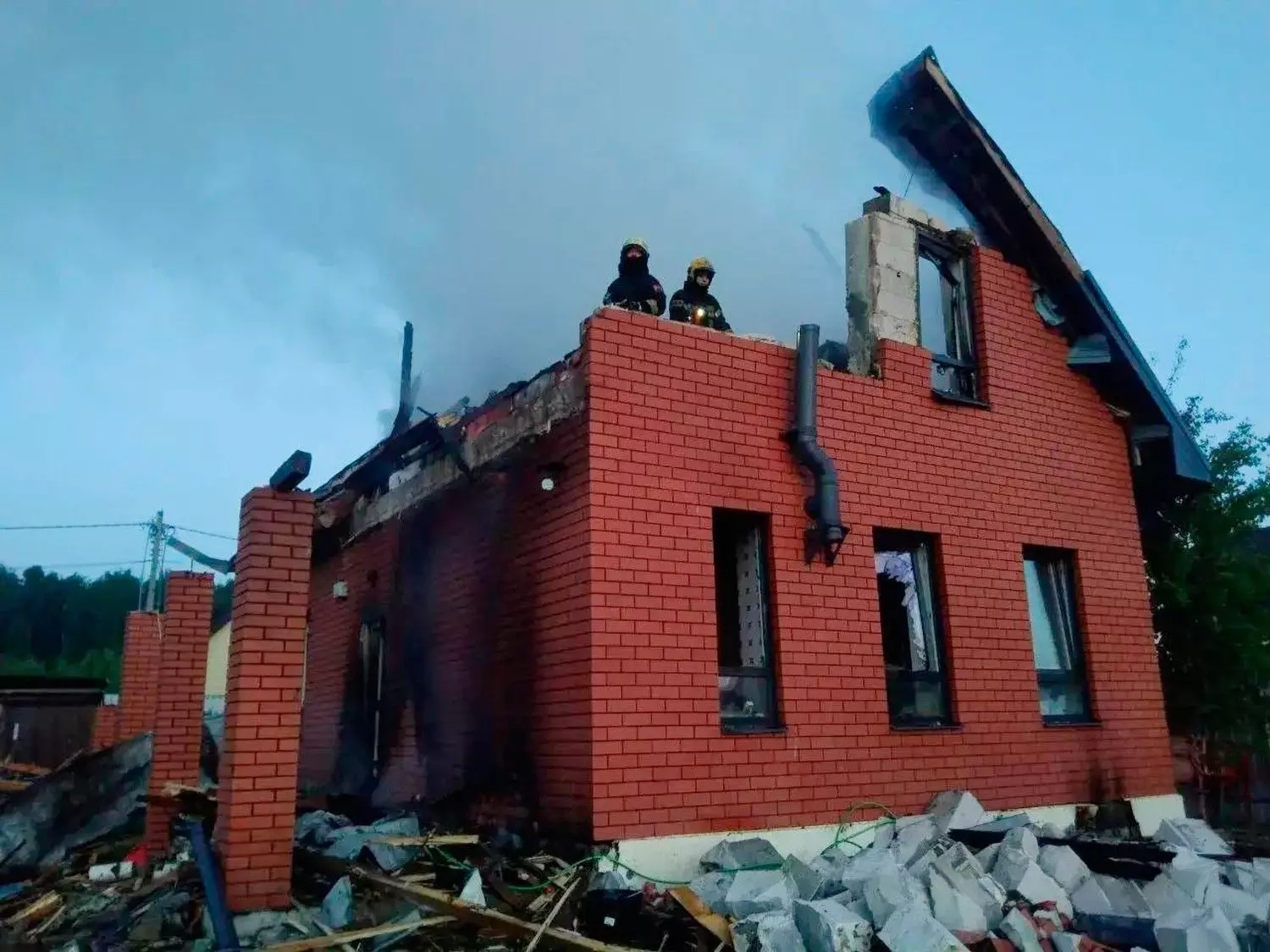
The latest drone attack, as this piece was being written, on a crowded Russian beach, a favourite destination for tourists, has reportedly killed at least seven people.
Pressure inside Russia
Across Russia, there are long queues for oil, and there’s a sense of insecurity everywhere as Ukrainian drones and missiles have shown they can strike anywhere. In Crimea, popular state-supported children’s summer camps that have been held for several years were called off due to the heightened sense of insecurity.
Also Read: Ukrainian strikes set off fires at oil facilities in Russia, Crimea
Even Putin, who has put up a brave front so far, was forced to scale down annual national celebrations like the May 9 Victory Day parade and Navy Day events, fearing aerial attacks – a move interpreted as acknowledgement of Russia’s self-doubt in intercepting Ukraine’s drones.
The Crimean Peninsula, which Russia annexed from Ukraine in 2014, has faced the brunt of Kyiv’s strategy. Missiles and drones from Ukraine have cut off bridges, power lines and roads connecting Crimea to the mainland. Its inhabitants are now suffering from blackouts and food shortages and reportedly feeling isolated.
Western support shifts
Reflecting the changed scenario, Trump during his meeting with Zelenskyy at the Nato summit in Turkey last month seemed to appreciate Ukraine’s resurgence. As an individual who is said to have a natural tilt towards winners in general, Trump suggested that he would allow Zelenskyy to produce the much-sought-after Patriot missile defence interceptors. Earlier, his administration had not responded positively to repeated Ukrainian requests for it.
Not just Zelenskyy, his NATO supporters in Europe too have wisened to the Iran-type strategy of targeting the enemy’s economic assets. Instead of giving conventional weapons alone, they are now supporting the manufacture of missiles and drone systems within Ukraine that are proving far more potent in this war of attrition.
Counteroffensive ahead
Zelenskyy pursued the new strategy in a 40-day window he announced on June 26. With the 40 days almost done, it’s been a huge success, by all accounts. Now that Putin has been sufficiently rattled, Ukraine is now considering its next phase of retaliation – aiming to free land occupied by Putin.
Bolstering this move, reports point out that the Ukrainian missile-drone retaliation has resulted in massive fatalities of Russian soldiers. One estimate quoting the US-based Centre for Strategic and International Studies says Russian casualties have touched at least 30,000 per month this year.
Also read: China, India ‘main culprits’: US Senate advances Bill imposing 100 pc tariff for Russian oil imports
With Russian citizens resisting forced conscription, and the inadequate replacement of existing troops, Putin’s men are apparently stretched thin in the areas Russia has occupied. They have reportedly been able to move just about 100 metres on average each day. Ukraine plans to utilise the thinning of Russian troops to launch counter-attacks and retake lost territory – in a planned manoeuvre starting in September.
Ukraine’s missile manufacturer Fire Point has been quoted as saying that in the next phase they will try to attack Russian missile-producing plants. Not that it will be easy, but the plan is that when fired in large numbers they will be able to overwhelm Russian defences.
Endgame for Moscow?
Even if Ukraine cannot militarily take back all the territory it has lost or occupy fresh areas in Russia, the planners in Kyiv expect the new drone-missile strategy to turn sections of Russians eventually against Putin. In other words, trigger a revolt. Or at least, create a division among Russia’s ruling elite and the deep state – which would force Moscow to end the war.