Iran, having realised the importance of Hormuz, is unwilling to let go. The US demands that Hormuz should be free from Iran’s control. The result: renewed fighting
The US-Israel, Iran war that has been smouldering since the MoU last month has flared up again. Unsurprising, as the agreement attempted a “band-aid” treatment regarding Hormuz rather an incisive surgery to remove the “tumour” of mistrust between the two sides.
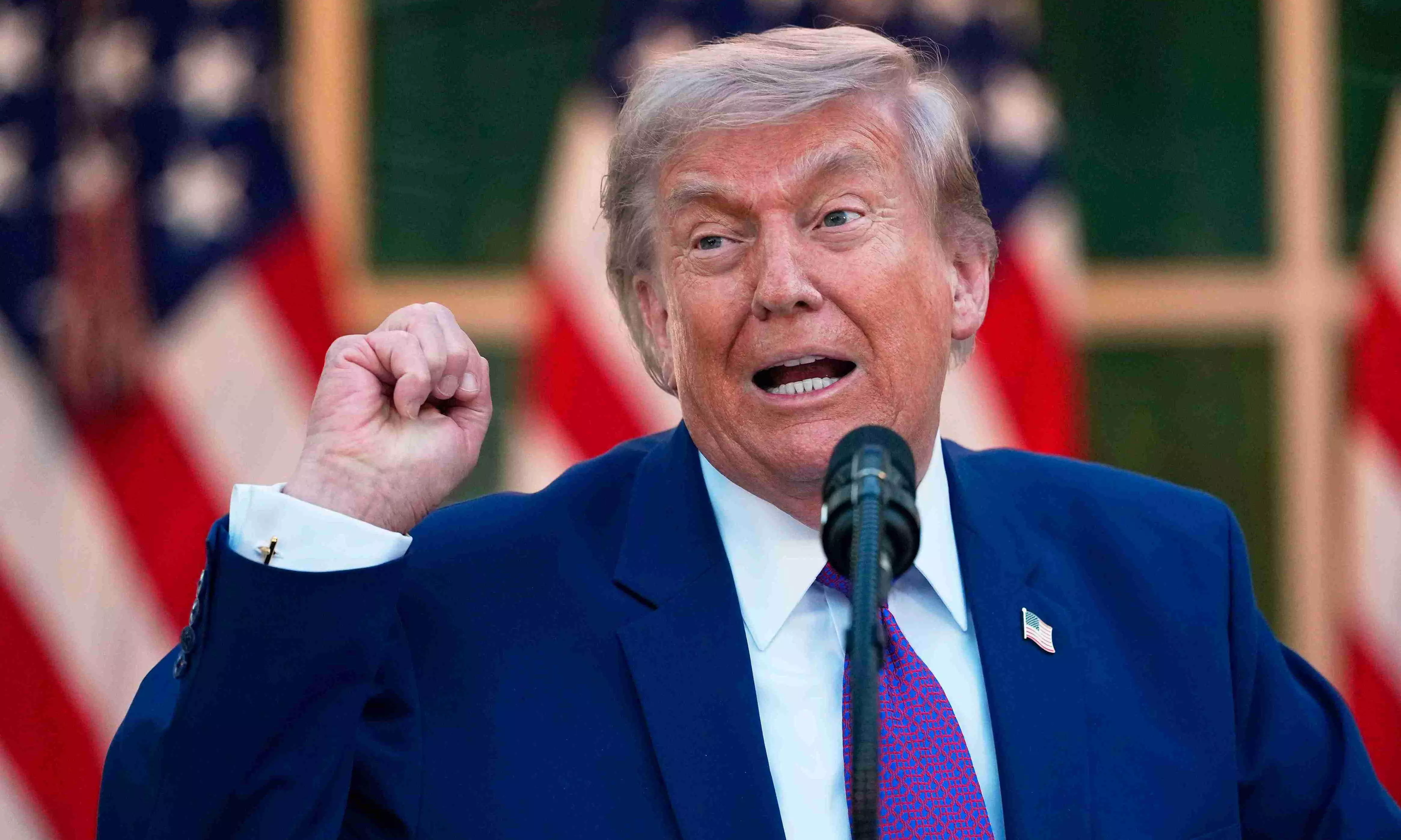
The latest round of US attacks on Iran is centred around the southern coast of Iran, which houses military facilities using which Tehran has attempted to control commercial shipping through the Strait of Hormuz. US President Donald Trump insists it should be free as before. To pressure Iran, he has now declared that the US is the guardian of Hormuz, and will collect 20 per cent toll on all goods being transported through the Strait.
Trump forced to halt strikes
Since the United States and Israel jointly launched military strikes on Iran end-February, the leadership in Tehran realised that the Strait of Hormuz was the trump card it could use to neutralise and halt the attacks. Pursuing this objective, Iran shut the Strait of Hormuz. This directly and immediately affected world economy.
Also read: US reinstates naval blockade on Iran, imposes 20 pc cargo toll on Strait of Hormuz
Under severe pressure from within the US due to rise in oil prices and from allies the world over, Trump was forced to halt the strikes and reluctantly entered into negotiations without being able to fulfil his stated aim of regime change in Tehran and obliterating Iran’s nuclear programme.
For Iran, the key leverage is its hold over the Strait of Hormuz. It has used this to successfully force Trump to do its bidding
Iran, having realised the importance of Hormuz, has held on to it as an important leverage point during negotiations that have been on since the MoU was signed between the US and Iran on June 17. Trump’s team hoped that Hormuz would be freely open to commercial shipping once the talks began. But that hasn’t happened.
According to reports emanating from the negotiations, the US delegation has tried to force the Iranian counterparts to its viewpoint – which is giving up on its nuclear programme in toto besides surrendering enriched uranium stored somewhere safe in Iran. The leadership has repeatedly asserted it will not allow itself to be “arm-twisted” into a deal.
Hormuz not the only obstacle
Amidst this, the other party to the fighting and considered the main instigator, Israel, initially refused to stop bombing Lebanon. After much pressure on Trump who in turn browbeat Israeli Prime Minister Benjamin Netanyahu into submission, it stopped bombing Iran. But Israel has refused to fall in line with Trump on the issue of stopping strikes on Lebanon.
Also read: Israel warns US of alleged Iranian plot to assassinate Donald Trump: Report
For Iran, the key leverage is its hold over the Strait of Hormuz. It has used this to successfully force Trump to do its bidding. The US, realising this, is now attempting to militarily force the issue by attempting to ensure that Iran does not anymore have the capability to enforce its diktat on Hormuz.
Ironically, while Hormuz is the stumbling block now for an eventual agreement between the US and Iran, that is not the only obstacle. Fundamentally, the mutual distrust and near-hatred between Iran and the Israel-US combo are nowhere near being addressed either in the negotiations or form part of the framework of the MoU. In fact, the MoU has been pejoratively renamed the “Memorandum of Misunderstanding”.
Iran hopes that, like earlier, the regional countries will apply pressure on the US to stop its strikes. But these countries are in a fix as they do not want Iran to control shipping through the Strait of Hormuz
The US, for instance, has not had a diplomatic relationship since 1979. Israel, which considers Iran as its major threat in the region, wants the Islamic theocratic dispensation to change into something more liberal and moderate. Both want Iran not to continue with its nuclear programme, and even if it did, to be under close international supervision – after giving up all its enriched uranium.
When will mediation resume?
The MoU gave the warring parties 60 days – by August 17 – to reach a deal. The current flare-up is happening at a time when negotiators were given a recess to enable Iran to bury its assassinated supreme leader Ayatollah Khameini. Now that fighting has resumed it is not clear when the mediation will resume. It may be rhetorical but there are sections within Iran that are demanding revenge against the US and Israel for his killing. Whether this is possible or not, this gives a sense of the dark mood at least among a section of Iranians that complicates the situation further.
Also read: Trump may claim victory but MoU shows Iran had the last laugh
The only counter to the hopeless situation is the pressure from Iran’s neighbours in the Gulf region who have been caught in the cross-fire right through the war. Iran views US allies in the Gulf as the other key leverage besides Hormuz and has resumed attacking US military bases or other US-linked targets in the UAE, Qatar, Oman, Kuwait, Bahrain and even farther away in Jordan.
Iran hopes that, like earlier, the regional countries will apply pressure on the US to stop its strikes. But these countries are in a fix as they do not want Iran to control shipping through the Strait of Hormuz. At the same time, letting the fighting continue is bound to further damage the Gulf nations which are already paying a price for destruction they suffered to oil and gas facilities besides random hits on their airports and cities.
Also read: US-Iran peace deal: Here's full transcript of MoU
The latest flare-up, that has been on since the last three days, therefore shows up limitations to the MoU. Unless it includes elements in it that would address long-pending issues like the restoration of mutual trust and belief in mutual diplomacy it leaves little choice but to conclude that the MoU is simply not enough to stop the war. The failure to resolve the Hormuz tangle is just one indication of what the problem is all about.