







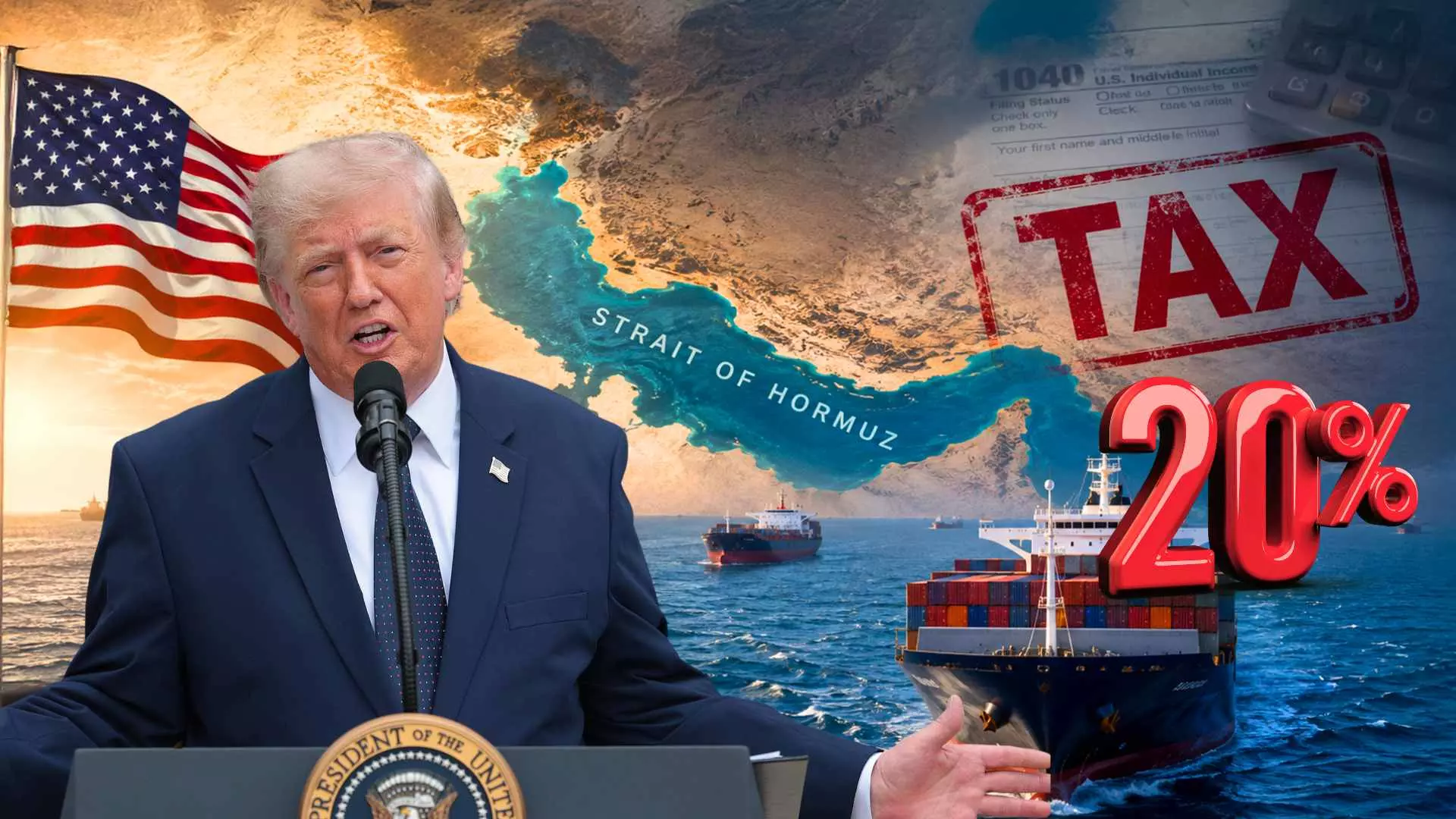
US reinstates naval blockade on Iran, imposes 20 pc cargo toll on Strait of Hormuz
Trump declares America as the “guardian of Strait of Hormuz”; Iran vows resistance as global oil trade reels from renewed conflict and economic dispute

A major escalation in West Asia has again pushed the United States and Iran to the brink of a full-scale war, with Washington officially reinstating its naval blockade on Iranian ports. The military enforcement begins today (July 14) at 8 pm IST, following an announcement by US President Donald Trump that the United States will take control of the strategic Strait of Hormuz.
During his announcement, Donald Trump declared that the United States is now the "guardian of the waterway." To cover regional security costs, the US President announced a mandatory 20 per cent toll on all cargo transiting through the strait.
This current crisis stems from a conflict launched by the United States and Israel against Iran in February. The warfare heavily disrupted transit through the Strait of Hormuz, a critical maritime route that handles one-fifth of global oil and gas supplies.
Broken peace talks
Although both nations signed a memorandum of understanding in June to temporarily pause the fighting and lift the initial blockade, peace talks quickly collapsed. Both sides remained locked in bitter disagreements over who holds the legal right to manage the strategic waterway.
Also read: Publicly guarantee safe passage for ships through Strait of Hormuz: US tells Iran
Tensions reached a breaking point following a series of military actions. Iran attacked a container ship in the strait and launched strikes against US military sites in Bahrain, Kuwait, Oman, and Jordan.
In response, the US military retaliated heavily by striking Iranian port cities, air defence systems, and missile installations. Following these strikes, Trump warned that the initial peace agreement is "officially over."
High-stakes economic dispute
With the military conflict reignited, the battlefield quickly transitioned into a high-stakes economic dispute over the waterway's control. However, Trump's plan to collect cargo transit fees faced immediate pushback from the International Maritime Organization, which rejected the legal basis for the tolls and stated that international law guarantees free navigation through the strait.
Iranian Foreign Minister Seyyed Abbas Araghchi also mocked the American proposal, countering that Iran is the "true guardian of the strait." Araghchi added that a 20 per cent fee is "far too high" and promised that Iran would charge a "much fairer rate."
Also read: MEA condemns attack on ship off Oman coast; 11 Indians rescued, 1 missing
Consequently, commercial shipping traffic through the strait has already suffered a drastic decline, causing global oil prices to fluctuate rapidly. The international community now faces deep uncertainty as the coming days will determine whether diplomacy can be salvaged or if the region will slide into a prolonged economic and military crisis.