As Devendra Fadnavis surpasses Sharad Pawar’s tenure as CM, his rise, political transformation, Delhi ambitions and rivalry with Shinde come under focus
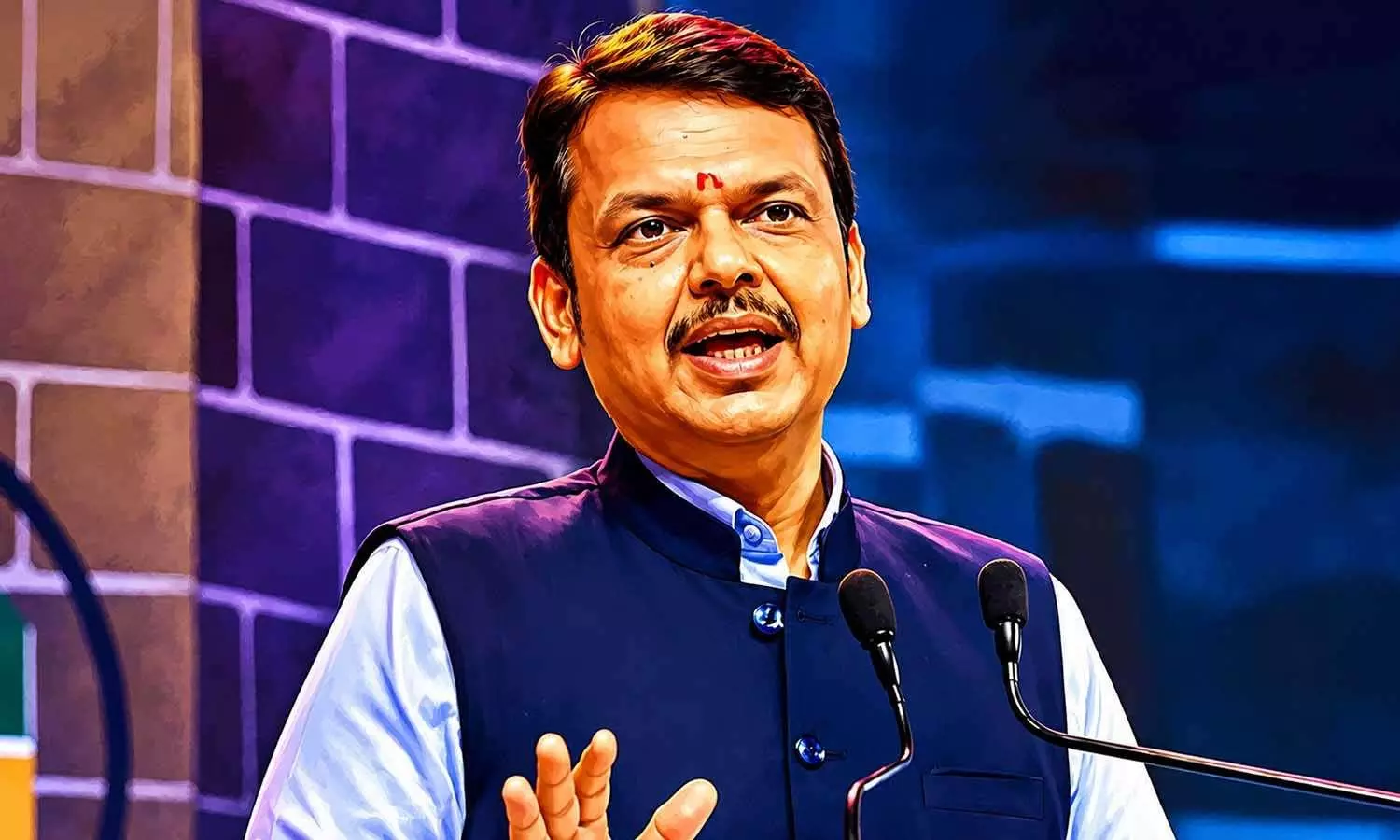
Maharashtra Chief Minister Devendra Fadnavis has crossed a political milestone, overtaking arguably the state’s tallest politician, Sharad Pawar, in terms of tenure as the chief minister.
The milestone comes at a particularly intriguing moment, with speculation rife that Pawar’s Nationalist Congress Party (NCP-SP) is gravitating towards the BJP even as Fadnavis himself is said to be facing the possibility of a shift to Delhi.
Fadnavis overtook Pawar’s record of about 6.6 years in four different stints between 1978 and 1995 in his (Fadnavis’) two tenures as CM beginning in 2014.
Contrasting routes to power
Of course, the careers of the two differ in many ways. While Pawar belongs to the liberal democratic tradition of politics, Fadnavis is a product of the Rashtriya Swayamsevak Sangh (RSS), whose ideology is the antithesis of liberalism and democracy.
Also read | Maharashtra moment: Is Fadnavis BJP's best bet after Modi?
Pawar belongs to the sugarcane-rich co-operative belt of West Maharashtra, and Fadnavis comes from the farmer-suicide belt of Vidarbha.
While Pawar has traditionally wielded great influence in the rural areas of Maharashtra, Fadnavis honed his political skills entirely in an urban milieu in Nagpur, Maharashtra’s third-biggest city, before becoming CM.
While Pawar catapulted himself to the CM's post through political manoeuvring of his own, heading the Progressive Democratic Front government in 1978 after rebelling against Congress (Urs) to become the youngest to occupy that chair, Fadnavis’ surprise ascent to the post was scripted in Delhi by Prime Minister Narendra Modi and his confidant Amit Shah, who didn’t want senior BJP stalwart Nitin Gadkari to become CM owing to the latter’s uncomfortable intra-party association with the former.
In other words, Fadnavis owed his rise more to the BJP's internal politics than to having made himself the party’s indispensable choice.
Most importantly, Pawar belonged to the traditional ruling Maratha caste, while Fadnavis is a Brahmin, which was till then considered the unlikeliest caste to have one of its members chosen for the top job in the state, the exception of Manohar Joshi of Shiv Sena in the '90s notwithstanding.
Power, survival and endurance
One record of Pawar, though, remains, and is likely to remain, unbroken—that of being the youngest to become CM at 38. Fadnavis, at 44, too, was very young, but not as young when he first became CM in 2014.
Another distinction that marks the two careers is the about 2.5 years of deputy chief ministership Fadnavis had to handle between 2022 and 2024, when the party leadership decided to make Shiv Sena turncoat Eknath Shinde the CM as a reward for siding with the BJP by rebelling against Sena chief Uddhav Thackeray.
Over the last twelve years, Fadnavis has proved to be a great survivor and a ruthless manipulator ready to go to any length to achieve his goals.
Pawar had never served as Deputy CM. Of course, Pawar has stood the test of time as a politician of consequence both in the state and at the Centre for about six decades.
Fadnavis still has a long way to go to match the endurance record of the grand old man of Maharashtra’s politics.
Fadnavis, though, has shown great political skills, often punctuated by a mercenary approach masquerading as killer instinct, to keep an iron grip on power. In doing so, he has also been accused of clipping the wings of many of his own party colleagues like Eknath Khadse, Pankaja Munde, Sudhir Mungantiwar and Vinod Tawade.
Over the last twelve years, of which he has been the CM in two stints—2014-19 and from 2024 till date—Fadnavis has proved to be a great survivor and a ruthless manipulator ready to go to any length to achieve his goals.
Politics over governance
But this journey hasn’t been uniformly so. His initial stint of five years as CM of the BJP-Shiv Sena (before the split) alliance government, which incidentally was only the second complete five-year term for any Maharashtra CM after Vasantrao Naik (1963-75), saw an urbane and suave Fadnavis focus more on governance than politics.
Circumstances, however, forced him to change tack and cast off sophistication for the mercenary approach that he, like many in the BJP, thinks is necessary to survive not only in inter-party politics but in intra-party politics too.
He did what serves any BJP leader the best - don the mantle of strident Hindutva and dismantle Opposition parties. The first target was Shiv Sena, the BJP’s ally of 25 years, which had left the alliance over the BJP’s refusal to share the CM’s post after the alliance's victory in the 2019 Assembly elections.
Also read | 'Operation Devendra'? Uddhav Thackeray links MPs' exit to Fadnavis' PM prospects
In an operation of unprecedented scale, he broke the party into two by enticing Eknath Shinde and 40 of Sena’s 56 MLAs. This was followed by a well-orchestrated operation of robbing the original Shiv Sena, led by Uddhav Thackeray, of both the party’s name and election symbol. A huge transfer of money - allegedly Rs 50 crore per MLA - was also allegedly executed during the engineered defection.
This subsequently became the template for the BJP for the next rounds of Opposition burglary not only in Maharashtra but also in other states.
But this massive undoing of Shiv Sena, though it successfully brought the curtains down on the MVA government in June 2022, didn’t accrue the CM’s post to Fadnavis, who had to eat the proverbial humble pie and settle for the Deputy CM’s post under Eknath Shinde.
Power struggle within BJP
His famous “I will return” thunder after the 2019 Sena dissociation did prove true, but in a humiliating manner, thanks to Delhi ordering him to take up responsibility as Shinde’s deputy.
This also started the buzz that the Delhi leadership of the party, Amit Shah in particular, had started getting wary of his rising stature in the party as a new Chanakya, the sobriquet monopolised by Shah.
Another challenge for Fadnavis is Shinde's reported proximity to Amit Shah. His frequent trips to Delhi have only fuelled the suspicion that Shah uses Shinde as a counterweight.
The 2024 Lok Sabha elections were yet another blow to his rising graph, with the BJP winning only nine of the 48 seats. But six months down the line, Fadnavis led a massive BJP resurgence in the Assembly elections, winning 132 seats for the party in the 288-member House. This once again raised his prestige to a level where Delhi had to put him back in the CM’s chair and relegate Shinde to the Deputy CM’s post.
This left Shinde sulking since it was a demotion from the CM’s post he had held before the elections. A cold war ensued between the two for one-upmanship that continues till date.
To add to Fadnavis’ challenge is the close proximity Shinde reportedly enjoys with Amit Shah. His frequent trips to Delhi, often by skipping important Cabinet meetings, have only fuelled the suspicion that Shah uses Shinde as a counterweight against Fadnavis. Shinde uses this internal dynamic of the BJP to his advantage.
Fadnavis has tried all possible tricks to put Shinde in his place, first by engineering a split in the NCP and getting a huge chunk of the party led by Ajit Pawar to join the alliance. This, of course, made Shinde jittery since the BJP could now survive without him.
But Shinde kept playing his Delhi connections well to keep up his political capital.
From poise to provocation
Grapevine has it that the frequent episodes of the Maratha quota stir by community leader Manoj Jarange Patil had Shinde’s blessings. Aware of his political vulnerability as a Brahmin, Fadnavis weathered the storm fuelled by Jarange’s selective diatribe against him with great patience and poise.
The agitation has, meanwhile, apparently slipped into a state of hibernation.
Fadnavis has since only added to his political weight by continuing to get more Opposition leaders on the BJP’s side and also winning several rounds of urban and rural local body elections for the party.
He has also made the right noises to strengthen his pro-Hindu credentials and placate his Hindutva gurus at Nagpur’s RSS headquarters by letting loose the fanatic fringe like Sakal Hindu Samaj and even Cabinet ministers like Nitesh Rane.
His government also enacted pro-Hindu legislation like The Maharashtra Freedom of Religion Bill that mandated individuals intending to convert to another religion to give a 60-day prior notice to the competent authority.
Fadnavis also resorted to pedestrian language while challenging his opponents. His recent unparliamentary “Bhade ke tatte” (hired asses) and “dekh lunga” (will teach a lesson) remarks in the state Assembly received a huge social media backlash.
But Fadnavis seems to be unperturbed. Call it hubris, but his transformation from a suave and studied politician known for his informed speeches as an MLA into a crude talker has truly been a picture of spectacular self-degradation.
He seems to have consciously developed this crudeness as some sort of a necessary prerequisite to survive and progress in the BJP's brand of politics.
Delhi dreams, Maharashtra constraints
But while taking control of Maharashtra’s politics with his wily and ruthless moves, Fadnavis has been silently nursing the ambition for a higher place in the BJP's hierarchy. His proximity to the RSS since childhood, his strong academic and intellectual credentials, his well-established go-getter ability and, above all, his young age, have made him a man to watch in the BJP’s future scheme of things.
The recent talk of the likelihood of his being shifted to Delhi may be more to suit Delhi's plans than Fadnavis' own effort to get a step closer to where he probably wishes to be.
Many believe the RSS, which once failed to prop another of its able swayamsevaks, Gadkari, to the top in the BJP due to an alleged financial scandal that forced Gadkari’s return to Nagpur from Delhi in 2012, is this time keen to push Fadnavis to the top job in Delhi.
But the recent talk of the likelihood of his being shifted to Delhi may be more to suit Delhi’s plans than Fadnavis’ own effort to get a step closer to where he probably wishes to be. The latest speculation that Sharad Pawar's NCP is likely to join the NDA and the state and Union cabinets is more likely to cause concern to Fadnavis than excitement. This is because the Shinde Sena has fortified its position following six Shiv Sena (UBT) MPs joining it in what Shinde described as his party’s ‘Operation Tiger’, raising its strength in the Lok Sabha to 13 and thereby gaining more bargaining power in the state as well as at the Centre.
And now, if Sharad Pawar’s NCP joins the NDA, it could also join the state Cabinet and lay its hand on some key ministries like finance, currently held by Fadnavis himself.
These developments have apparently dampened Fadnavis’ spirit since he had declared just a few days ago that the doors of the BJP are now closed for new entrants.
Ambition meets political reality
Delhi, which views Fadnavis as the RSS’s next choice for greater responsibility at the Centre after its failed Gadkari experiment about 15 years ago, might again try to cut Fadnavis to size by calling him to Delhi and replacing him with Shinde, who is just waiting for his new moment in Maharashtra's sun.
Also read | Fadnavis emerges as key strategist; BJP will have 17 Mayors
With the BJP under Modi and Shah unlikely to acquiesce to any RSS move to push Fadnavis for the PM’s job in 2029, it will make Fadnavis’ stay in the BJP that much more difficult.
How he will then negotiate the complex web of personal ambition tangled in the party’s internal politics remains to be seen. As such, his attempt for now would be to stay back in Maharashtra as CM rather than take up any Delhi assignment.
He had once said he will remain in the state till 2029. Only he knows if that means he plans to graduate to the next level in Delhi in 2029 or he simply doesn’t want to leave the state at least till 2029.
(The Federal seeks to present views and opinions from all sides of the spectrum. The information, ideas or opinions in the articles are of the author and do not necessarily reflect the views of The Federal.)