BJP reluctant to use resignation as tool for accountability as it will reflect poorly on PM Modi, set unsustainable precedent, defeat image BJP built for itself before coming to power
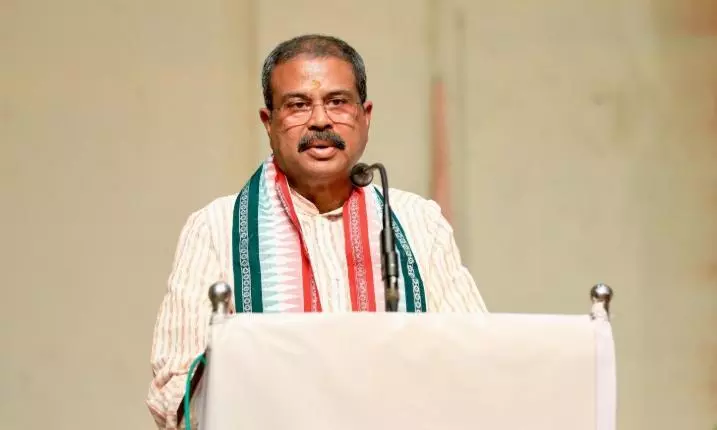
On Monday (July 20), two representatives of the Cockroach Janta Party (CJP) met Union Minister JP Nadda at his residence and submitted a memorandum with three demands: the release of Sonam Wangchuk; compensation of Rs 1 crore for the family of each NEET aspirant who died by suicide; and the resignation of Union Education Minister Dharmendra Pradhan. Nadda asked for time to consult the party leadership. The government's eventual response to each of these three demands will differ, and that difference is important.
BJP abandons own instrument
In 2012, the BJP shut down Parliament for several days, demanding the resignation of then Prime Minister Manmohan Singh over the coal block allocations. It pursued then Telecom Minister A Raja until he resigned over the 2G spectrum case, and it campaigned for months for the removal of then Maharashtra Chief Minister Ashok Chavan over the Adarsh Housing Society scam, until he too resigned. The same party now declines to apply that standard to itself.
In roughly 12 years of the Modi government, no Union minister has resigned in response to a live public demand for accountability. This holds across the Rafale controversy, the Nirav Modi-PNB fraud, and the Pegasus allegations.
Also read: ‘Is this not our country’: What CJP protesters said as they defied police crackdown
Does the BJP still regard resignation as a legitimate instrument of accountability? The available evidence suggests otherwise. Over more than a decade in office, the government has abandoned that instrument altogether, and its conduct in the current controversy should be read in that light.
No accountability, no resignations
In roughly 12 years of the Modi government, no Union minister has resigned in response to a live public demand for accountability. This holds across the Rafale controversy, the Nirav Modi-PNB fraud, and the Pegasus allegations. Ajay Mishra Teni's case followed the same pattern. His son was named in the killing of protesting farmers at Lakhimpur Kheri in 2021, yet Teni remained in the ministry for three more years, until he lost his Lok Sabha seat in 2024.
Under Manmohan Singh, a minister's resignation was understood as an individual failure, because the government was composed of separately accountable figures. The current government is structured differently: policy outcomes, successes, and failures alike are attributed principally to the prime minister.
The one large-scale ministerial exit of this period, the 2021 reshuffle in which then Health Minister Harsh Vardhan and 11 others left office, is often cited as a counter-example, but does not withstand scrutiny. The reshuffle occurred several weeks after the worst of the second Covid wave, was presented as a routine administrative exercise, and several outgoing ministers were subsequently appointed governors. No minister left office while the crisis that would have justified his departure was still unfolding.
Also read: Why CJP’s protest stands apart from previous mass movements
This differs from the pattern under the UPA government, under which Raja and Chavan resigned during active scandals, and Shashi Tharoor resigned (as Minister of State for External Affairs) within days over an IPL bid controversy in 2010. The comparison concerns which government treats resignation as a working mechanism of accountability, more than which government was more prone to corruption.
Minister’s failure is PM’s failure
Three factors help explain why the present government has set that mechanism aside. The first concerns the structure of authority within the government. Political scientists describe the tendency of parliamentary systems to concentrate power in a single leader as presidentialisation.
Under Manmohan Singh, a minister's resignation was understood as an individual failure, because the government was composed of separately accountable figures. The current government is structured differently: policy outcomes, successes, and failures alike are attributed principally to the prime minister. A resignation by Pradhan would, therefore, not be read simply as the removal of an underperforming minister. It would be read as an admission that an appointee of the prime minister had failed under the prime minister's direct oversight. The government has a strong incentive to avoid that reading, regardless of the case's underlying facts.
Reluctance to set precedent, break image
The second factor is precedent. A government that oversees a large number of ministries can expect further controversies in the future. Conceding a resignation in this case would establish a precedent that could be invoked in each subsequent controversy. Refusing to concede it now, even at reputational cost in this particular case, is likely calculated to be less costly over time than establishing that precedent.
Meeting of CJP representatives with Nadda produced no commitment on any of the three demands by outfit. However, it generated a headline suggesting the government was engaging with the protesters.
The third factor concerns the political identity the BJP built for itself before coming to power. The party's 2014 campaign was built substantially on the claim that the UPA government was defined by corruption and by ministers who would not leave office despite serious allegations against them. The promise, in effect, was that a BJP government would not produce ministers of that kind.
Also read: A warning shot for 2029? Why Delhi protests hold key for Opposition too
Power of refusal
These three factors suggest that the government's response reflects selective accommodation rather than indifference to public pressure. The release of Wangchuk costs the government little; compensation for the families of NEET aspirants involves a financial cost the government has not historically been reluctant to bear, and can be presented as an act of compassion rather than as an admission of ministerial failure. Pradhan's resignation is the one demand that addresses the structural, precedential, and reputational concerns described above and is accordingly the one the government is unlikely to meet. Monday's meeting with Nadda produced no commitment on any of the three demands. However, it generated a headline suggesting the government was engaging with the protesters, which may itself have been the intended outcome.
The more consequential development is not the government's refusal but where the demand has migrated as a result of that refusal. It has moved from Parliament to Jantar Mantar, to a hospital ward, and to a protest movement that has drawn more sustained public attention than the formal Opposition. What must be remembered is that when an institution ceases to function as a channel for accountability, the demand for accountability does not disappear. It continues to seek expression through other means.
(The Federal seeks to present views and opinions from all sides of the spectrum. The information, ideas or opinions in the articles are of the author and do not necessarily reflect the views of The Federal)