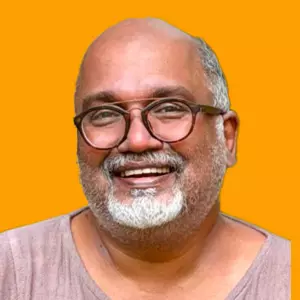
Salim Kumar obit: The face that laughed, wept, and lingered in Kerala’s memory
Salim Kumar, the actor who bridged Kerala’s laughter and silence, dies at 56 while battling pneumonia, leaving behind a legacy across stage, screen, and meme

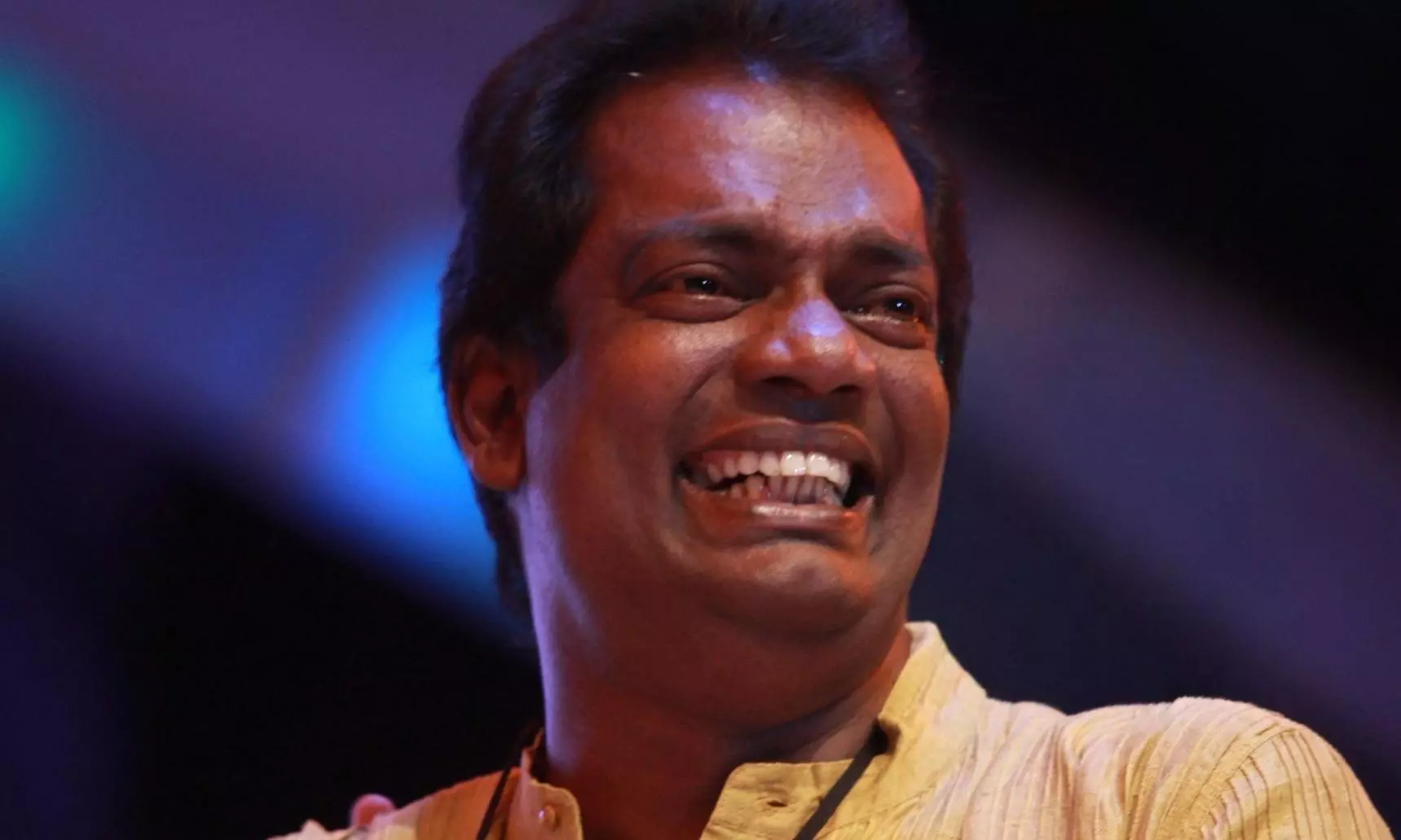
If you scroll through Malayalam meme culture of the past decade, one face refuses to fade into the background. It flickers, reappears, reshapes itself across contexts. Absurd, biting, vulnerable, or quietly devastating. That face is Salim Kumar. Few actors in Malayalam cinema have travelled such a wide emotional distance, from uninhibited laughter to deep stillness, with such ease.
He began as a man of the stage. A mimicry artist who found rhythm in voices, gestures, and the everyday theatre of Kerala life. Long before cinema found him, audiences did. College festivals, mimicry circuits, and the cultural spaces of Ernakulam became his early training ground.
At the MG University youth festivals, he did not just participate. He dominated, winning first place three consecutive times. Those years were not only about performance. They were about observation. The faces, dialects, quirks, and contradictions that would later define his screen presence were gathered there.
Story behind his name
Born on October 10, 1969, in Chittattukara, Ernakulam, to Gangadharan and Kausalya, even his name carried a story. His father, an ardent admirer of social reformer Sahodaran Ayyappan, chose “Salim” so that religion could not be easily inferred from it. It was later, in school, that a teacher insisted on adding “Kumar”. The name stayed, and it would go on to become one of the most recognizable in Malayalam popular culture.
Also read: Drishyam 3 review: Finally, Georgekutty slips; Mohanlal stands tall
Cinema entered his life almost incidentally. A day after his marriage to Sunitha in September 1996, he received his first call to act in a film. His debut came with Ishtamanu Nooru Vattam. What followed was a steady rise through comedy. Films like Meesha Madhavan, Kalyanaraman, Pulival Kalyanam, Thilakkam, Chathikkatha Chanthu, and CID Moosa made him a familiar presence. He was not merely a comedian delivering lines. He became a rhythm within the film, a disruptive energy that audiences anticipated.
His comedy was rarely flat. Even at its most exaggerated, there was an underlying observation of people and systems. Characters could be ridiculous, but they were never entirely hollow. That is perhaps why his transition into deeper roles felt organic rather than forced.
The turning point
The first major turning point came with Achanurangatha Veedu. In that film, he played Samuel, a struggling father of a sexual assault survivor. It was a performance stripped of excess. There was pain, dignity, and a quiet endurance that stood in stark contrast to his comic persona. The role earned him the Kerala State Award for Second Best Actor in 2005 and signalled clearly that Malayalam cinema had only begun to understand his range.
What followed was not an abandonment of comedy but an expansion of it. He continued to take on humorous roles, but the texture changed. There was often a sadness beneath the laughter, a vulnerability that lingered after the joke had passed.
Then came the defining performance of his career in Adaminte Makan Abu. His portrayal of Abu, an ageing attar (perfume) seller with a lifelong dream of performing the Hajj, was built on restraint. There were no exaggerated gestures or vocal flourishes. The power of the performance lay in stillness, in the way silence carried meaning. In 2010, he won both the National Film Award and the Kerala State Award for Best Actor for this role. It remains one of the most quietly powerful performances in Malayalam cinema.
Also read: Veteran Malayalam actor Santhosh K Nayar killed in road accident
Recognition followed in other forms as well. He won the Kerala State Award for Best Comedian in 2013 for Ayalum Njanum Thammil, reaffirming that his command over humour had not diminished. In the same year, he received the State Television Award for Best Actor, reflecting his presence across mediums.
Willingness to experiment
His creative pursuits extended beyond acting. He wrote and directed films, exploring stories from his own perspective. Karutha Joothan earned him the Kerala State Award for Best Story in 2016. His directorial ventures such as Compartment and Daivame Kaithozham K Kumar Akanam revealed a willingness to experiment, even when outcomes were uneven.
Yet, awards and filmography alone do not capture his cultural presence.
Salim Kumar exists as much in everyday conversation as he does on screen. His expressions have become part of the visual language of Malayalam memes. A glance, a pause, a shift in tone can convey entire situations. These fragments circulate widely, detached from their original contexts, yet retaining their emotional clarity. Few actors achieve this kind of afterlife in popular culture.
At the same time, it would be limiting to see him only through that lens.
Also read: Court grants bail to Malayalam film director Ranjith in sexual harassment case
What defines his journey is the coexistence of extremes. He did not move away from comedy in order to be taken seriously. He deepened it. He allowed humour and sorrow to exist side by side, often within the same character. His Abu is as authentic as his most exaggerated comic role. Between these two poles lies the true measure of his craft.
End of journey
Salim Kumar died at the age of 56 around 10.43 pm on Saturday (June 6) at a private hospital in Kochi while undergoing treatment for pneumonia. The actor, who had undergone a liver transplant a few years ago, was admitted to the hospital earlier in the day and was placed on ventilator support.
He is survived by his family, including his wife Sunitha and their sons Chandu (also an actor) and Aromal. Beyond that, he remains part of Kerala’s shared memory. A presence that continues to live in theatres, on television screens, and in the everyday language of humour.