



BJP says Congress ‘hyperventilating’ on UPI MDR; ‘6 of its MPs part of decision’
Party says Rahul 'misleading' nation by alleging US role in Centre's move, asks why Congress is protesting now when P Chidambaram himself was in Parliamentary panel that made recommendation

The ruling BJP has rejected Congress leader Rahul Gandhi’sallegation that the Centre introduced the merchant discount rate (MDR) on UPI payments under American pressure, while asserting that the decision was taken only after its sustainability was studied and approved by a Parliamentary committee that had at least six Congress MPs, including former Union finance minister P Chidambaram.
‘Congress hyperventilating’
In a stinging post on X on Thursday (September 17), the party accused Rahul of misleading the nation through his allegations.
Congress is hyperventilating over UPI MDR, and Rahul Gandhi is misleading the nation by presenting it as some sudden decision taken under American pressure.
— BJP (@BJP4India) September 17, 2026
𝐁𝐮𝐭 𝐡𝐞𝐫𝐞 𝐢𝐬 𝐰𝐡𝐚𝐭 𝐭𝐡𝐞 𝐏𝐚𝐫𝐥𝐢𝐚𝐦𝐞𝐧𝐭𝐚𝐫𝐲 𝐫𝐞𝐜𝐨𝐫𝐝 𝐬𝐚𝐲𝐬. ⬇️
The Standing Committee on… pic.twitter.com/ibCuixuXyG
“Congress is hyperventilating over UPI MDR and Rahul Gandhi is misleading the nation by presenting it as some decision taken under American pressure,” the post said.
Also read: UPI payments of up to Rs 2,000 remain free; no clarity yet on MDR for higher payments
Citing the Parliamentary record, BJP said that the Standing Committee on Finance, after examining the sustainability of the zero MDR model, had said that the absence of MDR made the UPI ecosystem financially unsustainable.
“It recommended establishing a viable revenue mechanism to ensure long-term sustainability without perpetually burdening the government exchequer,” the post said.
What Rahul alleged
The government on Tuesday introduced a 0.4 per cent fee on transfers worth more than Rs 2,000 made to merchants through UPI from October 15, while explicitly ring-fencing everyday person-to-person transactions as well as small payments from any charge.
Also read: 0.4 pc charges for UPI payments above Rs 2,000; free for consumers
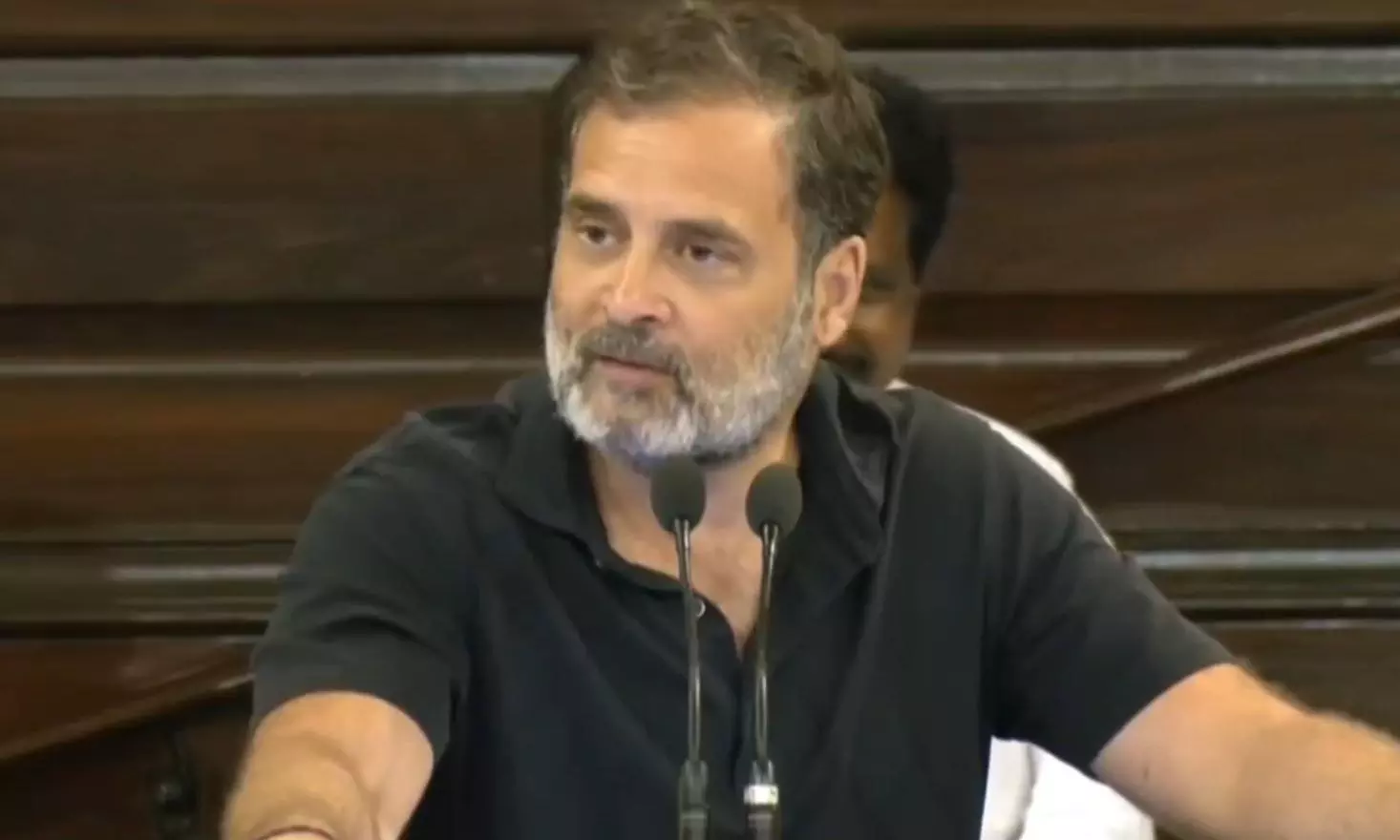
Reacting to the decision, Rahul accused Prime Minister Narendra Modi of deciding to "prostrate" before US President Donald Trump and give a huge amount of money to America. He also demanded a rollback of the government's decision.
‘Why support then, oppose now?’ BJP asks
Taking a dig at Rahul, the BJP’s post said that of the 13 Opposition leaders who sat on the panel, six were Congress MPs. They were Gaurav Gogoi, K Gopinath, Kishori Lal, Manish Tewari, P Chidambaram and Pramod Tiwari, the BJP claimed.
The post shared a demands for grants document published by the Union Finance Ministry showing the recommendations of the committee. Another document it shared on the post carried the names of all the Lok Sabha and Rajya Sabha MPs who were part of the panel.
Also read: US influence behind decision to impose MDR on UPI? What govt says
The BJP sought to know why the Congress is showing outrage now while its own economic mind P Chidambaram, also a former Union finance minister, was on the committee when the issue was being examined.
“Support the idea when it is being discussed in Parliament, then discover ‘USA pressure’ when the policy is implemented,” the post said.
“Support for sustainability in private, hyperventilation in public. Congress’ bizzare, convenient politics on show, yet again!” it added.
On Wednesday (September 16), a functionary of the central government had made a similar argument questioning Rahul’s current outrage even though the decision on UPI MDR was cleared by a Parliamentary standing committee with the backing of Congress leaders.
Also read: Free to fee: What new UPI MDR means for you and your kirana store
"Why is Rahul Gandhi opposing something his own MPs including former finance minister P Chidambaram and former minister in the UPA government Manish Tewari supported within the parliamentary panel," the functionary asked.
What committee observed
According to the report of the standing committee headed by BJP MP Bhartruhari Mahtab, the panel noted its earlier recommendation emphasising that due to the imperative of a viable revenue model, legislative-enabling provisions for a tiered MDR structure have been brought forward.
However, the committee remained deeply concerned by the staggering mismatch between the Rs 2,000-crore allocation and the industry's estimated operational cost of Rs 20,700 crore.
In the view of the committee, while statutory enablement now exists to permit calibrated MDR on high-value transactions, any delay in notifying and operationalising this framework leaves payment service providers heavily dependent on inadequate subsidies, thereby threatening critical investments in cybersecurity, fraud prevention and network infrastructure.
Also read: Retail, apparel bodies slam UPI fee ahead of festive season; fuel dealers seek exemption
Regarding the incentive scheme for promotion of RuPay debit cards and low-value BHIM-UPI transactions (person-to-merchant), the committee, in its report, had further observed and recommended: "The Committee note the massive Rs 2000 crore budgetary allocation for 2026-27 designed to offset ecosystem costs caused by the zero-MDR policy on RuPay and low-value UPI transactions.”
What committee recommended
"The Committee observe that while UPI is expected to process up to 150 billion transactions per month and add 600 million new users, the current government incentive covers merely 11 per cent of the industry's actual costs and 14 per cent of potential MDR collections, creating a structural funding gap impacting long-term infrastructural investment."
The committee recommended that while the proposed three-year multi-year scheme and cashback components are necessary to democratise digital payments in untapped Tier 3-6 cities, the Department of Financial Services must concurrently explore a self-reliant, tiered revenue model.
The committee would like to emphasise that establishing a viable revenue mechanism is critical to ensuring that the UPI ecosystem achieves financial sustainability without perpetually straining the government exchequer, it said.
(With inputs from agencies)