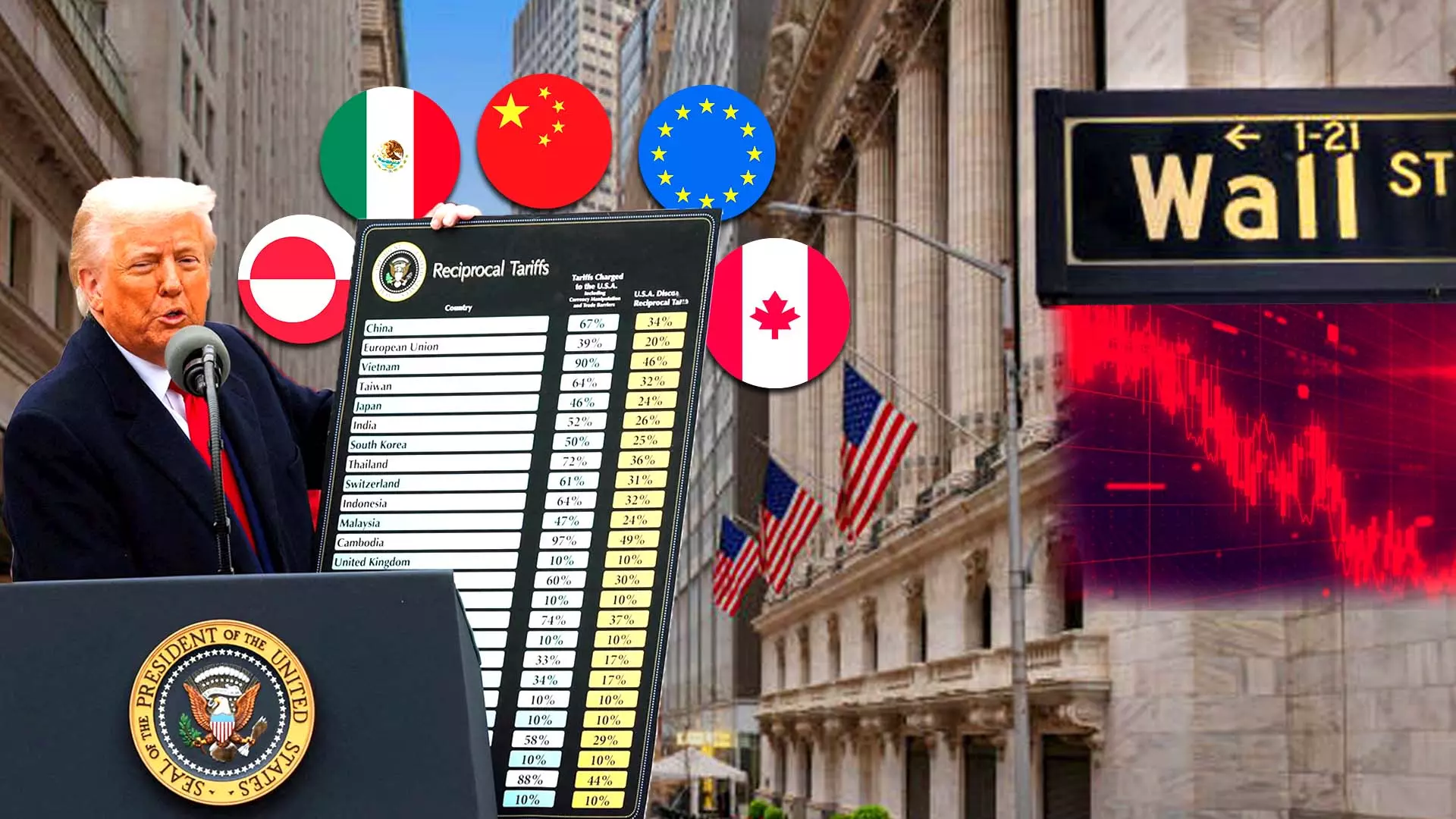
Markets react to his shifting tariff announcements and trade policy signals
Trump tariffs and TACO: How markets learned his trade war playbook
Wall Street has a name for Donald Trump’s tariff strategy — TACO. From threats to retreats, markets now trade the pattern. Has fear finally lost its bite?

Markets hate uncertainty. But lately, they have learned to live with it — especially when it comes from former US President Donald Trump.
Wall Street even has a nickname for his trade war strategy now: TACO, short for “Trump Always Chickens Out.” When tariffs are threatened, markets fall. When Trump pauses, they rally. It is not random. It is a pattern seen repeatedly, from China to Greenland.
The cycle became undeniable in April 2025. Trump posted on social media: “THIS IS A GREAT TIME TO BUY!!! DJT.” Hours later, he announced a 90-day pause on tariffs for all countries except China. The market reaction was immediate. The S&P 500 surged 9.5 percent, with nearly $4 trillion added back in market value within hours.
Also read: Trump threatens Canada with 100 pc tariff over China trade deal
This sequence cemented what traders had been suspecting for months — that Trump’s tariff threats followed a predictable rhythm that markets could now trade around.
Threat and pause
When questioned by a CNBC correspondent during a heated Oval Office press conference on May 28, 2025, Trump dismissed the TACO label as “nasty.” He insisted his tariff threats were a negotiating tool designed to extract concessions.
To support his argument, Trump pointed to ongoing talks with China, where tariffs were temporarily cut to 30 percent for 90 days. This was a sharp reduction from the 125 percent — and in some cases 145 percent — levels he had imposed just weeks earlier in April.
Yet, even as tariffs were scaled back, the core script remained unchanged. The threaten-then-retreat cycle continued to repeat itself across regions.
North America and Europe
With Canada and Mexico, Trump announced 25 percent tariffs citing fentanyl imports. These were suspended for 30 days and later exempted entirely for goods compliant with the United States–Mexico–Canada Agreement (USMCA).
In Europe’s case, a proposed 50 percent tariff was delayed until July 9, 2025. The postponement triggered a sharp relief rally in global markets. Auto tariffs were also softened through executive orders that allowed manufacturers to offset costs based on US-sourced content.
Each move reinforced the belief that deadlines mattered less than the signal being sent.
A familiar pattern
From Colombia’s flight ban dispute to reciprocal tariffs announced on nearly 90 countries, the sequence rarely changed. Tariffs initially scheduled for April were pushed to July and later to August, deepening suspicions that the volatility itself was part of the strategy.
Also read: US may cut tariffs on India as Russian oil imports fall: Scott Bessent
Observers increasingly questioned whether Trump’s seemingly erratic tariff announcements were designed less to reshape trade and more to influence market behaviour.
The repetition was so frequent that Wall Street traders began tracking it as a timeline rather than a policy.
Trading the cycle
Traders noticed that panic often began on Fridays, following cryptic or aggressive announcements. Markets drifted lower into the weekend as uncertainty built.
By Sunday evening, when futures markets opened, selling pressure intensified. But by Wednesday, dip buyers typically stepped in. The assumption was simple: tariffs were still weeks away, and history suggested a pause was coming.
The playbook had become predictable enough to trade.
The reassurance phase
About a week later, senior officials would appear on television to calm nerves. Treasury Secretary Scott Bessent became a key figure in this phase, offering reassurances that negotiations were ongoing and that outcomes would be “constructive.”
Soon after, a “deal” or framework would be announced. Markets would recover, often pushing to fresh highs. The cycle then reset — ready for the next round.
This pattern was evident again in Trump’s handling of Greenland and European Union tariffs.
NATO and Greenland
Following NATO talks, tariffs initially slated for February 1 were scrapped. Trump hailed what he described as an “infinite” and “forever” framework agreement.
However, NATO Secretary General Mark Rutte clarified that Danish sovereignty over Greenland had not even been discussed during the talks.
Also read: From threats to tariffs, how Trump has altered US foreign policy| Talking Sense With Srini
The gap between rhetoric and reality was stark, but markets focused on the outcome — tariffs had been dropped.
Chaos and retreat
The episode was marked by confusion. Trump mixed up Greenland with Iceland, floated the idea of a “Board of Peace” to replace the United Nations, and hinted he might not honour NATO’s Article 5 commitments.
Critics labelled it yet another TACO moment — a threat, a rattle, and a retreat. For markets, however, the retreat mattered more than the chaos that preceded it.
Investors welcomed the pause, once again rewarding risk assets.
Market psychology
From Wall Street to global capitals, the lesson has become clear. Trump’s tariff strategy appears less about long-term trade restructuring and more about short-term market psychology.
The pattern is now familiar enough that fear no longer dominates reactions. When the next tariff threat arrives, investors are unlikely to ask whether action will follow.
They will simply wait for the pause.
The content above has been transcribed from video using a fine-tuned AI model. To ensure accuracy, quality, and editorial integrity, we employ a Human-In-The-Loop (HITL) process. While AI assists in creating the initial draft, our experienced editorial team carefully reviews, edits, and refines the content before publication. At The Federal, we combine the efficiency of AI with the expertise of human editors to deliver reliable and insightful journalism.