



National hearing raises alarm over SIR as testimonies cite mass deletions, bias
From Uttar Pradesh and Gujarat to Madhya Pradesh and Bihar, testimonies before a public jury allege deletions, harassment and procedural lapses in the EC’s exercise

From special camps for sadhus (priests) in UP to enrol them as voters under the Special Intensive Revision (SIR), to the deletion of nearly 15,000 Muslim voters in Uttar Pradesh, over 1,200 Muslim voters in Gujarat’s Akbarnagar, and the denial of enumeration forms to nearly 300 people from a Muslim nomadic community in MP’s Jabalpur, more than a dozen testimonies at a national public hearing pointed to alleged discrepancies and bias in the Election Commission’s exercise aimed at “cleansing” the country’s voter list.
Also read | UP voter roll deadline extended as 4 crore names face re-examination
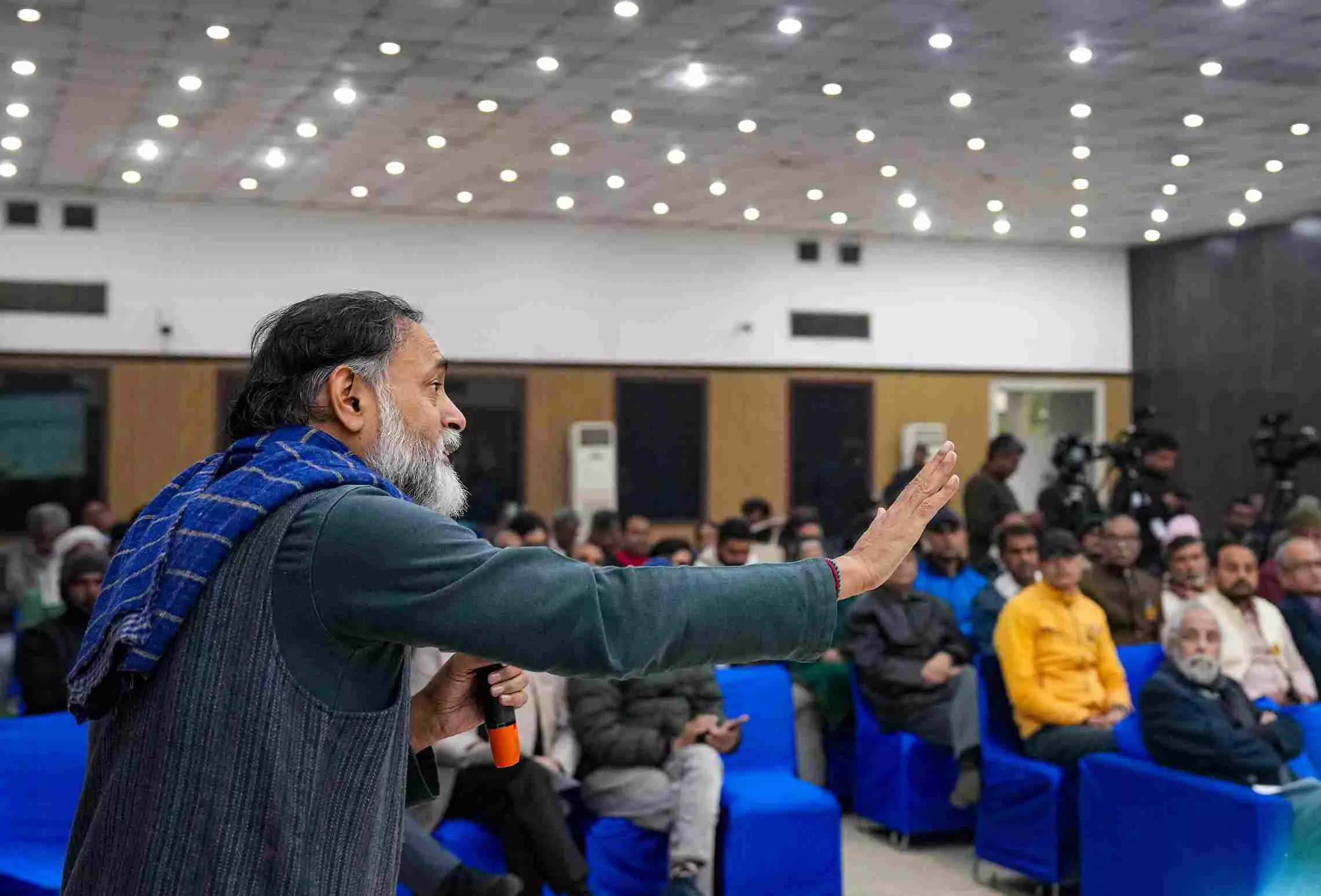
The hearing, held at the Constitution Club of India in New Delhi on Saturday (December 20), had a jury comprising retired Supreme Court judges Madan Lokur and AK Patnaik, Prof Nivedita Menon, Pamela Phillipose and Prof Jean Drèze. Former Chief Election Commissioner SY Qureshi attended as an observer, while Supreme Court advocate Prashant Bhushan and activist Yogendra Yadav were among those present.
Minorities allege exclusion drive
Arundhati, who presented a testimony from Uttar Pradesh, alleged before the jury that Chief Minister Yogi Adityanath had openly stated that he would secure votes for “his people”. “That is why a camp was run in Uttar Pradesh for two weeks,” she said. Drawing a contrast between alleged bias and due process in a Uttar Pradesh constituency, she claimed that nearly 15,000 Muslim voters were being removed from the electoral rolls because their address was listed as Basant Kunj, even though they were original residents of Akbarnagar, which has since been removed from the constituency. “They were given houses under the PMAY scheme at Basant Kunj. They were original residents of Akbarnagar. While sadhus without documents are being added to the voter list, the houses of Muslims are being bulldozed under bulldozer justice,” Arundhati said.
A group led by Ikram Beigh Mirza from Gujarat told the jury that demolitions were carried out in localities like Chandola Talab in Ahmedabad nearly 11 months before the SIR was conducted in the state. “While a special camp was held to enrol voters from nearly 12,000 households, in our predominantly Muslim locality, 1,206 voters have been deleted from the voter list and declared dead. The BLO is also not filling out our forms, saying he has directions from the local MLA not to do so,” Mirza said.
Another group, comprising fishermen from Gujarat’s Dwarka district, told the jury that they were selectively targeted in the exercise for being Muslims. “A demolition drive was carried out in our coastal areas, including Harshad, Narwada and Boghat,” the group said. They alleged that while voters from Boghat, a predominantly Hindu fishing village, were added to the rolls, Muslim fishing villages such as Harshad and Narwada were left out. They also referred to Kandla Port in Kutch, claiming that voters from around 70 Muslim households had been removed.
Vulnerable groups report deletions
The situation was described as “morose” by a Muslim nomadic tribe from Madhya Pradesh’s Jabalpur. Mohammad Mehdi, Babloo Khan and Shabair Khan told the jury that around seven months ago, members of the Bajrang Dal and VHP had come to harass them, calling them “Rohingyas and Bangladeshis”. “Saheb, we have been voting in elections. We have no land. We rear cattle and also work as labourers. We take certificates from sarpanches wherever we roam with our livestock,” Babloo Khan said. The group added that they were not given voter registration forms by the BLO.
A similarly disturbing account was presented by residents of the ‘Madari colony’ in Jaipur, Rajasthan. Members of the community, many of whom earn a living through magic shows, said the SIR appeared to be an “attempt to erase their identity”. “We are in the 2003 voter list. We have been voting. We are told we are Pakistanis. Nobody listens to us,” Alijan and Dharamveer told the jury. They were accompanied by Abid, Dharamveer, Anwar and Sajid.
The hearing also brought to light the cases of around 400 women who were not registered as voters in Bihar’s Araria district. One testimony, presented by Sarfaraz, said these women, who are from Nepal and married in India, had been excluded. “Araria is close to Nepal. For centuries, marriages have taken place across villages in this region. While the husband is a voter, the wife is not,” Sarfaraz said. He also accused BLOs of making serious errors while filling voter registration forms. “I myself was declared dead in the voter list. Even a watchman in our village was declared dead. Around 15 people were declared dead though they are alive,” he said.
Survey timing questioned
Testimonies also highlighted the “ill-timing” of the survey, particularly in states such as Rajasthan and Chhattisgarh.
Dharam Chand from Rajasthan, who lives near the Gujarat border, said people from villages such as Khotla and Jhadola migrate to Gujarat for work. “Around 23,000 names have been deleted. These are all Adivasis. Nearly 2,000 people have been declared dead. Many people go out for work for six months or even a year, especially during the peak harvest season in our region,” Chand said.
Also read | Bengal SIR flags 1.67 crore 'suspicious' voters; scanner on 'defective' forms
Similarly, a video testimony of a woman named Nasli Jan was played before the jury. Hailing from Madhya Pradesh’s Bhadwani village, she said the exercise was conducted when most residents were away in other parts of the country for work during the harvest season.
From Chhattisgarh’s Bastar region, former MLA Manish Kunjam recorded his testimony, stating that fear of Salwa Judum, the anti-Maoist militia, had affected over 6,000 villages in the state. “People migrated to Andhra Pradesh and Telangana due to this fear, which still exists. The affected population is over three lakh. We estimate that around 1.5 lakh people could be removed from the voter list, which is yet to be published,” he said.
Kunjam added that due to the volatile situation in earlier years, proper official surveys were never conducted in the region, leading to long-standing discrepancies in voter lists.
Pressure, suicides, serious doubts
Political activist Yogendra Yadav told the jury that nearly 40 BLOs across the country had died by suicide due to pressure from higher authorities to complete the surveys in a short time. He said these included six deaths from Gujarat, three from Rajasthan, one from Kerala, five from West Bengal, nine from Madhya Pradesh, eight from Uttar Pradesh and one from Tamil Nadu. Gajanand, whose son Mukesh worked as a BLO in Rajasthan, narrated his ordeal before the jury. “My son has two young daughters and a son. The government has provided no help. His daughters have reached marriageable age. I am an old man. I am helpless. I cannot do anything for them. Please help me,” he said.
Speaking at the hearing, Supreme Court advocate Prashant Bhushan described the SIR as a “new game” aimed at “removing the names of Muslims from the voter list”. “It was said they want to make a Hindu Rashtra. In Assam, they realised they could not do this openly based on religion, which they tried through the NRC and then the CAA. After that, they brought in a new game through SIR – to remove Muslims from the voter list,” he said.
Bhushan also questioned the “hastiness” with which the SIR was being carried out across the country. “It is being done very quickly, in clear violation of the rules,” he said.
After hearing the testimonies, the jury observed that the exercise appeared “very doubtful”. “I am convinced that the process of SIR rolls is very doubtful. Something needs to be done. I wish some Election Commission members were listening here. I hope the Supreme Court looks into it. I am 100 per cent sure that due process has not been followed,” said Justice Patnaik.
Jury flags democratic dangers
Echoing these concerns, Justice Lokur said the exercise was being carried out in undue haste. “We have listened to over 15 testimonies. There is a unique problem in each state. If SIR has to be done, it has to be done differently in each state. One size does not fit all,” he said.
Justice Lokur added that the exclusion of a person’s name from the voter list could have serious consequences, including denial of benefits under government schemes such as pensions and ration. “It should be done with care, not in a rush. People should be taken into confidence. That will benefit everyone,” he said.
Also read | Over 25 lakh voters found untraceable during SIR of electoral rolls in Kerala
Activist Pamela Phillipose and Prof Nivedita Menon said the exercise appeared aimed at “disenfranchising and stripping people” of their rights, particularly Muslims. “What we are witnessing is the unmaking of India. This is a destruction of the idea of rights. If the right to vote is taken away, it amounts to a civil death,” Phillipose said, adding that SIR was being used as a “tool to strip minorities, especially Muslims, of their voting rights”.
Menon said the process was being carried out deliberately. “They want to rule for 100 years. I will not soften my words – they want to build a Hindu Rashtra by removing minorities. This process is being carried out deliberately and in haste. We should say no to SIR because it is a process of mass disenfranchisement,” she said.
Economist Jean Drèze, also a member of the jury, said the exercise showed a “clear intent of Islamophobia”, pointing to the harassment of minorities that had surfaced during the testimonies.
