



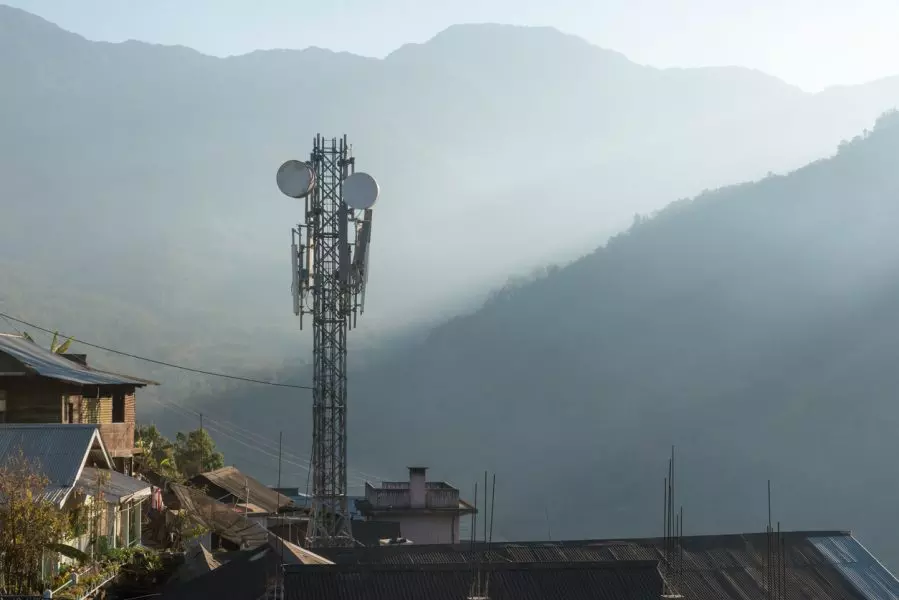
Centre asks communication infra providers not to share data outside India
Entities asked to ensure all data, logs, information associated with telecommunication network are stored within India and no copies are made available outside the country

The government has barred communication infrastructure providers, including those involved in cloud-based networks for telecom services, mobile towers and satellite gateways, from sharing any data outside the country, according to an official notification.
The Department of Telecom, in a notification for the authorisation framework for infrastructure providers, has made it mandatory that all telecommunication data should be stored within the country.
Authorisation frameworks
“Every new authorised entity shall ensure that all systems of its telecommunication network and the data, logs and information associated with its telecommunication network shall be stored within India and no copies of such data, logs and information shall be routed, shared or made available outside India,” the notification dated July 20 said.
Also read: Amazon to pump Rs 60,000 crore into Telangana data centre
As per the Telecommunications Act 2023, authorisation frameworks are part of government strategy to shift from a licensing regime to light regulation.
Infrastructure provider, digital connectivity infrastructure provider, internet exchange point provider, satellite earth station gateway, cloud-hosted telecommunication network provider and mobile number portability provider at national level can seek authorisation under the notified framework.
Centre’s powers under new norms
Under the new norms, the Centre, for the purposes of monitoring compliance with the rules may access and inspect the sites where telecommunication equipment and network are established, "including within a user's premises", audit processes or systems established by such new authorised entity for compliance of these rules and even may serve no notice if it considers that immediate action is necessary or expedient in public interest.
Also read: A hollow obsession with data-centre proliferation
For monitoring compliance, the Centre may appoint a designated agency to audit processes or systems established by the authorised entity.
The notification said that the designated agency will not collect nor require the disclosure of any information, the disclosure of which may harm the competitive position of any user or the new authorised entity.
Delays mustn’t cause non-compliance: govt
Infrastructure providers under the new framework will be solely responsible for obtaining permission to roll out the network and any delay in such permission should not be a reason for non-compliance of any rules under the new framework.
"The non-availability of right of way or delays in obtaining right of way permission by the new authorised entity shall not be a cause or ground for non-compliance with any obligations under these rules," the framework said.
Also read: Cabinet approves Rs 62,500 cr for mobile phone production-linked scheme 2.0
Data centre company Submer India head Anupam Shrivastava, who has served as BSNL chairman and managing director, told PTI that the newly issued Telecommunications (Authorisation for Telecommunication Network) Rules, 2026, mark a transformative milestone for national digital infrastructure. “As someone who has led traditional telecom infrastructure at BSNL and is now pioneering sustainable data centre solutions at Submer, I see this framework as a bold step toward a greener, highly secure, and cloud-integrated future,” he said.
‘Move to trigger domestic data centre demand’
Shrivastava said that the government has taken an uncompromising stance on data localisation, strictly mandating that all telecommunication network systems, associated data, and logs must be stored exclusively within India, and that no copies can be routed, shared, or made available outside the country.
“This will undoubtedly trigger a massive surge in domestic data centre demand. The introduction of the "Cloud-Hosted Telecommunication Network Provider" category, featuring a low barrier to entry with a Rs 10 Lakhs entry fee and zero annual authorisation fees, will seamlessly integrate cloud data centres with telecom networks to democratise infrastructure,” he said.
Also read: 'Human brains may directly connect to cloud networks in future'
ITU-APT Foundation of India president, Bharat Bhatia, said Bharat complimented the DoT on issuing these detailed authorisation guidelines but said that the key issue of spectrum assignment for gateway earth station still not resolved.
“The current notification does not allow the authorised entities to apply for spectrum, which is key to successful operation of the gateways. Currently, the gateways are run by ISRO, which is given the necessary gateway spectrum, but the private players will be disadvantaged. TRAI is presently consulting about this and hopefully they will resolve this in their next recommendation,” he said.
(With inputs from agencies)