‘Sonam Wangchuk’s removal was more like abduction; no legal basis at all’
Experts question the legal basis of Wangchuk's hospital transfer, call it a political crackdown, and debate whether the July 20 protest can retain momentum

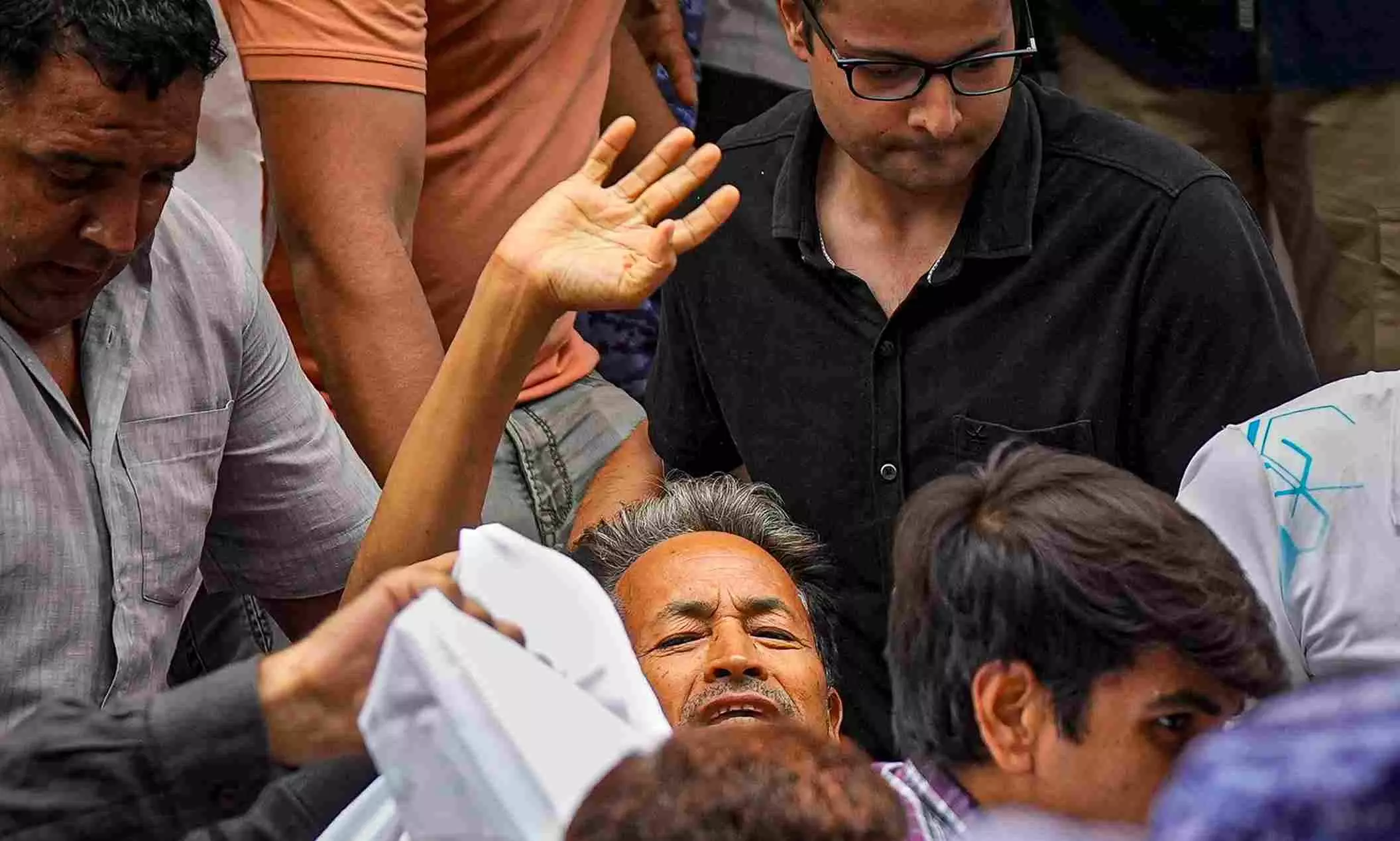
Climate activist Sonam Wangchuk was forcibly removed from his 20-day hunger strike at Delhi’s Jantar Mantar on Saturday morning after police officers and doctors arrived at the protest site, covered him with white sheets, and took him to Safdarjung Hospital.
The move has raised serious questions over its legal basis, given that a Delhi High Court order had only called for daily health monitoring at the site and did not direct that Wangchuk be shifted to a hospital. His family has disputed the need for the transfer, saying his vitals were stable, even as the action comes just days ahead of a planned march to Parliament on July 20, the opening day of the Monsoon Session.
Questions over Wangchuk’s removal
“There's no legal basis for this whatsoever. This is purely a political move,” said The Federal’s political editor Puneet Nicholas Yadav. He was speaking on a special episode of Capital Beat, alongside senior journalist TK Rajalakshmi and political commentator Pushpraj Deshpande.
Also read | Why Wangchuk's strike may not become an Anna Hazare-like movement
Yadav said Wangchuk had been moved into a newly vacated emergency block at Safdarjung Hospital, with barricades set up at the entrance and access tightly restricted. He was critical of the secrecy surrounding the transfer, saying hospital authorities owed the family a transparent account of Wangchuk’s treatment and medical reports.
Wangchuk's wife, Gitanjali Angmo, said his vital signs were stable and that a doctor had examined him only the night before. She has written to the Safdarjung Hospital Medical Superintendent asking that he be shifted to a facility of the family’s choosing.
Angmo also said she had been denied access to her phone at the protest site. She later said no treatment — oral or intravenous — should be administered to Wangchuk without consent from her, his family, and the doctors who had monitored him through the strike.
Crackdown sparks constitutional concerns
Pushpraj Deshpande said the crackdown is part of a broader pattern, arguing that the right to protest is constitutionally protected and has been affirmed by the Supreme Court, including in the Ramlila Maidan (2012) and Amit Sahu (2020) rulings.
He said, “It's autocratic, it's dictatorial. The police have behaved with brute force, and that's evident to everyone, including the international media covering this. The BBC and CNN have both reported on it. What does one even say about this turn of events? Unlike the UPA, which tolerated and even engaged constructively with dissent, the BJP has spent the last 12 years vilifying protest. The BJP doesn't see protest as a constitutional right; it sees it as a law-and-order problem.”
“The bitter truth is that the BJP cannot be moved by Gandhian tactics—civil disobedience, hunger strikes, or satyagraha—because it doesn't see itself as accountable to Indians. It doesn't win because people vote for it; it wins by manufacturing consent, stealing mandates, breaking governments and legislatures, and purging citizens from voter lists. The BJP simply has no conscience or democratic culture embedded within it,” he added.
On the manner of Wangchuk’s removal, he said, “This is nothing short of abducting Sonam Wangchuk,” and called on Opposition parties and civil society to build sustained, coordinated mobilisation rather than rely on symbolic protests.
'Momentum prompted police action'
TK Rajalakshmi said the timing of the crackdown was no coincidence. “I think the crackdown was sort of bound to happen... because it was gaining momentum,” she said, calling it a pre-emptive strike ahead of the planned march.
Also read | Ground Report: Why Wangchuk's fellow organisers can't convince him to stop
She added that any public backlash would hinge on organised political mobilisation rather than arise spontaneously, saying, “It will depend a lot on mobilisation by political parties, as well as their student and mass organisations.”
Can the protest survive without Wangchuk?
Yadav said the removal appeared aimed at draining momentum from the movement, since Wangchuk had drawn far larger crowds than Dipke was likely to command on his own. He noted the CJP had not called off the July 20 march, and that turnout that day would determine whether the movement continues.
He also said several political leaders who met Wangchuk in the days before his removal came away with the impression that he had planned to end his hunger strike after the July 20 march regardless of Saturday’s events.
Asked who was funding and organising the demonstration, Yadav said the more pressing question was the original cause behind it, which had been overshadowed by weeks of focus on Wangchuk’s hunger strike. The protest, he said, is rooted in anger over examination paper leaks and systemic failures in the education system, including student deaths linked to the leaks, and the debate needed to return to those issues rather than personalities.