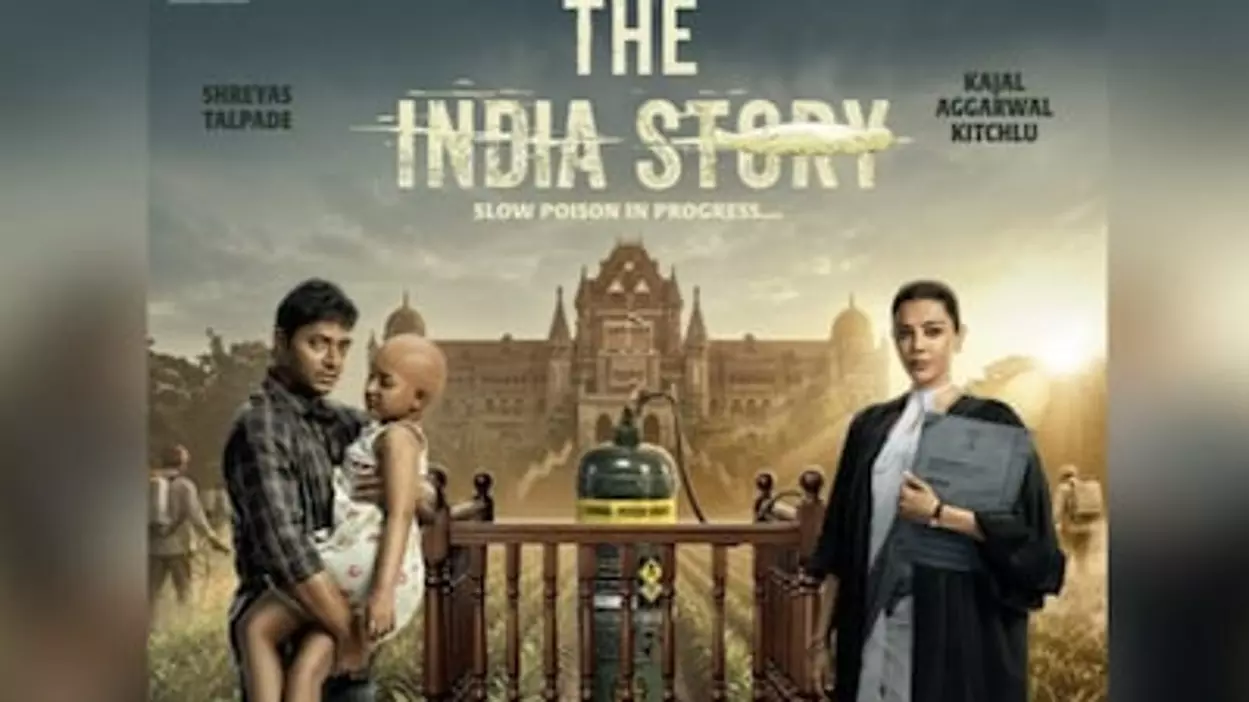
Just ahead of its July 24 release, the film has come under fire for its claims on pesticides, food safety and rising cancer cases in India. The agrochemical industry has rushed to the Central Board of Film Certification (CBFC), requesting it to stringently review the data points shown in the teaser. A legal notice has been served too.
Kalyan Goswami, director of Agro Chem Federation of India (ACFI), an industry body representing roughly 85 per cent of the country's agrochemical sector, stated that the film's teaser makes "misleading and unsubstantiated" claims regarding pesticides, food safety, and the state of Indian agriculture. The federation is currently seeking a formal meeting with CBFC Chairperson Shashi Shekhar Vempati to address these concerns.
Legal notice
Meanwhile, the filmmakers—Zee Studios and MIG Production & Studios LLP—have been served a legal notice by Mumbai-based lawyer Hiranya Pandey on behalf of Bhavesh Sodha of Agri Business Centre, demanding the scientific basis behind claims made in the teaser.
According to the legal counsel Pandey, the trailer deploys the derogatory and defamatory label 'Mrityudata' (provider of death) for 'Annadata' (the sustainer and provider of food)."
On June 30, the filmmakers issued a formal response via their advocate, said reports. But unsatisfied with their response, Pandey filed a rejoinder with the CBFC, requesting a personal hearing before the film is certified. Pandey has warned that his client is prepared to take the matter to court if the film is released without modifying the contested content.
He claimed the filmmakers' reply "admitted" that certain teaser sequences were "symbolic dramatisation" and that they did not assert pesticides were the "sole cause" of cancer, according to a report in India Today.
Key claims made in teaser
The teaser for The India Story: Slow Poison in Progress, directed by Cheytan DK, relies on bold data points, report snippets, and investigative headlines to deliver a scathing critique of Indian agriculture. Declaring "We grew poison, not food," the promotional clip frames its findings as "India's most shocking truths."
The promotional video highlights several alarming statistics and claims regarding the country's food supply chain. Text snippets claim that Indians are fed "over 50,000 metric tonnes of pesticides," exposing more than 200,000,000 (20 crore) people to hazardous chemicals.
The teaser directly connects modern agricultural practices to rising cancer rates across the country and it questions the safety of everyday staples like milk and poultry, ultimately labelling Indian food as a "slow poison."
Appealing to the CBFC, ACFI alleged that the teaser presented India's agricultural system in an "alarmist, sensational manner" and appeared to establish direct links between modern farming practices and public health problems "without providing any apparent scientific substantiation".
Filmmaker defends film
Cheytan clarified that the film's core message is about responsible usage. "Our point is simply that these chemicals should be used only to the extent necessary. Overusing them and risking public health is where it becomes wrong," he said, according to reports. He said audiences would understand "how pesticides and chemicals should be used, and where the line should be drawn".
He reiterated that the film's intention was not to target anyone but to highlight responsible pesticide use, said the report.
Industry body's stance
Meanwhile, in an interview with India Today Digital, ACFI Director General Kalyan Goswami disputed the film's portrayal of pesticide statistics, arguing that the teaser fundamentally misinterprets the data. Goswami clarified that the 50,000 metric tonnes cited in the teaser represents the total volume of pesticides imported and applied to farms, rather than chemical amounts directly consumed by citizens.
In its formal letter to the CBFC, the ACFI cited data from the Food and Agriculture Organization (FAO), claiming India's actual annual pesticide consumption sits lower, at roughly 40,000 metric tonnes. However, the India Today report quotes official government data to contradict the lower estimates.
Official data tells another story
The official data from the Ministry of Agriculture reveals that India’s actual chemical pesticide usage is significantly higher than the industry's figures.
The yearly usage of pesticide ranges from 59,669 to 63,406 metric tonnes on an average between 2017 to 2021, according to a Lok Sabha reply in December 2022 by the Ministry of Agriculture. In between 2021–2022, 58,720 (Technical Grade) metric tonnes was used.
While the agrochemical industry maintains that the film's narrative is exaggerated, long-term government records demonstrate a steady, upward trajectory in domestic chemical pesticide consumption over recent years.
The debate over regulatory standards in India remains highly contentious. Agriculture experts have often highlighted that several pesticides permitted for domestic use face severe international scrutiny such as glyphosate and 2,4-D. Both are classified by the WHO’s International Agency for Research on Cancer (IARC) as "probable" or "possible" carcinogens.
There's also paraquat, a highly toxic herbicide which continues to be used in India despite being banned in over 70 countries.
Pressure is mounting from grassroots organisations and legal bodies to tighten agricultural regulations. Farmer groups like Rajasthan's Kisan Mahapanchayat have demanded a ban on Paraquat, while states like Kerala and Telangana have already enacted strict restrictions against certain herbicides.
A petition seeking a nationwide ban on these hazardous chemicals is currently pending before the Supreme Court.
Film's origins
It was this specific public health angle that inspired the film. Director Cheytan DK has shared that the project began after writer-producer Sagar B Shinde’s close friend suffered the tragedy of having their six-year-old child diagnosed with cancer.
The shocking diagnosis prompted the filmmaking team to research environmental toxins, ultimately leading to the making of the film.
Interestingly, ACFI head Kalyan Goswami acknowledged that pesticide overuse and misuse by farmers is "a very big concern" and agreed that awareness needs to be highlighted. However, the federation maintained that raising awareness should not rely on exaggerated or scientifically unsupported claims.
Current status of film
Despite the escalating war of words, The India Story does not currently face any judicial delays. The CBFC has not halted the certification process.
And the ACFI clarified that it is not pursuing legal action, opting instead for a dialogue with the CBFC chairperson to ensure a balanced review.
Conversely, lawyer Hiranya Pandey reiterated that his client will seek an immediate injunction, alongside civil and criminal remedies, if the film is released without modifying the contested claims.