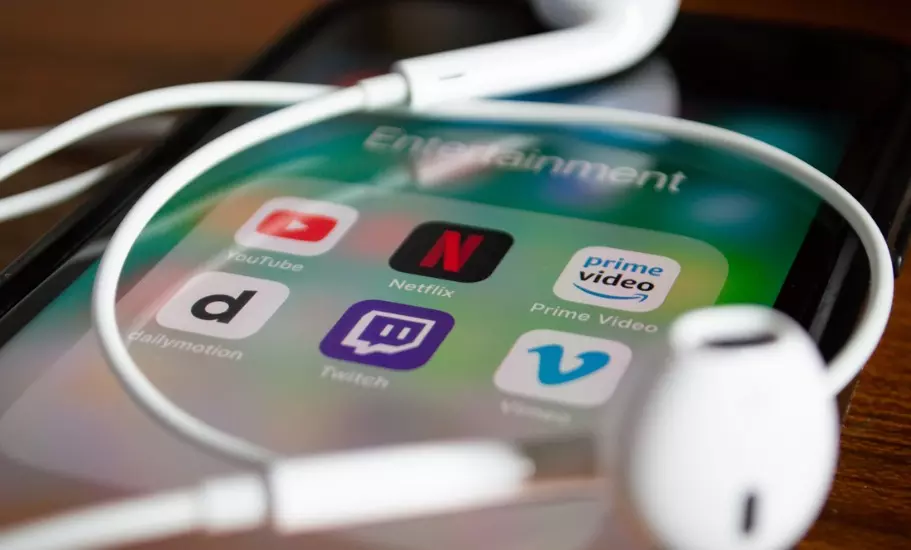
'Cultural pollution': Is RSS going to decide what you Netflix?
Informal group weighs censor‑like OTT checks; critics warn clampdown on streaming won’t alter behaviour, question who defines “family values” in diverse society

The Rashtriya Swayamsevak Sangh (RSS) has reportedly formed an informal group to examine what it calls “cultural pollution” on OTT platforms. The group reportedly includes former vice-chancellors and RSS pracharaks and is considering recommendations for stronger oversight, including the possibility of a censor-board-like mechanism.
But what constitutes “cultural pollution”? And what could “greater regulation” mean for OTT content?
RSS worldview
Speaking on The Federal’s Capital Beat programme, Senior journalist and political commentator Vivek Deshpande said the RSS has a particular worldview and the Sangh and its affiliates have engaged in debates around cultural values in the past too.
Also read: Bhagwat's global tour is all about image management, not ideological change
Deshpande said when the RSS talks about “protecting family values”, he understands the concern to include sexual content and what he described as “sexual promiscuity”. However, such content predates OTT platforms, he pointed out.
How to restrict social behaviour?
Deshpande also questioned whether restricting OTT platforms would change social behaviour. He cited examples of films dealing with, for instance, women’s sexuality and similar subjects that are often difficult to discuss openly in Indian society.
He referred to Lipstick Under My Burkha, a film directed by Alankrita Shrivastava that faced an initial certification refusal from the CBFC before receiving an adult certificate after the appellate process.
Deshpande wondered whether such films would come under scrutiny as well if a new regulatory mechanism were created. He argued that OTT content reflects aspects of society rather than creating them. Therefore, a clampdown on streaming platforms would not necessarily eliminate the behaviour or subjects that regulators may consider problematic.
Who decides what is acceptable?
But then, who gets to define “acceptable cultural values”?
Also read: Bhagwat’s pitch on GenZ protests exposes RSS-Modi fault line over dissent
The RSS sources cited in a media report have described concerns about OTT platforms as a source of moral corruption affecting families and younger generations. Senior journalist and political commentator TK Rajalakshmi focused on the role of “Kutumb Prabodhan”, an RSS activity that is likely an influence behind the initiative.
Rajalakshmi argued that family structures and values are not static and change with society. She questioned the idea of imposing a single model of family values on a diverse population.
She also cited films such as Santosh and Jaggi while discussing concerns around access to films dealing with difficult social subjects. Santosh, directed by Sandhya Suri, centres on a female police officer, while Jaggi, directed by Anmol Sidhu, explores masculinity and sexual abuse among young people.
Testing waters?
Political analyst Ayushman Pandey described the RSS initiative as a way of testing public reaction before the BJP decides its next course of action. He also argued that the broader idea running through recent RSS interventions was one of “purification” and control over social behaviour.
Also read: How RSS has reshaped India’s history, politics: Historian Tanika Sarkar explains
Pandey said if an OTT censor board were to be created, the same logic could raise questions about other forms of media and content. He argued that viewers should retain the ability to make their own choices in a democracy.
Echoing him, Deshpande also argued that people who dislike particular OTT content can choose not to watch them, rather than relying on a regulatory mechanism to make that decision for everyone.
Rajalakshmi also argued that India already has a regulatory framework governing OTT content through the IT Rules and related mechanisms.
Is RSS serious about move?
But then, will the proposed RSS initiative actually result in a censor-board-like mechanism for OTT platforms?
Deshpande said he did not view the move as merely a “testing balloon”. He said the RSS appeared serious about making recommendations and argued that the important question would be what the government ultimately chose to accept.
Also read: How RSS emerged as a response to decline of Brahminical dominance 100 years ago
Pandey, however, questioned whether regulation could effectively cover foreign OTT platforms. He distinguished between Indian streaming platforms and foreign entities and argued that technology could not simply be withheld from audiences.
But what about Gen Z?
Rajalakshmi, on the other hand, described the proposal as “hot air” and argued that attempts to regulate what younger viewers watch would struggle to gain traction.
She said the proposal could also complicate efforts to connect with Gen Z and millennials, who form a major part of the OTT audience. In her view, attempts to regulate viewing behaviour could instead create resistance.