



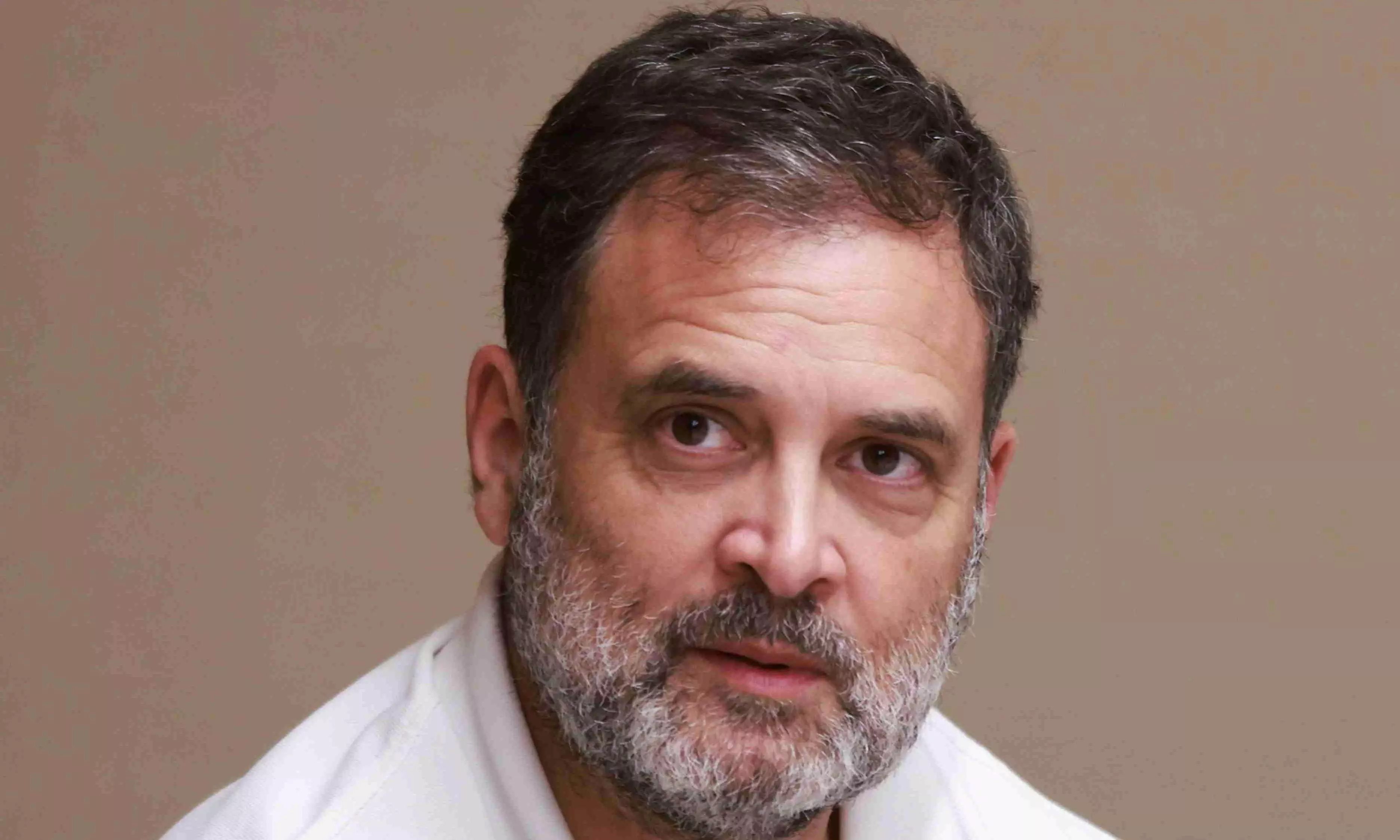
Rahul Gandhi questions data sovereignty safeguards in India-US trade deal
Rahul raises concerns over a lack of clarity on data protection, localisation rules, and AI policy amid ongoing India–US digital trade discussions.

Raising concerns over India’s data sovereignty, Congress leader Rahul Gandhi on Monday (April 6) alleged that there has been no clarity from the Centre with regard to the usage of Indian government data regarding health and finance under the India-US trade deal. He further alleged that the country has been kept in the dark regarding how its data would be protected when it should have been leading the global tech race.
Data as a national asset
Elaborating further, the Leader of the Opposition in the Lok Sabha said that India's data belongs to its people and in the AI economy, it can be one of its biggest strengths - to build AI, grow companies, and create jobs.
Also Read: Iran war: Senior Congress leaders differ with Rahul; party offers ‘democratic’ defence
"So I asked the government some important questions about the recent trade deal with the US:- What does 'reducing barriers' with the United States mean for our data? Will our health data, financial data, and government databases stay in India? Can India still require foreign companies to store data here and use it to build our own AI?" Gandhi said in a post on his WhatsApp channel.
Questions over lack of clarity
"Every question on our data sovereignty, health data, AI, and local data storage gets the same treatment: 'framework', 'balance', 'autonomy' - big words, zero specifics," he added, alleging that the Centre refuses to tell the country what it is negotiating away.
Also Read: Chinese CCTVs: Rahul alleges Modi govt putting Indians’ security at risk
"We should be leading the global tech race, but instead we are kept in the dark about how India's data will be protected," said Rahul. He also said that the people deserve transparency and accountability regarding the country's data, adding, "We deserve to own and use our data to build a better future.”
Concerns raised in Lok Sabha
Rahul, on April 1, in the Lok Sabha sought clarity from the government on how it plans to align commitments made in the India–US joint statement with existing rules on data localisation, cross-border data flows and the country’s broader digital policy framework. He asked how reducing barriers to digital trade would sit alongside India’s regulatory approach to data.
Also Read: Rahul tears into CM Himanta in Assam, says BJP turned state into 'land ATM' for corporates
Rahul also pressed the government on whether any policy changes were being considered to safeguard regulatory autonomy. “What does ‘reducing barriers’ with the United States mean for our data?” he asked, while raising concerns about whether such commitments could limit India’s ability to mandate local storage or regulate artificial intelligence.
Government’s response
He further sought details on whether critical sectors -including financial systems, digital identity platforms, health databases and telecom networks - would be affected. “Will our health data, financial data, and government databases stay in India?” he asked.
Responding in writing, Minister of State Jitin Prasada said India’s digital economy remains strong, with significant revenues, exports and employment. He added, “India is firmly committed to fostering and expanding digital trade partnerships,” while maintaining that regulatory autonomy over data remains intact.
(With agency inputs)