



Winter Session marked by brisk passage of Bills, limited committee scrutiny
Parliament functioned even beyond scheduled hours, clearing most legislation within days while referring only a small share of Bills to committees

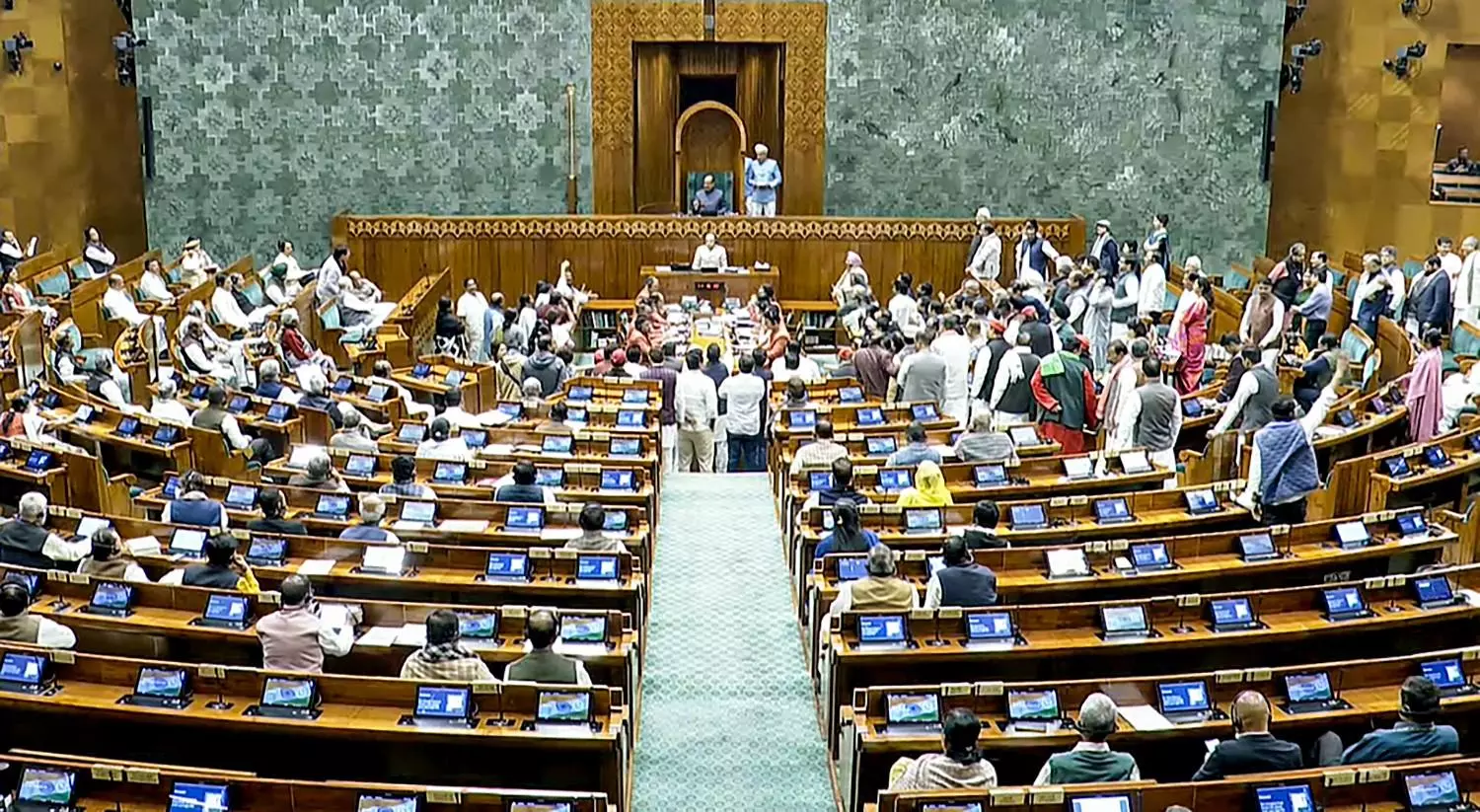
Parliament’s latest Winter Session, held between December 1 and 19, saw both Houses functioning beyond their scheduled time even as key legislations were introduced and passed at a rapid pace, according to data compiled by New Delhi-based PRS Legislative Research.
The Lok Sabha functioned for 103 per cent of its scheduled hours, and the Rajya Sabha exceeded its by 104 per cent — both much better than their respective performances in the Winter Session of 2024 and the disappointing Monsoon Session earlier this year.
Also read: What’s wrong with the SHANTI Act and how it can be fixed
Over 40 per cent of the time in both Houses was spent on debates, driven largely by special discussions on the 150th anniversary of Vande Mataram and electoral reforms. While the Lower Houses devoted 43 per cent of its time to debates, the highest in three years, the Upper House spared 41 per cent, seven points less than what it did in the same session in 2024.
Legislative output: Speed over scrutiny?
However, while the two chambers overworked, a comparatively lesser share of time was spent on the legislative business, with most Bills taken up for discussion and passed within just a couple of days.
During the just-concluded session, nine Bills were introduced, of which seven were passed, while two were referred to various parliamentary committees. These seven Bills were cleared within a week, an unprecedented development highlighting the pace at which legislation moved this session.
Also read: Kamal Haasan raises first Rajya Sabha queries on fuel transition, nuclear projects
One of the highlights of this Winter Session is that several Bills with wide-ranging implications were introduced in its final week and passed within days. These included legislation on nuclear energy (SHANTI Bill), insurance sector reforms [The Sabka Bima Sabki Raksha (Amendment of Insurance Laws) Bill], and the replacement of the two-decade-old MGNREGA with the Viksit Bharat – Guarantee for Rozgar and Ajeevika Mission (Gramin) or VB-G RAM G Bill.
The two Bills, aimed at overhauling higher education regulation (Viksit Bharat Shiksha Adhishthan (VBSA) Bill) and merging securities market laws into a single code (The Securities Markets Code Bill), were sent to the committees for detailed examination.
Overall, 26 Government Bills were pending before the session began and with two Bills sent to the committees during the proceedings, that number now stands at 28, the PRS Legislative Research data showed.
Plan vs performance
While 12 Bills were originally listed for passage, only seven were actually passed, excluding the Appropriation Bill. Parliament also overshot its productivity targets with the Lok Sabha and Rajya Sabha completing their 15 scheduled sittings each, working beyond planned hours on most days.
Also read: Sabka Bima Bill: Why 100 pc FDI push may not fix India's insurance woes
However, despite the legislative push, time spent on law-making remained limited. The Lok Sabha devoted only 36 per cent of its time to legislative business, as compared to the Rajya Sabha’s 30 per cent, with debates continuing to dominate proceedings, as seen earlier. In matters of finance, the two Houses used up only eight and three per cent of the time, respectively.
In terms of utilisation of the Question Hour, one of the key aspects of parliamentary democracy, the Rajya Sabha outdid the Lok Sabha with 80 per cent as against 67 per cent. Only about a fourth of starred questions were responded to orally in both Houses.
Private Members’ Bills (PMBs) were introduced in the Lok Sabha in this session, for the first time since August 2024. In total, 137 PMBs were introduced in the Lower House and 59 in the Upper House. However, private members’ business was taken up on only two of the three earmarked days.
Out of 42 Bills introduced in the current or 18th Lok Sabha so far, only 11 have been referred to the committees — a modest 26 per cent — raising questions about legislative scrutiny. Just one Bill — the Securities Markets Code — has been referred to a (Departmentally Related) Standing Committee, while the remaining 10 went to either Joint or Select Committees, the agency data revealed.
Also read: Viksit Bharat or centralised control? The risks of India’s new higher education law
Institutionally, the Lok Sabha continues to function without a Deputy Speaker, a position which has remained vacant since June 2019, even as the Constitution mandates its early election. M Thambidurai, the Rajya Sabha MP from Tamil Nadu, has been the last deputy speaker who served between 2014 and 2019. The Rajya Sabha received a new Chairperson in CP Radhakrishnan, who recently got elected as the Vice President, succeeding Jagdeep Dhankhar.