Om Birla survives Opposition motion, but doubts over impartiality linger
From allegations of partisan functioning to record suspensions of MPs, the debate raised troubling questions about fairness in Lok Sabha proceedings

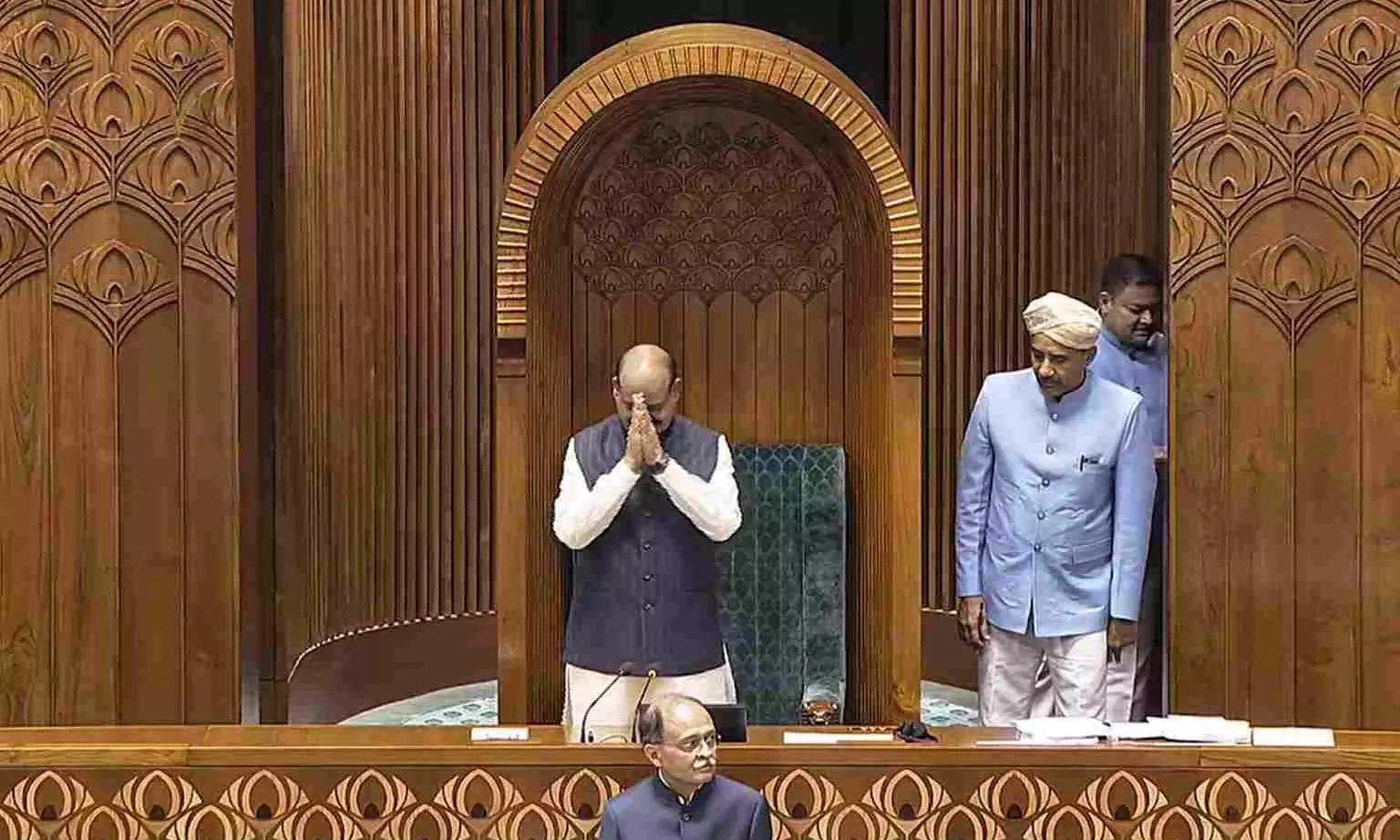
Amid sharp exchanges and heightened acrimony, the Opposition’s motion seeking the removal of Om Birla as Lok Sabha Speaker was defeated by a voice vote on Wednesday (March 11) evening.
The Opposition had moved the motion with a litany of grievances against the Speaker’s “blatantly partisan” conduct of House proceedings and the hope of conveying to the country, from the floor of Lok Sabha, that the presiding officer of the highest temple of democracy was not a neutral arbiter but a rubberstamp of the Executive.
Speaker sidesteps direct defence
The Speaker, as per the Constitution, was empowered with a right to defence but chose not to exercise it; refusing even to be present in the House while the motion was debated though the rules allowed him to. Instead, Birla, who had stopped presiding over the House since the Opposition submitted its notice for the motion on February 10, returned to the Chair at noon on Thursday (March 12) to deliver what seemed less of a defence and more a self-applauding victory speech.
Also read | 'House runs on rules, not individual will,' says Speaker Birla after removal motion's defeat
That he chose to opt out of the constitutionally sanctioned power to defend himself during the discussion on the motion but used the Chair the following day to deliver a 28-minute-long statement extolling his own fairness and chastising those who questioned it, spoke louder than the Opposition’s criticism about Birla’s lack of respect for Lok Sabha’s rules of procedure.
The Centre had the chance to rebut the Opposition’s charges on fact and put the majesty of the Chair and the ideals its occupant is meant to symbolise in a parliamentary democracy ahead of its own political battles. Unsurprisingly, it chose to do neither. Though stinging, submissions by Treasury MPs, including Union minister Amit Shah and Kiren Rijiju and veterans like Ravi Shankar Prasad and Bhartruhari Mahtab, were ultimately a regurgitation of the same attacks and innuendoes directed primarily at Leader of Opposition Rahul Gandhi that Parliament has heard on loop in practically every critical discussion over the last 12 years.
An ironic departure from the Treasury side’s usual praxis was that Jawaharlal Nehru, the country’s first prime minister and the BJP’s pre-eminent all-weather villain, came in for rare and repeated praise. This was not because the ruling side suddenly discovered new virtues in the Congress icon but as, on this occasion, Nehru’s words spoken in Lok Sabha during the first ever discussion on a motion brought against Speaker GV Mavalankar all the way back in 1954 provided the BJP a better defence than its leading defenders could come up with.
Trust deficit in Parliament
The outcome of the over 13 hour discussion was hardly a surprise. The INDIA bloc, which had submitted the notice for the motion on February 10, never had the numbers to succeed. The measure of what the motion achieved, however, must not be seen through the prism of who, between the Treasury and Opposition, won but whether the House of the People and its custodian, the Speaker, can be trusted by the people, to rise above partisan politics and its inherent antagonism. The answer to this, at least from the two-day discussion, was sadly a resounding no.
In the Centre’s view, the Opposition’s motion may have been borne out of self-serving political necessity; it may have even been what TDP MP Lavu Sri Krishna Devarayalu described as “spectacle without substance, anarchy disguised as principle and hypocrisy dressed as accountability”. Yet, it is difficult to ignore the prima facie merit in several, if not all, of the allegations that the INDIA bloc MPs brought against Birla and the convenient whataboutery and conspicuous silence that Treasury MPs adopted in their response to these charges.
There is no denying that Union Home Minister Amit Shah was spot on in admonishing Leader of Opposition Rahul Gandhi over the latter’s grossly inadequate participation in House proceedings over the last 15 years or his lack of respect for the rules of procedure. One could also add to this Rahul’s utterly cavalier attitude towards his own role as Leader of Opposition – his long absences from the House during debates on critical legislation, his lack of patience in listening to interventions of fellow Opposition MPs and inability to point out the multiple and repeated violation of House rules by Treasury MPs.
None of this, however, can gloss over the bitter truth that the LoP, when he does choose to attend the proceedings, seeks the Chair’s permission to speak or actually makes an intervention, is rarely accorded the courtesy by the Speaker and Treasury MPs to have his say. Anyone who has followed Lok Sabha proceedings since Birla was elected Speaker can testify that the LoP’s submissions in the House are seldom allowed to go uninterrupted even when he is conforming to the rules and, more often than not, the interjections come from Birla himself.
Row over Speaker’s insinuations
The Centre’s argument during the debate and Birla’s assertion on Thursday that the LoP, like the Leader of the House or any other MP, must seek the Chair’s permission before speaking and abide by the rules while speaking are on point but so is Rahul and the wider Opposition’s charge that the LoP is rarely accorded the courtesies Birla’s predecessors extended to previous LoPs.
Also read | Speaker's Parliamentary Friendship Groups put Congress MPs in a bind
Among the Opposition’s charge against Birla was also the disturbing insinuation he, as Speaker, made against women MPs of the Congress during the discussion on the Motion of Thanks to the President’s Address last month. Birla had obliquely suggested that the women MPs had planned to attack Prime Minister Narendra Modi when the latter arrived in the House to deliver his reply to the debate. Birla claimed that it was on receiving this “credible information” about the possibility of an “unprecedented incident” that he told Modi to stay away from the House.
Multiple Opposition MPs, including Congress’ KC Venugopal, Samajwadi Party’s Anand Bhadauria and Trinamool’s Mahua Moitra, questioned the veracity of Birla’s claim during the discussion with Venugopal even going to the extent of asking why, if the Speaker genuinely had such information of a planned attack at the PM by fellow MPs, a complaint was not filed with relevant security agencies. The women MPs had also protested the insinuation in a letter to the Speaker.
Throughout the debate during the past two days and in Birla’s statement on Thursday, there was no explanation for the Opposition’s questions in this regard. Instead, Birla went on to repeat the allegations on Thursday, albeit wording them somewhat more carefully without offering anything to substantiate his assertions.
Uneven enforcement of rules
The Opposition had also objected to the manner in which eight Opposition MPs were suspended for the entire budget session for protesting in the House during the Motion of Thanks to the President’s Address. The Centre and Birla have defended the suspensions, asserting that unruly behaviour in the House cannot be countenanced. While this may be true, Birla and the Centre must also explain if rules can be applied selectively only to the Opposition’s ranks.
Since he assumed the role of Speaker, scenes of Treasury MPs making vile comments directed at the Opposition, be it towards the LoP or the Trinamool’s Mahua Moitra, disrupting House proceedings and chanting religious, jingoistic and sycophantic slogans each time the prime minister enters or exits the House have become a regular affair. It is also during Birla’s term as Speaker of the previous Lok Sabha that BJP MP Ramesh Bidhuri hurled abuses on the floor of the House at BSP’s Danish Ali. No action was taken against Bidhuri; not even a reprimand from the Chair or a reference to the Committee on privileges or ethics.
The Union home minister has himself been caught, including on videos still in circulation on social media, using an unparliamentary slang while speaking in the House on at least two occasions, including, ironically, while he was lecturing Rahul on Wednesday on how a LoP must conduct himself. Again, there hasn’t been a word of apology from Shah nor a reprimand for him from the Chair.
Growing strain on parliamentary norms
The Opposition, in contrast, is repeatedly reprimanded and its MPs suspended. Birla already holds the record for presiding over the highest number of suspension of MPs since the first Lok Sabha. While an upward trend in suspension of MPs had begun with the start of Modi’s first term as the prime minister with Sumitra Mahajan as Lok Sabha Speaker, it has clearly peaked under Birla.
Also read | Speaker Om Birla says PM Modi was advised to skip House over ‘unexpected act’ fears
Since 2019, Birla has presided over suspension of 120 MPs, including the mass suspension of 100 Opposition MPs during the Winter Session of 2023. Compare this with a total of 73 suspensions during the five-year tenure of Sumitra Mahajan from 2014 to 2019, 47 suspensions during Meira Kumar’s tenure from 2009 to 2014 and a mere five suspensions during late Somnath Chatterjee’s tenure from 2004 to 2009.
The two-day discussion on the motion seeking Birla’s removal saw the Opposition and the Centre trade stinging barbs on each of the charges recounted above, and more. Both sides assert they triumphed against the opponent in putting across their respective points; the predictable outcome of the vote on the motion notwithstanding. Birla’s statement, on Thursday, expectedly rejected every charge brought by the Opposition against him.
The Lok Sabha has, since, moved on without any sign of reconciliation, cessation of hostilities and return to courteous conduct by MPs across the aisles. The Speaker’s brusque dismissal of Opposition demands to discuss critical issues, including the threat of a looming energy crisis due to the escalating war in West Asia, has also returned. Whether the people, whom the MPs and the Speaker are meant to represent, have won in the House of the People, however, is a question best left unanswered.