Lok Sabha braces for uproar over Birla removal motion, Indo-US trade deal
Opposition set to challenge Speaker Birla and debate Indo-US trade deal, LPG hike, while Centre targets Mamata ahead of state elections, promising a stormy Parliament session

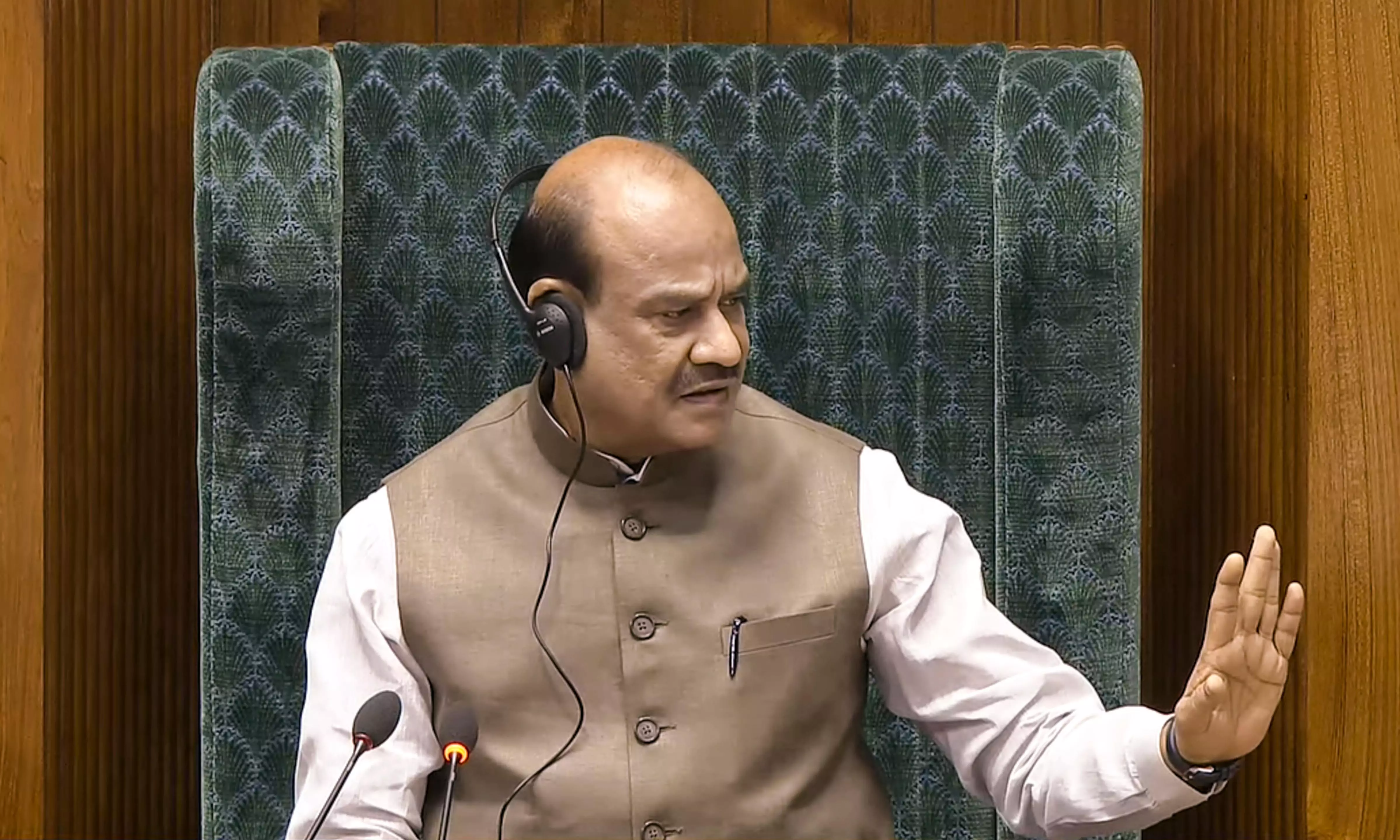
The second half of Parliament’s budget session will commence on Monday (March 9) with the Lok Sabha taking up the Opposition’s no-confidence motion, backed by 118 INDIA bloc MPs, seeking the removal of Om Birla as Speaker. While the motion by itself is expected to trigger a war of words between the Treasury and Opposition benches, there are enough indications that the remainder of the budget session, which concludes on April 2, would be just as stormy.
Also read | Lok Sabha to take up no-confidence motion against Speaker Om Birla on March 9
The Opposition parties, particularly the Congress at whose behest the notice seeking Birla’s removal was submitted during the first half of the budget session, are hopeful that a discussion on Birla’s “brazenly partisan” conduct of Lok Sabha proceedings will follow once the motion is formally moved on the floor of the House.
Speaker Birla under fire
On Saturday, Mamata Banerjee’s Trinamool Congress, which had refused to sign the notice seeking Birla’s removal when it was submitted by Congress MPs Gaurav Gogoi, K Suresh and Mohammed Jawed last month, indicated that it would support the motion once it is moved in the Lok Sabha. A senior Lok Sabha MP of the Congress told The Federal that there was “no chance” of the party withdrawing the motion and claimed that “senior leaders from all INDIA bloc parties will speak during the discussion on the motion and highlight specific instances to expose how the Opposition’s voice is being muzzled by the very custodian of the Lok Sabha”.
Birla, who had stopped presiding over Lok Sabha proceedings since the Opposition submitted its notice on February 10, is expected to speak during the discussion and counter the Opposition’s charge. The Centre is also expected to line up senior ministers and MPs cutting across the NDA partners to speak in Birla’s defence. Prime Minister Narendra Modi too is expected to speak during the discussion, said sources in the BJP.
While Birla may not have presided over House proceedings after the Opposition moved to seek his removal, he has continued to discharge administrative duties of the Speaker, including setting up over 60 Parliamentary Friendship Groups, with their members drawn from both Treasury and Opposition sides. This is expected to be touted by the Treasury MPs as a mark of the Speaker’s impartiality.
Meanwhile, the broader counterstrike by Birla and senior NDA MPs is expected to focus on a targeted broadside against Lok Sabha’s Leader of Opposition, Rahul Gandhi, and other Congress MPs for “repeatedly violating Parliamentary rules of procedure and misleading the country by claiming that they are not allowed to speak.”
Who will preside Lok Sabha?
Since the Lok Sabha has not had a Deputy Speaker after May 2019, it is, as yet, unclear who would preside over the discussion on the motion.
PDT Achary, former Secretary General of the Lok Sabha, told The Federal that as per rules it is the Deputy Speaker who presides over the discussion on a motion seeking the removal of the Speaker while the Speaker is allowed to attend the discussion as an ordinary MP and also present his defence. “However, since the Lok Sabha has not had a Deputy Speaker for nearly seven years now, this is a grey area because now basically the Speaker will get to decide who will preside over the discussion on the motion against him… he can choose anyone from the panel of chairpersons or even an MP who is not on that panel,” Achary said.
Also read | Opposition submits notice seeking Birla's removal as LS Speaker, what next?
Sources in the BJP said it is likely that either Jagdambika Pal or PC Mohan, both members of the panel of chairpersons and senior BJP MPs, could be handpicked to preside over the discussion.
Once the discussion concludes, it will be put to a vote. The Opposition is acutely aware that it lacks the bench strength (a majority of the total strength of the House) to get the motion passed but insists that it was forced to submit the notice under Article 94(C) as a “last resort due to extraordinary circumstances created by the Speaker himself”. Jairam Ramesh, the Congress’s communications chief, said the goal of the no-confidence motion “is not really to remove him from office but to use a perfectly legitimate and constitutional parliamentary instrument to put on record the Opposition’s deep concern over the brazenly partisan manner in which Lok Sabha proceedings are being conducted by him (Birla) to favour the BJP and muzzle the Opposition.”
Opposition plans full-scale protest
While the discussion on the Opposition’s motion is expected to conclude on Tuesday, proceedings in both Houses of Parliament are likely to continue in uproar.
INDIA bloc leaders, said sources, are expected to renew their demand for a detailed discussion on the interim trade agreement signed between the US and India last month, which Rahul Gandhi and several other Opposition leaders have dubbed as “anti-farmer and against the economic and sovereign interests of the country”. The Opposition’s demand to discuss the Indo-US trade deal, says Congress MP Manish Tewari, has only been “compounded further” by the war jointly waged against Iran by the US and Israel, which has “far reaching economic and geopolitical consequences for India”.
That the US has “allowed India to resume buying Russian oil for a period of 30 days” as a consequence of the war in Iran, which is expected to disrupt crude oil and LNG supplies globally due to the blockade in the Strait of Hormuz, is also likely to be raised by the Opposition. Congress leaders allege that America’s statement on the matter has practically validated Rahul’s claim that “Modi’s trade deal with the US has surrendered Indian economic interests”.
The Opposition is also planning to protest in Parliament against the steep Rs 60 hike in the price of domestic LPG cylinders that came into effect on Saturday (March 7). Also on the agenda of the INDIA bloc, particularly the Congress, is an offensive directed at Prime Minister Modi and Union Petroleum Minister Hardeep Singh Puri over the latter’s name finding repeated mentions in the Epstein Files revelations made in the United States.
The Congress has been pressing for Puri’s resignation from the Union Cabinet over the allegations about his numerous email exchanges and personal meetings with Jeffrey Epstein, who was convicted in the US in 2008 on multiple charges, including paedophilia, and died in custody in 2019 while awaiting trial in another sex trafficking case.
Centre set to target Mamata
With high stakes elections set to be announced any day now for the assemblies of Bengal, Tamil Nadu, Kerala, Assam and Pondicherry, sources say the Centre plans to launch a stinging attack on Bengal Chief Minister Mamata Banerjee for “insulting India’s first tribal woman President, Droupadi Murmu”.
Also read | Row over President’s remarks in Bengal; PM slams TMC govt for ‘insulting’ Murmu
On Saturday, Murmu triggered a war of words between the Trinamool Congress chief and the BJP when she alleged that Banerjee “does not allow” her to visit Bengal. Murmu claimed the local administration in the state tried to prevent her from meeting Santhal tribals gathered in Siliguri’s Bidhannagar for the privately organised International Santhal Council, while forcing her to attend a separate event of the Santhal community at Gosainpur, near the Bagdogra airport, which had a sparse turnout.
While Banerjee dismissed the allegations and claimed the President was being used for the BJP’s political agenda ahead of the Bengal polls, Modi hit out at the Trinamool government saying it had “truly crossed all limits” and that Banerjee’s administration was “responsible for this insult to the President” who “herself hails from the tribal community”.
The Centre also plans to pillory the Congress on the row over the Indian Youth Congress’s ‘shirtless protest” at the AI Impact Summit last month. Over a dozen IYC members, including the outfit’s national president Uday Bhanu Chib, were arrested by the Delhi police (Chib and some others are now out on bail) in connection with the protest, which the police and BJP leaders have variously claimed was part of a “deeper conspiracy” to promote “anti-India sentiments” and “malign the image of the prime minister”.
Parliament showdown looms
The Centre, said sources, is “not worried” about the disruptions of House proceedings as far as their impact on getting the Union Budget and Demand for Grants passed by Parliament are concerned.
“The Parliamentary Affairs minister (Kiren Rijiju) has already said that if the Opposition continues to disrupt, the government will bring the guillotine (a parliamentary instrument that enables to the Centre to club together the budget and any demands for grants or related matters not discussed in the House and put them to a vote at once)…We will not allow the Opposition to derail our agenda,” a Union minister told The Federal.
The session, as has now become a recurring practice in recent years, is also expected to see a “surprise” legislation introduced in Parliament by the Centre without any prior discussion with the Opposition and other stakeholders. Rijiju had said as much last month while asserting that the government wants to bring a critical Bill to Parliament but “will not disclose” its details beforehand.
Also read | Congress questions ‘American blackmail’ after 30-day waiver to buy Russian oil
While Opposition leaders have been wondering what this new legislation could be. Some Opposition leaders told The Federal that the Centre could bring in a new law on funding of political parties as a replacement of the controversial Electoral Bond scheme, which the Supreme Court had scrapped two years ago, others said the government could be planning some major populist and polarising scheme considering that critical electoral battles in Bengal, Assam, Tamil Nadu and Kerala that are fast approaching. What Opposition leaders were in complete agreement on, however, was that any proposed law brought without proper consultations is bound to be met with resistance both inside Parliament and outside it.
The stage is set for a turbulent post-recess session of Parliament.