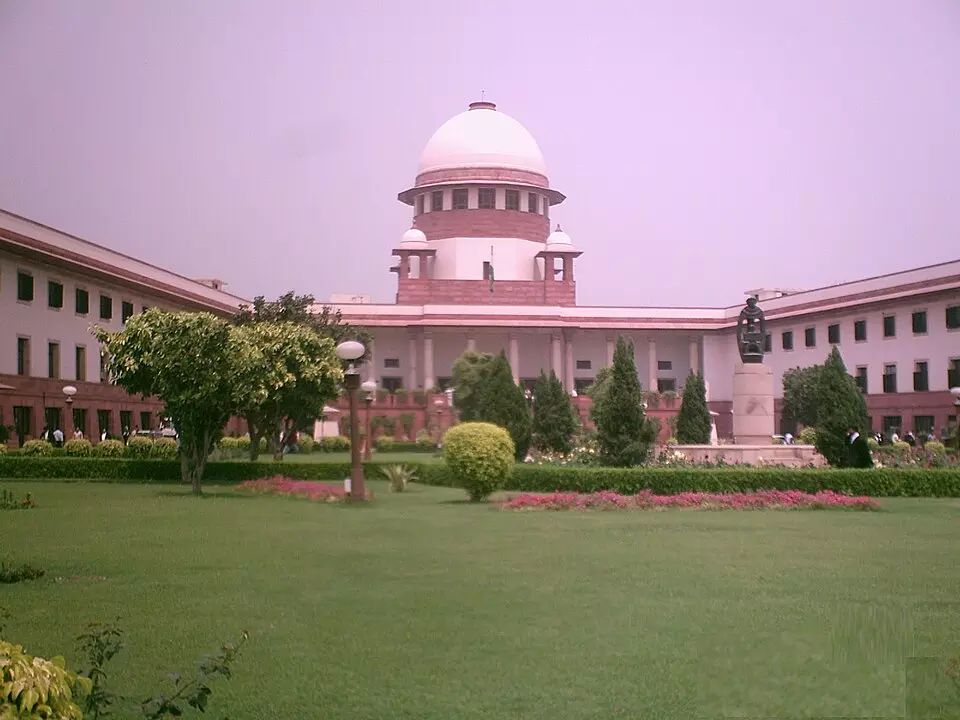
Kaul’s memoir lifts the lid on the collegium, sparks questions about his own choices
Justice Sanjay Kishan Kaul’s memoir faults the practice of seeking the government’s nod before the collegium debates a name, but his own picks invite scrutiny too

In October 1993, a nine-judge Bench of the Supreme Court of India first laid down the decisive power of judges to select judges (Second Judges case). The government could oppose a judge name recommended by the collegium, but if the collegium reiterated its recommendation, the Executive was bound to accept it "as a healthy convention". Former Supreme Court judge Sanjay Kishan Kaul's soon-to-be-published memoir, Without Fear or Favour (Juggernaut), co-authored with researcher Jay Vinayak Ojha, echoes this.
Justice Kaul retired in December 2023, as the next senior-most judge after incumbent Chief Justice DY Chandrachud. The memoir centres on Justice Chandrachud, at a collegium meeting, pondering whether to seek the government's approval to recommend a Judge to fill the Court's sixth and last unfilled vacancy towards the end of 2022. Justice Kaul describes the practice as 'pre-approval', which he defines as "going and seeking the Government's nod before the collegium had even formally begun debating." In an interview, Justice Kaul described pre-approval as a settled practice that began before Justice Chandrachud even joined the Bench.
Justice Chandrachud's 'bizarre' question
The record of that meeting leaves Justice Kaul’s suspicion open and tests the claim that informally sounding out the government about the recommendees speeds appointments. On December 13, 2022, the collegium sent five names for six vacancies, and the government notified them 53 days later. Most recommendations since 2018 cleared within three weeks, though Justice Dipankar Datta’s appointment took 76 days in late 2022. The government may have sat on the five because the collegium dropped its suspected favourite, or over its wider quarrel with the court. Either way, any advance sounding bought the collegium no speed. The file moved on February 4, 2023, a day after Justices Kaul and Abhay S Oka warned Attorney General R Venkataramani against delay.
Also read: Executive magistrate and preventive detention: Law behind CJP and AISA cases
In the case of a minority-faith candidate, the memoir shows how the government asked why the Court needed greater representation of the minority community. Justice Kaul recalls that Justice Chandrachud posed a second, "bizarre" question concerning the caste of the candidate's family. The government's question directly contravened the collegium's January 31, 2023 resolution, which is to consider minority representation.
The collegium showed it can take on the government when it rejected the intelligence panel's objections to senior advocate Saurabh Kirpal in January 2023. In a November 2024 interview, Justice Chandrachud said, "We prefer talking to the Law Minister over using the power to implement recommendations". "It is not just the government which has a veto", he added, since a candidate rejected as unfit by the collegium cannot become a judge.
The 1993 judgment
The judiciary's veto was built into the 1993 model: no name even gets to the President without the backing of the collegium. The government's veto is weaker: it can refuse the name and put it back once. If the collegium reiterates the name, the government has no choice: it must appoint the judge. The government, though, misuses its role to delay the appointment using a pocket veto. In judicial appointments, a pocket veto is the government's practice of blocking a candidate the collegium has recommended, or even reiterated, by sitting on the file indefinitely instead of rejecting it on the record, until the candidate withdraws or the vacancy is filled by someone else.
Also read: EC rift: How the government handled two commissioners’ complaint
Taken literally, then, Justice Chandrachud has granted the executive a veto power that the 1993 judgment refused to recognise. Though he may have used the term loosely, meaning the government's right to object to a name, in reality that right now functions like a pocket veto. It works through delay (the government continues to withhold names even when the collegium reiterates them), and through pre-emptive strike (any name the government opposes is dropped before the collegium formally recommends it).
In response to this inaction, Justice Kaul was tempted to wield judicial authority that Justice Chandrachud was reluctant to exercise. His Bench set precise deadlines in April 2021, requiring approval of a reiterated name within three to four weeks. On 5 December 2023, the court registry removed the matter from his cause list. Justice Kaul now blames Justice Chandrachud for this, writing that it contradicts his own final authority as the master of the roster. An administrative function prevails over an order, and the case has not been heard since. In July 2025, Chief Justice BR Gavai said his court hoped to resolve the matter administratively.
A parallel story is the reconsideration of the July 2022 Vijay Madanlal Choudhary ruling, which the Justice Kaul-led three-judge Bench heard in October 2023. That decision, rendered by a Justice AM Khanwilkar-led 3-judge Bench, reaffirmed the Enforcement Directorate's (ED) powers of arrest and attachment, and the stringent bail conditions under the Prevention of Money Laundering Act (PMLA). Justice Kaul recounts that, mid-hearing, Justice Chandrachud counselled caution and a middle path at a meeting in his chamber, attended by Justice Sanjiv Khanna, also on the Bench. The case was eventually withdrawn from Justice Kaul’s Bench a few weeks before he retired, after Justice Kaul refused to adopt a “middle path” while reconsidering the Choudhary judgment. The case remains pending, and as Justice Kaul rightly puts it, it dictates every arrest made under the Act.
Memoir sheds light on court’s opaque workings
Both episodes turn on the Chief Justice's control of the roster, which decides which judges hear which cases. The grievance is older: four senior judges (Justices Jasti Chelameswar, Ranjan Gogoi, Madan B Lokur and Kurian Joseph) took it to the press in January 2018, expressing concern that the Chief Justice, Dipak Misra, was exercising the power of the master of the roster unilaterally and anti-democratically. Three months later, Justice Chandrachud wrote the ruling in Asok Pande's case, declaring that the Chief Justice alone has the prerogative to constitute Benches. That ruling, reaffirmed in July 2018 by another Bench, left Justice Kaul with no option to contest Chief Justice Chandrachud's roster decisions in 2023. Justice Kaul's restraint in office explains his verdict on the 2018 protest by the four Judges: the grievance had some legitimacy, but going public was unwise. Justice Kaul’s silence in 2023 spared the court a second rupture, but his full account of the Court's internal discontent became public only after both cases had gone cold.
Also read: Why does changing religion put reservation benefits at risk?
The memoir sheds light on the court’s opaque workings, yet a reader may want to know how Justice Kaul weighed the nominees he endorsed. On November 6, 2023, a collegium including him recommended Justice Satish Chandra Sharma, then Chief Justice of the Delhi High Court. The resolution cited his 15-plus years on the High Court Bench, over two years as Chief Justice, and second-place in all-India seniority. It added that his judgments “stand testimony to his legal acumen and competence”, though it didn’t name any of them.
Those generic reasons now invite closer reading, as Justice Sharma’s role in two matters touching Chief Election Commissioner (CEC) Gyanesh Kumar has drawn scrutiny. In September 2026, he and Justice N Kotiswar Singh stayed the Allahabad High Court’s strictures against Kumar’s daughter, Noida District Magistrate Medha Roopam, and the direction to pay Rs 5 lakh to the student, Akriti Chaudhary, who, the High Court held, was detained illegally under the National Security Act after participating in a workers’ protest in Noida in April 2026. The stay left the High Court’s quashing of Chaudhary’s preventive detention intact. Sitting with Justice Dipankar Datta, who disagreed, he favoured a Constitution Bench for the challenge to the 2023 law on appointing election commissioners.
Applicants now seek recall of that opinion, citing his son’s reported engagement since July 2024 as the Election Commission’s standing counsel in Madhya Pradesh. They allege the undisclosed link, which emerged after five hearings, created a reasonable apprehension of bias. Chief Justice of India Surya Kant has agreed to examine the plea. A lawyers’ body has separately asked why Roopam’s petition reached Justice Sharma’s Bench, since, it says, the roster sends preventive detention cases elsewhere.
These episodes postdate Justice Kaul’s tenure, while seniority and merit may have made Justice Sharma a natural choice in 2023. They still show why a resolution should record what its authors weighed beyond seniority, and why disclosures need a written trail. A memoir that faults pre-approval invites scrutiny of the choices its author helped make as a member of the collegium during his tenure.