Imran Khan apologises for anti-SIR protest; can law really punish OCI holders for protesting?
Foreign citizens, OCI holders don’t have fundamental rights to protest, but Indian law doesn’t expressly bar them from protesting, nor govt can cancel OCI status without a hearing

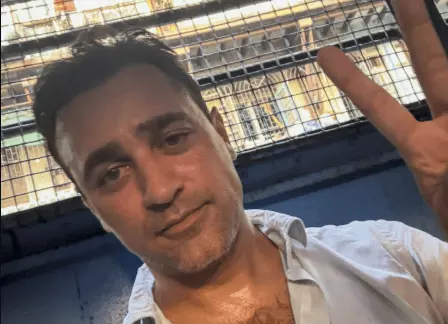
Actor Imran Khan has, for now, evaded the Leave India Notice served on him last month after the Bombay High Court accepted his unconditional apology on November 2 for participating in a protest against the Chief Election Commissioner and the Special Intensive Revision of electoral rolls in India despite being a US citizen who holds an Overseas Citizen of India card.
The case, however, leaves open a question that will outlive his case: what does Indian law require of a foreign national of Indian origin holding an Overseas Citizen of India (OCI) card and having lived here almost all his life?
Khan has no right to protest
Khan, a US citizen, was briefly detained near the August Kranti Maidan in Mumbai on October 10 during the protest against Chief Election Commissioner (CEC) Gyanesh Kumar over the Special Intensive Revision (SIR) of electoral rolls. On October 14, the Foreigners Regional Registration Office (FRRO) asked him to leave India by October 28 on a complaint by former BJP MP Kirit Somaiya.
The Union Home Ministry's 2021 notification for OCI cardholders requires special permission for journalism, mountaineering, missionary activity, research, and visits to protected areas, and protest is not mentioned on that list.
While hearing Khan’s plea against the FRRO notice on Monday (November 2), a bench of Chief Justice Mahesh Chandra Tripathi and Justice Advait Sethna kept the notice in abeyance till the FRRO hears him after recording his apology and his undertaking not to protest in future.
Also read: Imran Khan apologises to Bombay HC, vows not to join future protests
The bench was on solid constitutional ground. Article 19 guarantees freedom of speech and peaceful assembly only to citizens. Foreigners can only avail themselves of such rights as equality under Article 14 and personal liberty under Article 21.
In Louis De Raedt v. Union of India (1991), the Supreme Court held that a foreigner's fundamental right is confined to Article 21 (life and liberty), which does not confer a right to reside and settle in India. It also called the government's power to expel foreigners "absolute and unlimited". So, Khan has no fundamental right to protest against the Election Commission.
Can law bar OCIs from protesting?
But lacking a fundamental right to protest differs from being forbidden to protest. Even the State's power over foreigners comes from statute: in Hans Muller of Nurenburg v. Superintendent, Presidency Jail, Calcutta (1955), the Supreme Court traced the "absolute" power of expulsion to the Foreigners Act. Article 20(1), which protects citizens and foreigners alike, bars punishing anyone except for breaking a law in force.
Whether Khan was forbidden to protest therefore depends on statute. The Immigration and Foreigners Act, 2025, effective from September 1, 2025, does not mention protests anywhere. Section 7 authorises the Central Government to make an order prohibiting a foreigner from "engaging in activities of a specified description". The Order and Rules issued under the Act on that same day contain no express bar on political activity, demonstrations or speech.
The Union Home Ministry's 2021 notification for OCI cardholders requires special permission for journalism, mountaineering, missionary activity, research, and visits to protected areas, and protest is not mentioned on that list.
Also read: Bombay HC stays FRRO notice directing actor Imran Khan to leave India
This aligns with the Centre's recent practice. The Home Ministry notified in August 2025 that an OCI registration can be cancelled if its holder is sentenced to prison for two years or more, or is charge-sheeted for an offence punishable with seven years or more.
The offence which Somaiya cited, under Section 23 of the Act of 2025, carries a maximum of three years. The bench observed that protest by an OCI cardholder is intolerable and he "cannot criticise". Such cardholders "are at the mercy of the country", the bench was quoted by PTI as saying. It is debatable whether the bench can substitute for the silence in the law and the rules.
Govt can’t summarily nullify OCI status
The government's defenders have a strong case. The OCI card is a statutory concession under Section 7B of the Citizenship Act. Under Section 7D, it can be cancelled in the public interest. Section 29 of the 2025 Act allows a foreigner to be removed on an adverse security report without naming any breach. Democracies often worry about external meddling in their politics, and India has every right to do so.
The Citizenship Act empowers the Centre to specify in advance, by order subject to judicial review, the activities foreigners are prohibited from engaging in. If a government wants OCI cardholders out of protests, it can make that rule public, and those affected can then weigh the risk before acting.
The Act already provides the answer. Section 7 empowers the Centre to specify in advance, by order subject to judicial review, the activities foreigners are prohibited from engaging in. If a government wants OCI cardholders out of protests, it can make that rule public, and those affected can then weigh the risk before acting.
The bench had a good procedural sense. It asked Additional Solicitor General Anil Singh how such a notice could be issued, without a hearing, to a man who had lived here for years without breaking the law. It also asked what would happen if the police found no evidence against him. The questions follow the Citizenship Act, under which Section 7D, since an amendment in 2019, states that no order cancelling an OCI registration can be made unless the holder has been heard. The FRRO's own show-cause notice on October 17 proposing to cancel Khan's registration suggests the department saw the difficulty.
When courts took lenient approach
Other high courts have sought similar fairness. The Calcutta High Court in March 2020 quashed a Leave India Notice issued to Polish student Kamil Siedczynski of Jadavpur University after he was seen at an anti-CAA rally. The notice was called a "paranoid over-reaction" violative of Article 21. For now, the Delhi High Court is tilting the other way. In Khalid Jahangir Qazi v. Union of India (2026), the Division Bench on August 11 took the provisional view that the safeguards under the Citizenship Act cannot automatically be brought into proceedings under the old Foreigners Act.
Also read: Actor Imran Khan challenges 'leave India' notice in Bombay High Court
Courts have sometimes made a litigant's undertaking about future conduct the price of interim relief. In 2023, the Karnataka High Court safeguarded Kannada actor Chetan Kumar's OCI card for interim relief on his undertaking not to tweet about the judiciary.
If FRRO wishes to expel Khan, it must say why
An apology for disputed past conduct is a different matter. Khan has denied participating in the protest; no authority has found that he broke any law, and the State's counsel told the high court bench she needed instructions on whether the FIR implicated him. An apology made before the FRRO hears him might be treated as an admission there and in the criminal case. It gave him time, and his lawyers chose to file it. But a litigant facing expulsion in days will accept almost any condition. This is why a court must weigh the condition it imposes.
Also read: From reel to real: Why Imran Khan’s 'Matru Ki Bijlee Ka Mandola' feels relevant again
The bench also said an Indian participating in a protest in the United States would be put on the next flight home. The American executive tried exactly that in 2025 against foreign students and scholars who spoke up for Palestinians. On September 30, 2025, federal district court Judge William Young in Massachusetts ruled that the administration's ideological deportation policy violated the First Amendment, which protects the right to free speech in the US. He held that non-citizens lawfully in the US enjoy the same free speech protection as citizens. On closer examination, the comparison favours Khan.
An FRRO wishing to expel an OCI cardholder must state the rule violated, disclose the material on which it relies, hear the person, and give reasons. The December 7 hearing will test whether the FRRO can do all four.