From reel to real: Why Imran Khan’s 'Matru Ki Bijlee Ka Mandola' feels relevant again
Detained during a protest against the SIR of electoral rolls, the actor’s real-life confrontation with the state echoes his portrayal of an activist challenging the nexus between political power and corporate interests

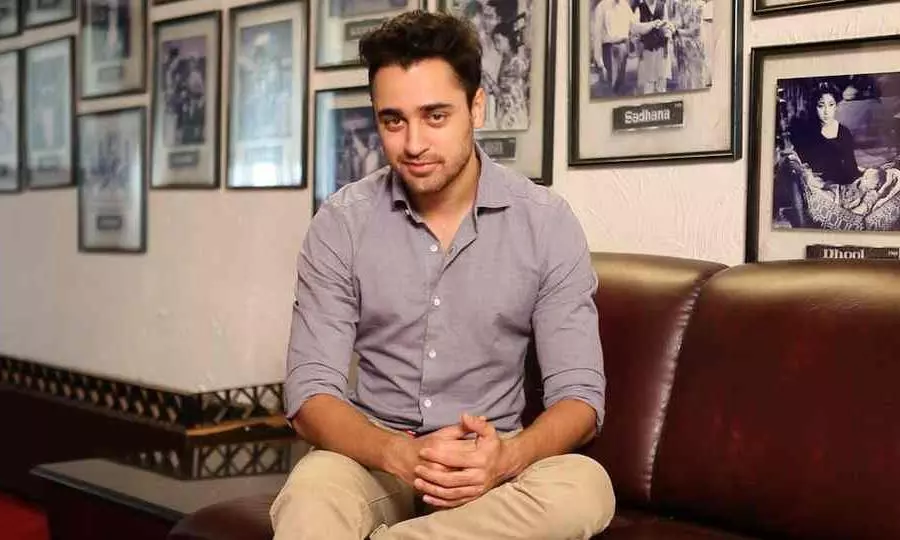
The public image of actor Imran Khan that has emerged in recent years is increasingly that of someone willing to step outside the comfortable boundaries of celebrity. File photo: Wikimedia commons
Imran Khan was once the boy who could make rebellion look like romance. In Jaane Tu… Ya Jaane Na (2009), he played the young man who took his time falling in love, all sheepish smiles, gentle wit and a studied indifference to the world’s expectations. He was the sort of hero who seemed incapable of making a scene.
And then, in Mumbai, he was in the middle of one.
Political turn
Khan had joined a protest against the Special Intensive Revision (SIR) of electoral rolls, an exercise that has raised concerns over the deletion of voters’ names. He was detained by the police. Soon after, the actor, an American citizen and Overseas Citizen of India (OCI) cardholder, reportedly received a notice directing him to leave India. The image of the familiar romantic hero caught up in a confrontation with the state has an unmistakable charge. It also invites a look back at a film in which Khan stepped away from the business of making hearts flutter and into the far messier business of challenging power.
Also read: Actor Imran Khan to move Bombay HC against notice directing him to leave India
Released in 2013, Vishal Bhardwaj’s Matru Ki Bijlee Ka Mandola was an unlikely vehicle for Khan, and perhaps a revealing one. Here was an actor best known for playing the supportive friend, the hesitant lover, the young man whose greatest conflict was often admitting what he felt. As Matru, he played a city-educated, Left-leaning activist who returns to his village and stands up to a politician-industrialist determined to take its land. The film’s subject was dispossession; its targets were the corrupt political-business nexus and the convenient language of development used to dress up the interests of the powerful.
The romantic hero
Khan’s breakout performance in Jaane Tu… Ya Jaane Na established his appeal with remarkable efficiency. As Jai Singh Rathore, he was the affectionate friend who took time to recognise his own feelings, a young man whose appeal lay in his resistance to the swagger expected of a Bollywood hero. The film made his restraint seem radical in its own small way. Khan could carry a romance with a smile, a pause and the faintest suggestion of embarrassment.
For much of the next few years, that became his cinematic identity. Yet Delhi Belly (2011) had already revealed an appetite for mischief. Its profanity, bodily humour and thoroughly disreputable protagonists belonged to a different register of Hindi cinema, and Khan seemed happy to abandon the good-boy image that had made him popular. In Matru Ki Bijlee Ka Mandola, he pushed it further, bringing politics into the picture.
Story of land and power
In Bhardwaj’s film, Khan’s Matru becomes involved in a struggle against the acquisition of agricultural land. The opposition comes from Harry Mandola, a wealthy industrialist and politician played by Pankaj Kapur, whose development plans threaten the livelihoods of local farmers. The film locates its comedy in a deeply recognisable Indian arrangement: political ambition, corporate money and the vulnerability of people whose land is suddenly worth more to the powerful than it is to those who live on it.
Also read: 'This is only a trailer’: Prakash Raj warns SIR protests yet to peak
For Matru, the fight is personal as well as political. He understands the language of power and the tricks through which it operates. He also knows that the villagers stand little chance if they accept the official version of events. His resistance is fuelled by a mixture of conviction, impatience and dry humour and Khan plays him as someone who has little interest in the solemn performance of heroism. He simply refuses to cooperate with an injustice he can see unfolding in front of him.
An unusual film
The film, however, struggled to bring its ambitions together. Its political satire, eccentric comedy and romantic subplot often pulled in different directions. Bhardwaj’s deliberately exaggerated world had moments of real invention. But audiences expecting another easy Imran Khan romance encountered an altogether stranger proposition.
The film’s box-office failure obscured what was most distinctive about Khan’s performance. He did not play Matru as a grand ideological figure. Instead, his natural restraint worked in the character’s favour. The casualness, the dry humour and the refusal to turn every emotion into a declaration gave Matru a lived-in quality. He could appear almost indifferent even when he was deeply invested. In that, there was something quietly appealing about a man who did not need to announce his seriousness in order to possess it.
From reel to real
Today, that quality feels more relevant than it did a decade ago. The public image of Khan that has emerged in recent years is increasingly that of someone willing to step outside the comfortable boundaries of celebrity. His participation in the protests have placed him in a political situation with consequences that extend far beyond a film release or a promotional appearance.
Also read: 'More than a Gen Z uprising': Why the SIR protests matter beyond age and politics
More than anything, it is the film’s central question feels all the more relevant in 2026. What does an ordinary person do when power begins to treat other people’s lives as expendable? In 2013, Imran Khan answered that question through a fictional villager with a political conscience. Today, as he faces the fallout of stepping into a real political dispute, it is this film that returns with an unexpected charge. The romantic hero has receded. Matru, with his irreverence and his refusal to look away, seems closer than ever.