Bharat Summit visa row: What Indian law says on barring foreign speakers
While the Centre cites sovereign powers to deny entry, constitutional precedents on free speech and arbitrary bans could open the door to a court challenge

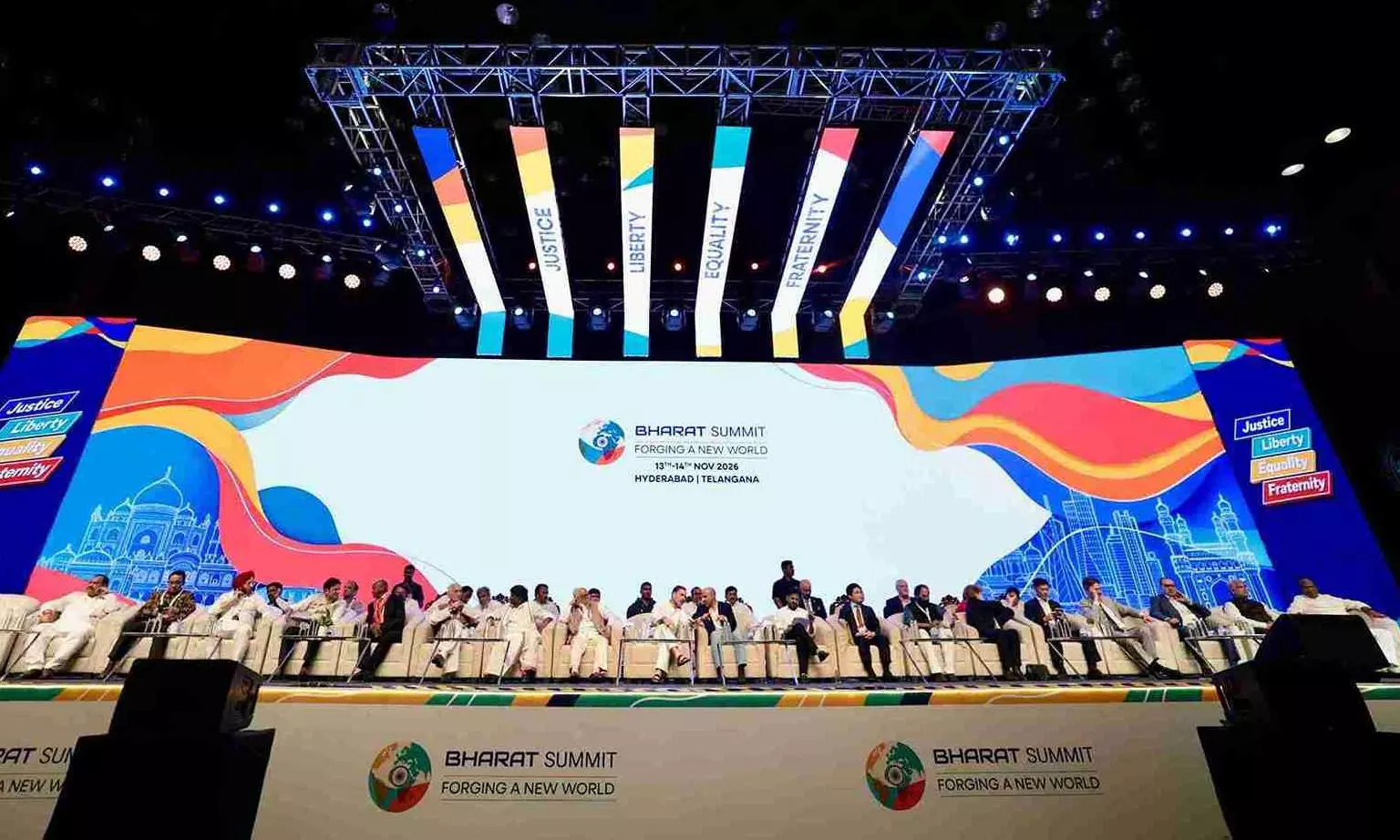
The Congress party's assertion that around 115 out of 315 foreign speakers approved to participate in its Bharat Summit in Hyderabad were barred from entering India has prompted Congress MP and head of the Parliamentary Standing Committee on External Affairs Shashi Tharoor to ask the Union government under which legal provision it acted.
The Ministry of External Affairs (MEA) responded on November 13 that visa issues are “sovereign functions of any country or any government”. The organisers say the Ministry of Home Affairs (MHA) made the decisions. There has been no statement from the MHA so far, and no official has confirmed the number of foreigners denied entry into India.
What clearances does a foreign national need?
Foreign speakers require two approvals, one for the event and one for the person. Since April 2025, conference organisers, whether government or private, have been applying on an MEA portal for what is called political clearance for their foreign participants. In the MEA’s clearance letters to the conference organisers in previous years, the Ministry stated that it had no objection “from a political angle”. It made that approval subject to clearance from the MHA “as applicable”. The first approval, then, did not guarantee entry.
The MHA’s own FAQ on conference visas, updated in May 2017, limits the Ministry’s security clearance to two cases. The first involves participants from Afghanistan, Pakistan, Iraq and Sudan, Pakistani-origin foreigners and stateless persons. The second covers events where the participants need to visit restricted, protected or militancy-affected areas. The FAQ also states that the MHA will not give security clearance to any event that does not fall into these categories.
The organisers cite this document to argue that the MHA had no role to play, as Salman Khurshid, chairman of the Congress's foreign affairs department, said on November 10 that no delegate from a neighbouring country had been invited.
Also read: What Bharat Summit means for Congress at home and abroad
What law applies to entry and visa cancellation?
The governing law is the Immigration and Foreigners Act, 2025, which came into force on September 1, 2025, replacing four earlier laws, including the Foreigners Act, 1946, and the Passport (Entry into India) Act, 1920.
Section 3 states that every foreigner entering India shall have a valid passport and a valid visa. It provides that even such a foreigner may be declared inadmissible on grounds of a threat to national security or to the sovereignty and integrity of India, relations with a foreign State, public health, or any other ground which the Central government may specify. The Immigration Officer's decision on this point is declared “final and binding”.
Section 7 goes even further. It empowers the Central government, by order, to prohibit, regulate or restrict the entry of all foreigners, a class of foreigners or a specific foreigner. The Immigration and Foreigners Order, 2025, issued under this section by the MHA, provides for refusal of entry if it is prohibited under specific orders of the Central government or of an agency it has authorised. The Order also requires the Bureau of Immigration to maintain a list of foreigners barred from entry. A listed person can make a representation to the MHA for review.
Rule 9 of the Immigration and Foreigners Rules, 2025, deals with the cancellation of an already issued visa. The authorities that grant a visa, that is, the MEA with its missions abroad and the Bureau of Immigration, are also the ones that cancel a visa or curtail its period. The Rules also state that the Bureau's officers are drawn from the Intelligence Bureau, which reports to the MHA.
Helle Lyng, a journalist with the Oslo daily Dagsavisen, says she received a telephone call from the Indian Embassy in Norway minutes before leaving for the airport on November 11. Such a call, then, has a statutory footing.
Also read: OBC reservation: What Supreme Court’s latest order means
Can the excluded delegates take legal action?
In Hans Muller of Nuremberg v. Superintendent, Presidency Jail, Calcutta (1955), a five-judge bench of the Supreme Court held that the Foreigners Act gave the Central government “absolute and unfettered discretion” to expel foreigners. In Louis De Raedt v. Union of India (1991), the court held that a foreigner’s fundamental right is restricted to Article 21, which protects life and personal liberty, and does not include a right to reside in India.
In both cases, the foreigners were already in India. Anthropologist Filippo Osella from the University of Sussex was turned back at Thiruvananthapuram airport in March 2022 despite having a valid visa. He challenged the decision in the Delhi High Court. In October 2022, the Union government told the court he was in the top category of its blacklist and offered to show the file to the judge, who directed it to file an affidavit.
Do the Indian hosts have a case of their own?
The law on this point is open. In Secretary, Ministry of Information and Broadcasting v. Cricket Association of Bengal (1995), the Supreme Court held that the freedom of speech and expression under Article 19(1)(a) includes the right to receive as well as the right to impart information. Citizens who have invited a speaker to hear and question her in person can claim that the State has infringed their own right, irrespective of the speaker's position.
Article 19(2) provides for the imposition of reasonable restrictions by law in the interests of the sovereignty and integrity of India, the security of the State, friendly relations with foreign States and public order, among others. These grounds overlap with those in Section 3 of the 2025 Act.
In Kleindienst v. Mandel (1972), the United States Supreme Court addressed the case of Ernest Mandel, a Belgian Marxist economist and journalist who was invited to speak at Stanford and other American universities. American law then barred advocates of communism from getting a visa, and the Attorney General refused to waive the bar. Along with Mandel, the professors who had invited him went to court. In a majority decision, the Court established a deferential standard for executive immigration actions, meaning courts exercise minimal review over individual visa denials.
Even that deferential test presupposes a reason has been given. That test has been met in India’s own practice before. In April 2016, Uyghur leader Dolkun Isa's visa was cancelled ahead of a conference in Dharamshala. The then MEA spokesperson, Vikas Swarup, explained that Isa had obtained a tourist e-visa without revealing he was coming for a conference, and that Interpol had issued a red corner notice against him.
Were the invitees treated as a class?
When more than a third of an approved list is struck off within days of the event, one has to ask whether the invitees were treated as a class. Section 7 does allow orders against a class of foreigners. The class here would be defined by the event they were to attend, a conference organised by the main Opposition party and hosted by a State government.
The Union List of the Constitution includes aliens, admission into India, passports and visas, and Telangana, therefore, has no say in the decision. As host, it may still ask for the reasons, and the organisers may challenge the decision as arbitrary.
The summit ended on November 14, and no court can bring back the lost sessions. A petition by the hosts would still be useful, for two reasons. It would test whether the government must give its reasons, at least to the court, as it offered to do in the Osella case. It would also matter to the excluded speakers themselves, as a person whose name is on the Bureau of Immigration's list is barred from future visits until the MHA reviews the entry.