


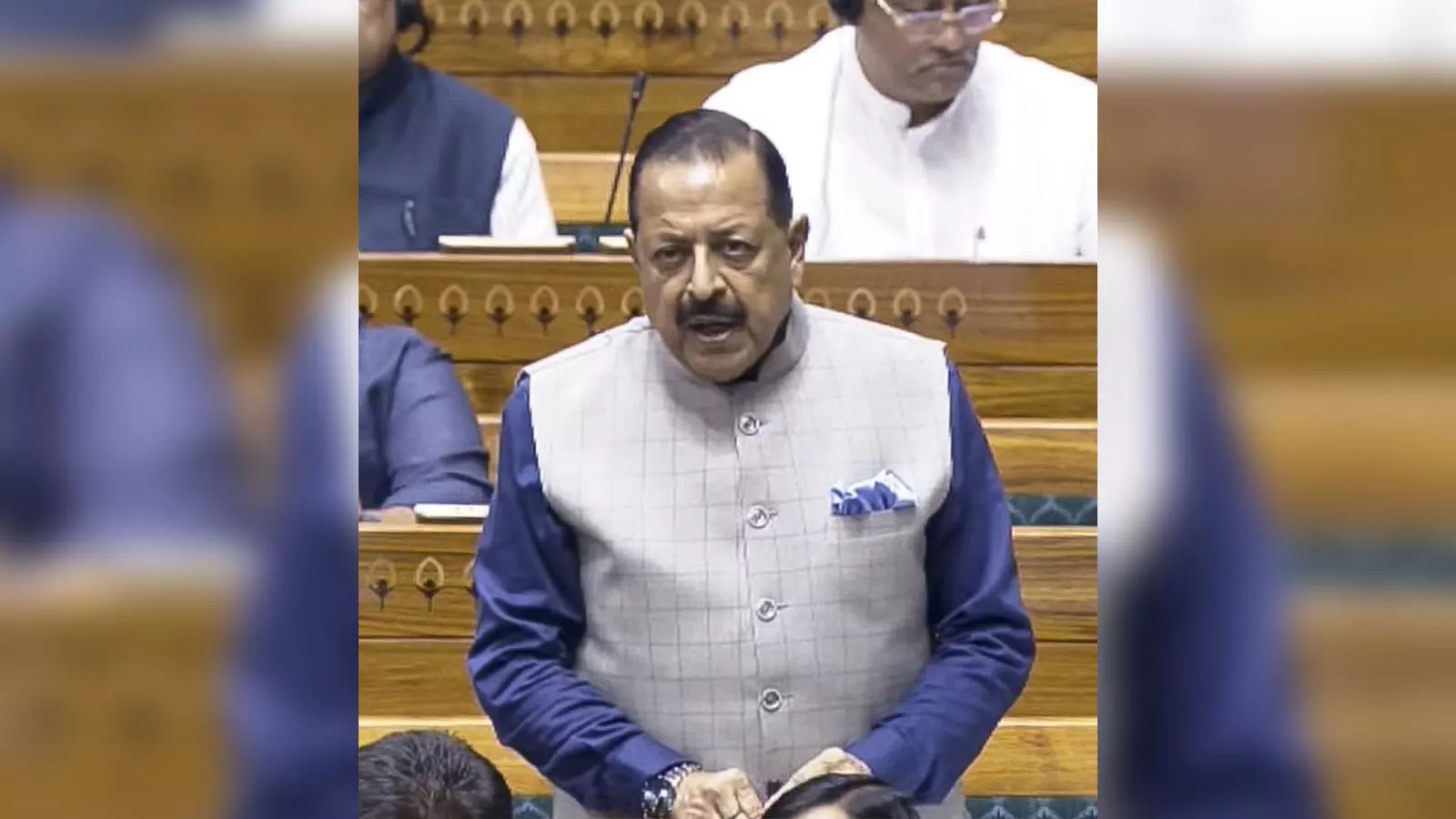
Union Minister of State Jitendra Singh speaks while introducing the examination reforms bill 2026 in the Lok Sabha in Parliament on June 27, 2026. Photo: Sansad TV via PTI Photo
How India's new anti-paper leak law can improve its exam structure
New legislation proposes fast-track courts, longer debarment periods for service providers, and severe penalties for cheating rackets. Will they deliver?

The introduction of the Public Examinations (Prevention of Unfair Means) Amendment Bill, 2026, in the Lok Sabha on Monday (July 27) marks the National Democratic Alliance (NDA) government’s most concrete legislative response yet to a crisis that the country witnessed for over a month.
Follow CJP movement updates here
Union Minister of State for Department of Personnel and Training, Jitendra Singh, who was one of the central representatives to speak with the Cockroach Janta Party (CJP) during the protests, introduced the Bill that seeks to amend the Public Examinations (Prevention of Unfair Means) Act, 2024, to strengthen the legal framework to deal with unfair practices in public examinations.
Coming two days after the resignation of Dharmendra Pradhan as the Union education minister, the bill represents an attempt to close the gap between public outrage and institutional accountability. As per the document, “The Act aims at effectively deterring persons, organised groups, and institutions from indulging in unfair means thereby committing offences, adversely impacting the sanctity of public examinations.”
Examination Act 2024 vs 2026: Some key differences
♦ Punishment for individuals: 2024 had 3–5 years imprisonment; 2026 has 5-10 years imprisonment
♦ Fine for individuals: Up to Rs 10 lakh in 2024; up to Rs 50 lakh in 2026
♦ Punishment for organised crime: 5-10 years, minimum fine Rs 1 cr in 2024; min 7 years, fine up to Rs 10 cr
♦ Service provider debarment: 4 years in 2024; 8 years in 2026
♦ Investigation timeline: No fixed timeline under 2024 bill; must be completed in 2 months under 2026 bill
While its success will depend on how effectively its provisions are implemented, on paper, at least, the changes address several long-standing weaknesses in India's examination security framework.
Harsher penalties
The new bill has called for a steep increase in punishment, one of the most visible changes. Under the 2024 Act, which was passed in February, individuals caught leaking papers or using unfair means faced three to five years in prison and fines up to Rs 10 lakh.
The amended bill raises this to a mandatory five-to-10-year sentence and a fine of up to Rs 50 lakh.
For organised syndicates, including criminal networks, the penalty climbs to a minimum of seven years and fines up to Rs 10 crore. Previously, the fine amount was Rs 1 crore.
Also read: The Cockroach Effect: Two new online movements now target E20 fuel, caste quotas
The bill also bars any service provider found engaging in unfair means from being assigned responsibilities in future public examinations for four years. It doubles this debarment period to eight years.
Countering the menace of organised cheating matters since past leaks have often been traced not to lone opportunists but to organised rackets with access to printing presses, transport routes, or examination centres. A structure that treats organised crime with proportionately heavy consequences could impact the risk calculus for those who see paper leaks as a low-risk, high-reward enterprise.
Time-bound probe
One of the key focuses of the bill is speed. Investigations into paper-leak cases must now be completed within two months, and states and Union Territories will be empowered to designate fast-track courts capable of concluding trials within three months of a chargesheet being filed.
In a country where judicial delays often stretch into years, the compressed timeline has been designed to ensure that punishment follows swiftly enough to serve as a deterrent.
The bill also provides that appeals against judgments, sentences, or orders of the special fast-track courts will go before a two-judge bench of the high court, with such appeals to be disposed of, as far as possible, within three months of admission.
Additionally, the Centre’s power to constitute a special task force for investigating serious cases is another key step. Prime Minister Narendra Modi has already formed a high-powered task force under Nandan Nilekani to revamp the examination system to make public tests leak-proof and transparent.
Building an exam framework
Beyond determining the scope and time of enforcement, the bill also tries to standardise the machinery of conducting the examination itself. It lists 15 specific illegal acts, including tampering with OMR sheets, creating fake websites, and issuing counterfeit admit cards.
Also read: Higher education bill may lead to concentration of power in central regulator: Parliament panel
It also sets out norms for pre-examination activities such as biometric registration, security and screening, and question paper handling — the very stages where past leaks have originated — as well as post-examination activities.
While the latest bill marks a shift from a purely punitive approach to one that also addresses the integrity of the process, not everyone in the opposition ranks is convinced the bill goes far enough.
Congress MP Karti Chidambaram, for example, has pointed out that the legislation focuses on penalising leaks after they happen rather than preventing them structurally.
Nevertheless, the bill constitutes, as Lok Sabha Speaker Om Birla said, a first step towards reform.
Tougher penalties and faster trials address the consequences of paper leaks, but sustainable reform will require parallel investment in secure infrastructure, transparent processes, and technological safeguards. Only then may the country move meaningfully closer to restoring the trust of the millions of students who have been deeply shocked by repeated instances of leaks.