



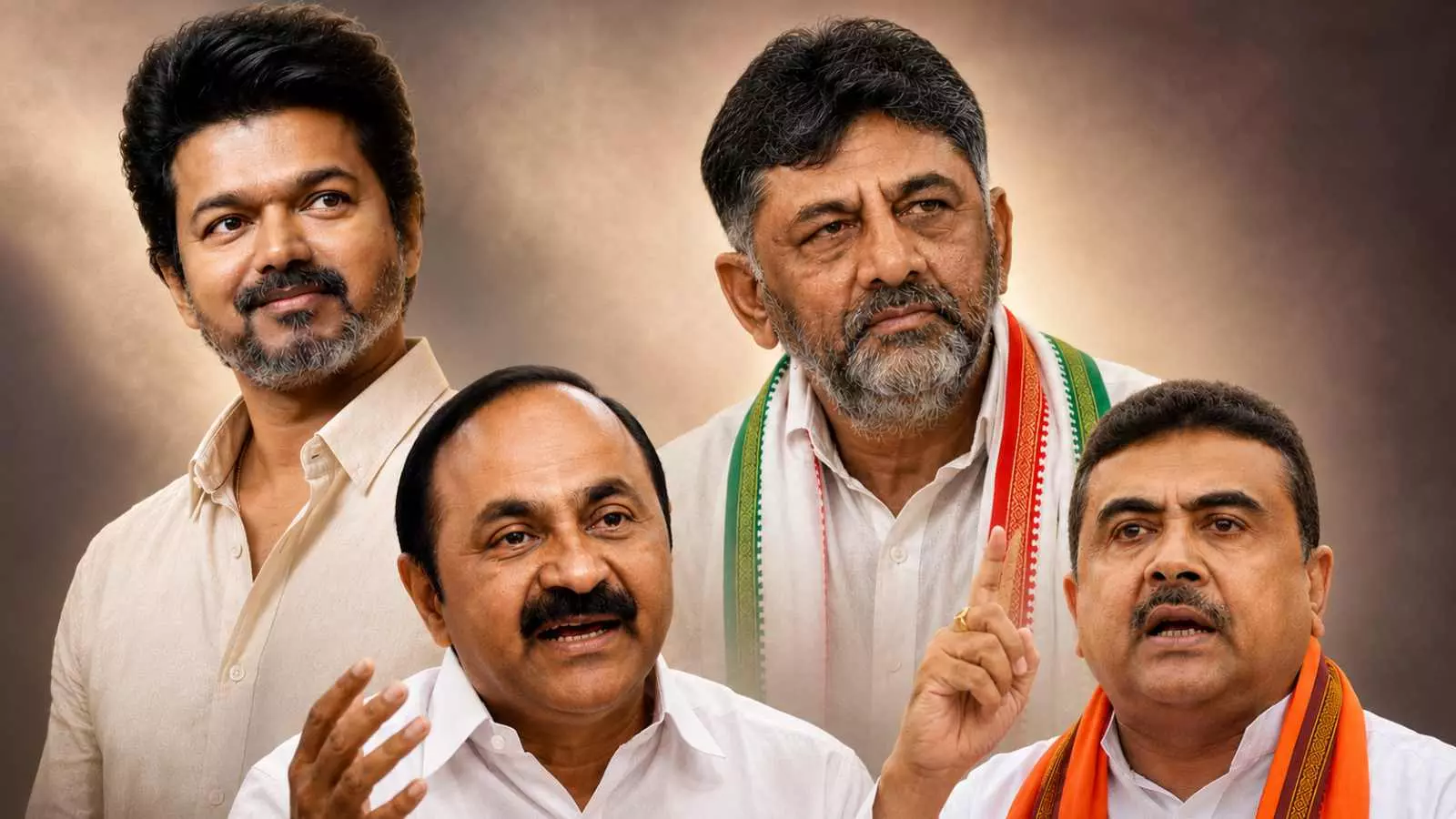
In a world ruled by Boomers, Indian CMs get younger by 2.6 years
With 4 younger CMs replacing much older predecessors recently and one set to do so, the mean age of India’s CMs has fallen by more than 2 years—from 61.6 to 59

Gen Z might be the buzzword the world over, toppling governments and keeping political establishments on their toes, but when it comes to heading governments, Boomers still rule.
Over the past five decades, the average age of global leaders has risen from 55 to about 62, and India is no different. India’s leaders are getting older with each generation too, with the median age of prime ministers being 76 and MPs aged 56–70 making up nearly 40 per cent of parliament.
While half of India’s population is under 30—the national median age hovers around 28 to 30 years—only 0.007 per cent of Lok Sabha members are below 35.
Old order makes way for new
Amid this overwhelming global and national gerontocracy, the Indian Gen Z can take heart from the age of chief ministers. With the four younger chief ministers replacing their far older predecessors this month, the mean age of India’s chief ministers has fallen by two years—from 61.6 in 2025 to 59 now—making them at least Gen X.
Also read: Suvendu vs Vijay: Two first-time CMs take oath, reflecting two Indias
In Tamil Nadu, 51-year-old C Joseph Vijay, a Gen Z favourite, took over from a 73-year-old MK Stalin. Similarly, in West Bengal, a 71-year-old Mamata Banerjee made way for a 55-year-old Suvendu Adhikari, her former protégé who was only a child when the TMC supremo stared her political career.
Similarly, in Kerala, the octogenarian Marxist leader Pinarayi Vijayan handed over the baton to the 62-year-old VD Satheesan who is 19 years his junior. And now, the 78-year-old Siddaramaiah has vacated his seat as the Karnataka chief minister, and his long-term rival and deputy, DK Shivakumar, who is 64 years old, is most likely to take over though a formal announcement is yet to be made.
And like Karnataka, as Bihar had a change of CM last month, a 57-year-old Samrat Chaudhary replaced a 75-year-old Nitish Kumar to take charge of the state.
This map has been made assuming that DK Shivakumar will be declared the new Karnataka CM though a formal announcement has not been made yet.
India gets its CMs young
Interestingly, Indian chief ministers have always been comparatively young. Their median age rose from 57 in the 1950s to about 59.5 in the 2020s, peaking at 62.25 in the 2010s. Across parties, whether Congress or BJP, the average age of CMs hovers around 58, and now it is back to about that after last year’s average neared the 2010 peak.
Also read: Winning a poll is only half the battle for Congress, as Kerala CM row showed
The youngest chief minister currently is Arunachal Pradesh’s Pema Khandu (46), while another North-Eastern state, Meghalaya, has the second youngest CM in Conrad Sangma (48). These are the only two CMs in their 40s, while the vast majority of the states and Union territories with legislatures have their leaders in the 50s.
With the exit of Siddaramaiah, only four states—Andhra Pradesh (Chandrababu Naidu, 76), Nagaland (Neiphiu Rio, 75), Mizoram (Lalduhoma, 77), and Tripura (Manik Saha, 73)—and the Union territory of Puducherry (N Rangasamy, 75) now have septuagenarian CMs. Another six states have CMs aged in their sixties.
Boomers rule
Compare that to some of the most powerful world leaders today, and the seventies still seem to "roar". Donald Trump (79), Lula da Silva (80), Benjamin Netanyahu (76), Vladimir Putin (73), Recep Tayyip Erdogan (72), and of course, Narendra Modi (75), continue to dominate.
Also read: Priyanka's key role in Shivakumar’s likely elevation as Karnataka CM
India’s Parliament has also aged significantly. The average age of MPs rose from 46.5 years in 1952 to 56 years now. The share of younger MPs (25–40 years) has dropped from 25–30 per cent in the early years to under 10 per cent today.