



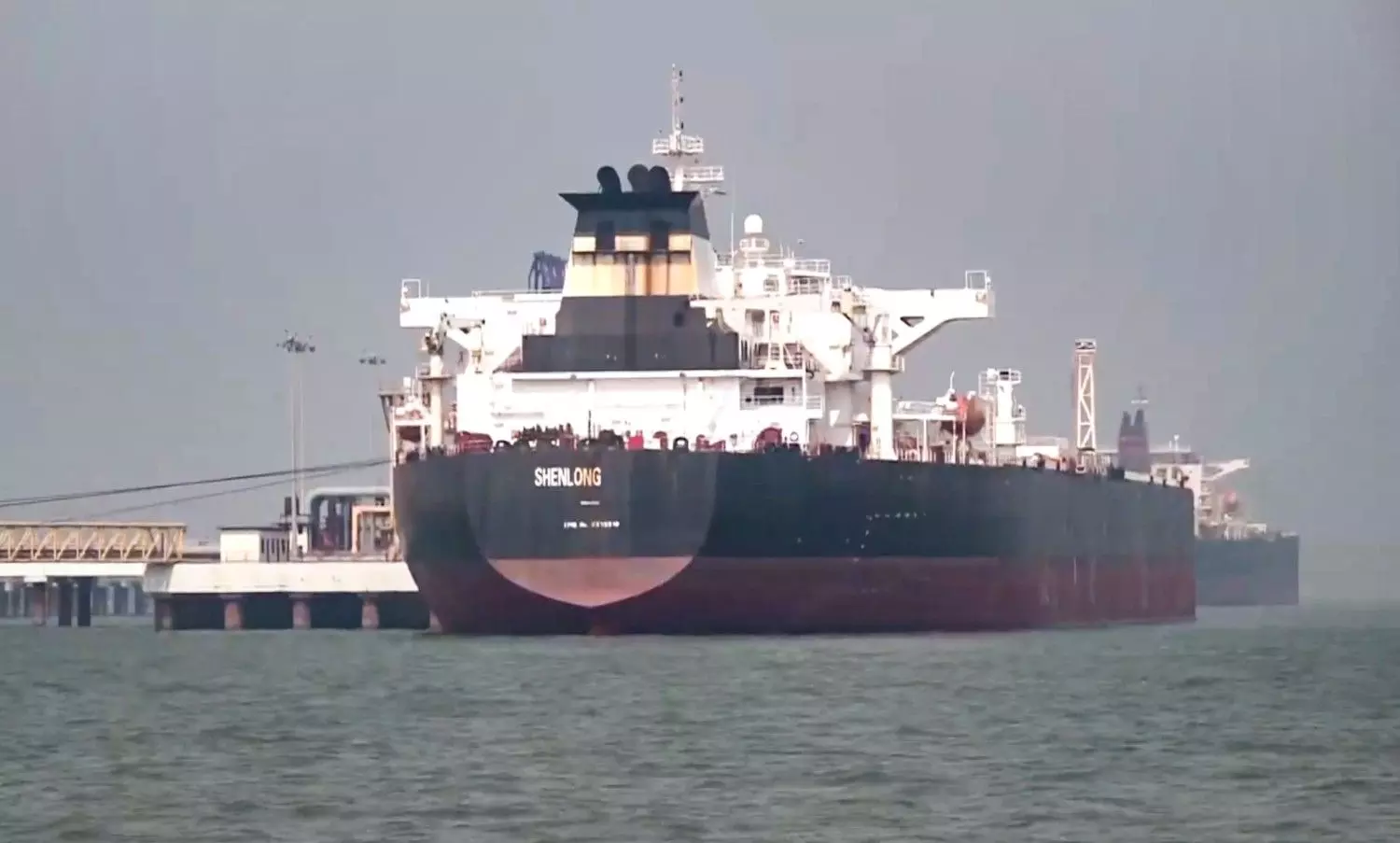
The Shenlong Suezmax, carrying crude oil from Saudi Arabia, berthed at Mumbai Port on Wednesday (March 11). Photo: PTI
How Indian-captained oil tanker went ‘dark’ and crossed Strait of Hormuz safely
Liberia-flagged vessel carrying Saudi crude becomes among the first to navigate the war-hit Strait of Hormuz as tensions from the US-Israel conflict with Iran disrupt global shipping

Amid escalating tensions in the Middle East, a Liberia-flagged crude oil tanker commanded by an Indian captain has safely reached Mumbai after navigating the conflict-hit Strait of Hormuz, offering some relief to concerns over disruptions in India’s energy supplies.
The Shenlong Suezmax, carrying crude oil from Saudi Arabia, berthed at Mumbai Port on Wednesday (March 11) after passing through the strategic waterway just days earlier. The tanker, which had departed from Ras Tanura port in Saudi Arabia on March 1, is carrying about 135,335 metric tonnes of crude oil and has begun discharging cargo at the Jawahar Dweep Terminal for onward transport to refineries in Mumbai.
The vessel is owned by Shenlong Shipping Ltd and managed by Athens-based Dynacom Tanker Management Ltd. It had a crew of 29 seafarers, including Indians, Pakistanis, and Filipinos, and was commanded by Captain Sukshant Singh Sandhu.
Ship briefly went ‘dark’ in Hormuz
Maritime tracking data showed the tanker’s last signal inside the Strait of Hormuz on March 8 before it briefly disappeared from monitoring systems. Experts say the crew switched off the ship’s Automatic Identification System (AIS) while crossing the high-risk stretch, a tactic known as “going dark”.
The AIS system automatically transmits information about a vessel’s identity, location, and movement to nearby ships and coastal authorities. Turning it off makes the ship effectively untraceable at sea and is usually avoided under international maritime rules except in exceptional security situations.
Also Read: Iran allows Indian ships safe passage through Strait of Hormuz after diplomatic talks
After clearing the danger zone, the tanker reappeared on tracking systems and continued toward India.
According to TankerTrackers.com, several other tankers — including two Very Large Crude Carriers, three Suezmax vessels, and a Panamax tanker — have also gone offline from AIS tracking for at least 48 hours while operating in the region.
Strategic waterway under threat
The tanker’s successful passage comes amid heightened hostilities in the Gulf following US-Israeli strikes on Iran. Tehran has reportedly attacked at least 16 ships in the past two weeks and warned of further strikes on vessels operating in the region.
The Strait of Hormuz handles more than 20 million barrels of crude oil daily, roughly a fifth of global oil consumption, making it one of the world’s most critical energy chokepoints.
Also Read: LIVE: India deplores attack on Kandla-bound Thai ship in Strait of Hormuz
India remains particularly vulnerable, as more than half of its crude oil and natural gas imports pass through the narrow maritime corridor.
The government has said that 28 Indian-flagged vessels are currently operating in the Persian Gulf region, carrying hundreds of Indian seafarers, while a Thai vessel bound for Kandla port in Gujarat was attacked in the strait earlier this week, prompting strong criticism from New Delhi.