‘Contamination, not E20, is the real problem; govt must fix it first’
Expert calls for greater transparency on fuel quality, tighter checks at fuel stations, while cautioning govt against increasing ethanol concentration beyond 20 pc

At a time when the government’s E20 policy is receiving widespread pushback from motorists, experts in the auto sector say the real culprit is not the ethanol blended fuel itself, but rather its high susceptibility to contamination, mainly due to ingress of water high in chlorine content.
Hormazd Sorabjee, editor, Autocar, explained that ethanol's hygroscopic nature means it absorbs water more readily than conventional petrol. Since groundwater often contains chlorine, contaminated fuel can introduce chlorides into engines, creating corrosive conditions that may damage engine components, he said.
‘Contamination not unique to E20 vehicles’
And the issue is not unique to E20-compatible vehicles, he said.
"If the chlorine levels go beyond a certain limit, whatever compatibility your fuel has, you're going to have a problem," he said.
Also read: No ethanol blending in ATF proposed, says Civil Aviation Minister Naidu
"It is not E20 per se which is the problem. It is the contamination of it which is the problem," he said, reiterating that ethanol's ability to absorb moisture makes quality control even more important than before.
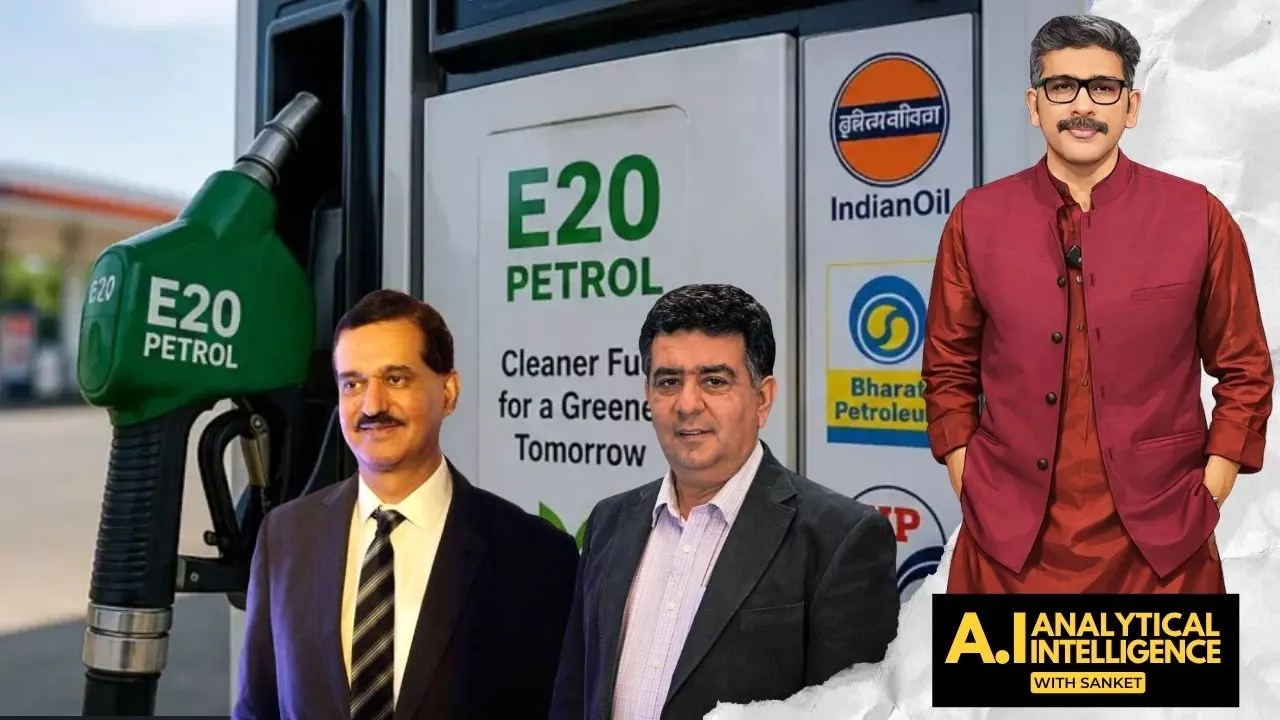
Sorabjee’s comments came during a discussion in The Federal on the furore over E20 fuel, contamination, consumer concerns and the way forward. Arun Malhotra, former managing director of Nissan India and an expert in the field, also participated in the discussion hosted by Sanket Upadhyay.
Both experts agreed that India's ethanol programme can succeed in the long run, provided infrastructure, fuel quality standards, communication and consumer protection improve together rather than independently.
Sorabjee said fuel contamination has existed in India for decades and predates the introduction of ethanol blending. According to him, oil marketing companies have significantly reduced adulteration over the years through better technology and stricter monitoring. However, contamination has not been eliminated entirely, and occasional lapses continue to occur.
‘Tighter checks needed’
Sorabjee said tighter quality checks at fuel stations are now essential. While he acknowledged that contamination cases remain relatively small compared to the total number of fuel stations, he noted that even a limited number of affected pumps can impact thousands of motorists.
While supporting India's long-term ethanol blending strategy for energy security and lower carbon emissions, he cautions against increasing ethanol concentration beyond E20, saying higher blends such as E25 could create genuine compatibility issues for older vehicles.
Also read: Why is E20 policy report not in public domain if it's beneficial for India?: Tahseen Poonawala
He said that solving contamination should be the immediate priority rather than questioning the fuel itself.
Communication gap
He also criticised the way the issue has been handled publicly. Referring to the reported communication and subsequent withdrawal by the Society of Indian Automobile Manufacturers (SIAM), he said such actions only increase public suspicion rather than restoring confidence.
Malhotra agreed that the larger problem is poor coordination among stakeholders rather than the E20 fuel itself.
According to him, motorists have received fragmented information—first about fuel efficiency, then about components such as gaskets and liners, and now contamination—creating unnecessary confusion.
He argued that oil companies, petrol pump operators, automobile manufacturers and the government need to communicate in one voice instead of responding independently whenever a controversy emerges.
Need for transparency
As the controversy rages, consumers have asked who will be responsible if an E20-compatible later suffers engine damage because of contaminated fuel, only to be told the damage is not covered under warranty.
Acknowledging the fear and uncertainty driving public frustration, Malhotra said stakeholders should openly explain the technical challenges instead of releasing partial information that is later withdrawn.
Also read: Policy over choice? Experts flag consumer risks in E20 fuel rollout | AI With Sanket
"When you are rolling it out at 100,000 pumps, you needed to do a lot of tests," he said, adding that E20 itself offers several benefits but that parts of the supporting ecosystem have not kept pace with the policy.
According to Malhotra, transparency and honest communication are essential if consumer confidence is to be restored.
Who pays the price?
Upadhyay argued that motorists appear to be the last priority in the ongoing debate, saying consumers are effectively becoming "collateral damage" when ageing infrastructure combines with a rapidly implemented policy.
Responding to this, Sorabjee said every regulatory transition carries a cost, but questioned why motorists should shoulder most of it.
He suggested that if consumers experience lower fuel efficiency with higher ethanol blends, policymakers could consider pricing mechanisms to offset some of those costs. Ultimately, however, someone in the ecosystem—whether oil marketing companies, fuel retailers or consumers—must absorb the financial burden.
Sorabjee also argued that governments should acknowledge that ethanol blending has practical challenges instead of portraying it as entirely problem-free.
"There are a few issues, but they are not major issues. Just be honest about it," he said.
Also read: Are automakers misleading E20 consumers? | AI With Sanket
He recommended defining permissible chlorine limits in fuel through Bureau of Indian Standards (BIS) specifications and strengthening quality inspections at fuel stations to improve transparency and accountability.
Possible fixes
Malhotra proposed simple testing mechanisms at fuel stations that would allow consumers to independently verify contamination levels before filling their vehicles.
According to him, visible and transparent quality checks would inspire confidence far more effectively than official statements alone.
He also observed that contamination complaints appear far more prominent among passenger car owners than two-wheeler users, suggesting that social media amplification may have magnified public anxiety. Nevertheless, he maintained that the absence of consistent communication from all stakeholders has fuelled both suspicion and misinformation.
‘Balanced debate needed’
Sorabjee criticised misinformation circulating on social media, saying several viral claims linking stalled vehicles directly to ethanol were factually incorrect.
Also read: The Cockroach Effect: Two new online movements now target E20 fuel, caste quotas
He argued that the debate has become polarised, with one side portraying ethanol as entirely harmful and the other insisting there are virtually no problems at all.
Instead, he called for a balanced discussion based on evidence gathered from scientists, engineers and industry experts.
While acknowledging that E20 may marginally accelerate wear in some older vehicle components over time, he said the far more immediate concern remains contaminated fuel entering vehicle tanks.