



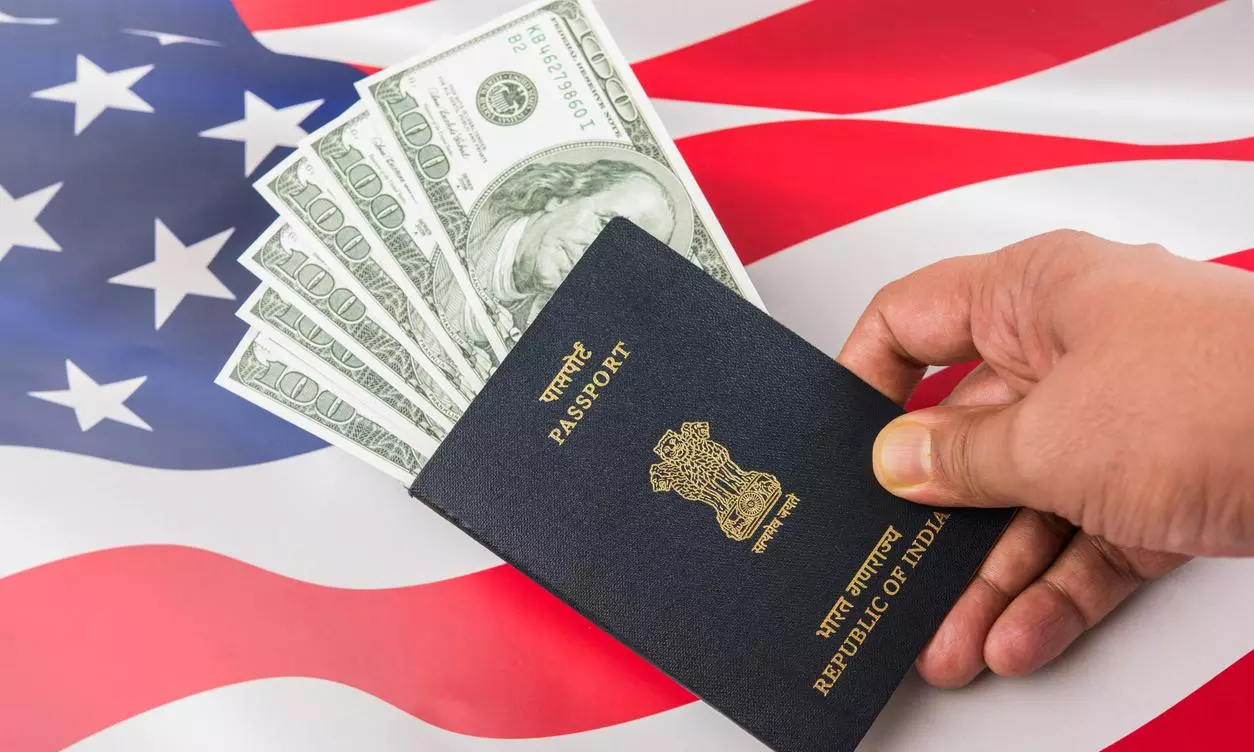
End of American dream? 40% of Indian Americans consider leaving US: Study
Carnegie–YouGov study finds over one-third have thought of emigrating, citing frustration with US politics, rising costs, and discrimination concerns

For many Indians, the United States was once the preferred destination to live and work, but for a growing number, the American dream is losing its appeal.
A survey by the Carnegie Endowment, conducted in partnership with YouGov, suggests rising unease within the Indian American community, with many even considering leaving the country. Based on responses from 1,000 participants, the findings show that nearly 40% of Indian Americans have at some point thought about emigrating, driven by a mix of political, economic, and social factors.
Also read | American dream stolen, claims US labour dept's new ad targeting Indian H-1B workers
“A small minority of respondents, 14 per cent, say they have thought about leaving the United States frequently, while 26 per cent have occasionally thought about it,” the survey notes. “Interestingly, the most cited reason is frustration with US politics, mentioned by nearly six in ten respondents (58 per cent). This is followed closely by concerns about the cost of living (54 per cent) and personal safety (41 per cent),” it adds.
Notably, over 5.2 million people of Indian origin currently live in the United States.
Discontent during Trump’s second term
The political climate is central to this shift, with 58 per cent of those considering leaving pointing to it as the primary reason. Broad dissatisfaction with Donald Trump’s second term has played a significant role in shaping these views. Around 71 per cent of respondents expressed disapproval of his handling of the economy, immigration, and foreign relations.
While there is some unease around US-India ties, foreign policy does not rank as a major concern for most. Instead, many respondents point to discomfort with the tone of domestic politics and what they perceive as a more exclusionary national narrative. Analysts note that rhetoric centred on “America for Americans” has left immigrant communities, including Indian Americans, feeling less included.
Bias concerns and rising living costs
A rising sense of discrimination and social unease is closely tied to this trend. Though there has not been a sharp increase in direct violence since 2020, concerns about everyday bias, particularly in workplaces and online spaces, have grown. Many respondents said they have altered their behaviour, avoided certain discussions, or felt less secure in public. For a community with a large share of first-generation immigrants and non-citizens, this persistent, low-level discomfort is a significant factor in thoughts of leaving.
Economic strain is another key driver. The escalating cost of living in the US, especially in major cities and tech hubs, has made long-term settlement increasingly difficult for many middle-class families. Inflation and job security are among the top concerns, cited by 21 per cent and 17 per cent of respondents respectively. Financial pressures are reshaping how Indian Americans view their future, with the cost of raising a child now estimated at over $300,000. Meanwhile, rents for a one-bedroom apartment in cities such as San Francisco, Seattle, and New York range between $3,000 and $5,000 a month.
Immigration hurdles fuel frustration
The US immigration system, however, remains perhaps the most persistent structural challenge. Long visa queues, green card backlogs, and ongoing policy uncertainty continue to affect a large section of the diaspora, particularly skilled professionals on temporary work visas.
Also read | US proposes rule to revise H-1B, PERM wage calculations, may impact Indian workers
Recent visa bulletins have only strengthened the perception that permanent residency is still a distant and uncertain prospect. This lack of long-term stability, despite years, sometimes decades, of living and working in the US, is emerging as a major source of frustration within the community.
At the same time, there is a noticeable political shift underway. Indian Americans are no longer firmly aligned with a single party. Since 2020, identification with the Democratic Party has declined, while support for Republicans has remained largely unchanged. Nearly 30 per cent now identify as independents, reflecting a growing move away from party loyalty toward decisions shaped by practical concerns such as job security, family safety, and long-term stability.