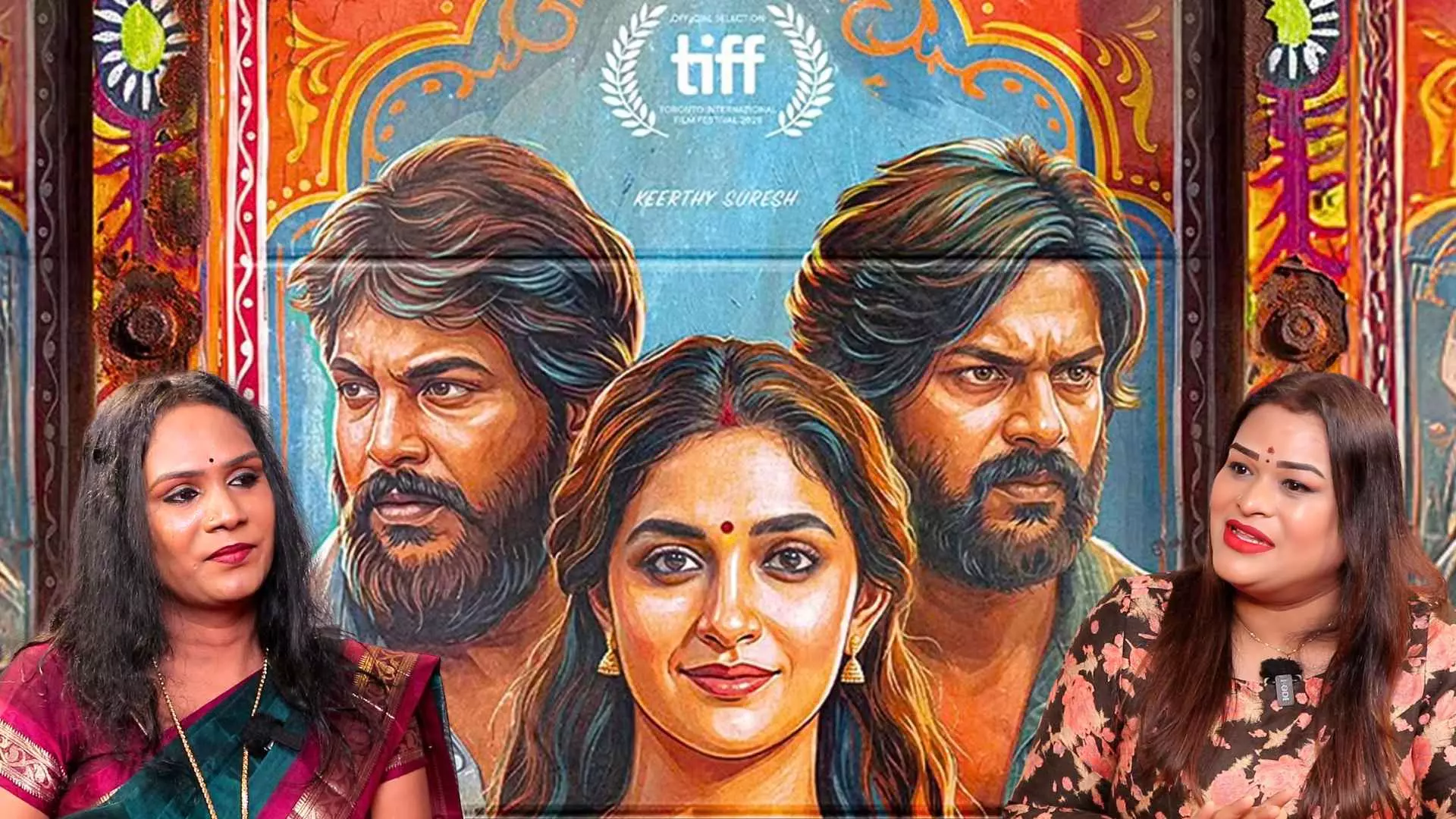
Ms. Sasha and Dr. N. Jency on The Federal
Don't sympathise, empathise: Trans women activists on Dorothy
Social activist Sasha and Dr N. Jency say Karthik Subbaraj's Dorothy shows trans women finding love, not victimhood, and ask society for equal space.

"Society is ready to sympathise with us, but it finds it difficult to empathise with us." That was the central message from transgender women on the Tamil film Dorothy, whose emotional impact they say has reached their community deeply.
Karthik Subbaraj's film has been the talk of the town since its release. The opinions of cisgender men and women have been heard, but the community at the heart of the story has rarely been given a platform.
The Federal spoke to social activist and Chennai Rainbow Film Festival director Ms. Sasha and Professor Dr. N. Jency about whether the film represents trans women accurately and whether it can change how they are treated off screen.
Seen on screen
Sasha said she could relate many scenes to her real life. "We have all been through a lot of trauma and emotional turmoil," she said, adding that the pain was something she felt immediately, especially in the last scene.
She asked society to recognise trans men and trans women as equally natural, just as it accepts men and women. "Love exists even between a crow and a sparrow," she said, but when it involves a transgender woman, society raises its voice.
The discussion, she said, has been reduced to why the character was shown as a boy and why the two kissed at the end. In the film, the character hides his femininity for a while because he does not want to lose his friend. "Nobody understands that," she said. She felt Gen Z has understood the film, while the older generation still struggles.
Also Read: Dorothy Movie Review: Karthik Subbaraj’s latest is bold, beautiful & unprecedented in Tamil cinema
Beyond victimhood
Sasha said the director showed simply how trans people are born and brought up. Families try to control them, she said, recalling being told at home not to walk in a feminine way. She hid herself for so long because she had only one friendship and feared losing it.
She said society sympathises when trans people beg or do sex work, but stays uncomfortable when they study, work and move ahead. "Give us what belongs to us," she said. "This society belongs to everyone."
They said transgender people are referenced in Sangam literature, that Avvaiyar used the term "Pedu" in a poem, and that some served as soldiers protecting queens. Later, they said, society projected them as sex workers and beggars.
A different ending
The panellists compared Dorothy with earlier films such as Thangam from Paava Kadhaigal. In many films, they said, the transgender character is a victim who is killed, pitied or used for comic scenes. In this film, Subbu and Dorathi find love, happiness and acceptance, and the film ends with a happy ending and a kiss.
"I think that is what has hurt a lot of people," one panellist said. "Tamil cinema has accepted all of that. Then why is there hesitation to accept this?"
One panellist said she has lived the things society called impossible. She has been married for six years, after failing twice to register her marriage and succeeding on the third attempt. "A transgender woman is a woman," she said, citing the law. She has adopted transgender children and supports their education. One daughter secured a ₹36 lakh scholarship and is studying in London, another is pursuing a master's at Anna University, and another is at Ethiraj College.
Love and friendship
Asked about criticism that the friendship turned into love too quickly, the panellists rejected the charge. They said there were signs from the beginning that the bond was more than friendship. "He buys her parotta. He takes care of her. Why would he do all these things? That is love," one said.
Friends becoming lovers is nothing new in literature, they argued. Heterosexual friendships turn into marriages everywhere, and childless couples adopt. They also rejected the claim that trans people are mentally ill. "Who said we are mentally ill?" one asked.
Also Read: Why Raghav Chinivar’s biography of Manjamma Jogathi, Dance Like a Trans, is more than an inspiration
They said the character struggles to see his friend differently after years of seeing her one way, yet his love shows in small gestures. "It is a love that has grown from a friendship that existed from the very beginning," one said. "And that is the kind of love that will surely endure, because there is understanding in it."
Women and music
Asked whether cisgender women accept the community more, the panellists said yes. "Women understand our minds quickly," one said, pointing to Keerthy Suresh's character, who tells Subbu, "You are a woman." They also cited the scene in which Karthi's mother comforts her friend's child. But acceptance inside families, they said, remains "very, very low", and women and trans women share a trauma bond because "everyone is a victim of patriarchy."
On Ilaiyaraaja's Muthumani, they said eight or nine of every ten trans profiles they see use it in statuses or reels. They explained that the paal function is a ceremony held about 48 days after a transgender woman's surgery, and that the song from Narthagi had long been used for it. Muthumani may now take its place. "He has taken us and played us like a veena," one said, offering Ilaiyaraaja "a big salute".
Mainstream moment
The panellists stressed that this is a mainstream release with a mainstream actor, director and music director. In its second week it is "getting stronger than ever," Sasha said. It begins like a gangster film set in Madurai before slowly revealing its subject, and earlier films such as Kanchana showed a successful trans woman, but this one is about something more basic: love.
They also questioned the term "third gender". "Who is the first gender? Who is the second gender?" one asked. Trans people pay the same taxes, they said, and have the same right to love and marry. Citing Ambedkar and the Constitution, they said everyone is equal.
"We are not asking for money, property or land. Just love," one said, ending with the same plea: "Do not sympathise with us. Start empathising with us. If you start empathising with us and give us equal space, genuine social change will happen."