Why Raghav Chinivar’s biography of Manjamma Jogathi, Dance Like a Trans, is more than an inspirational story
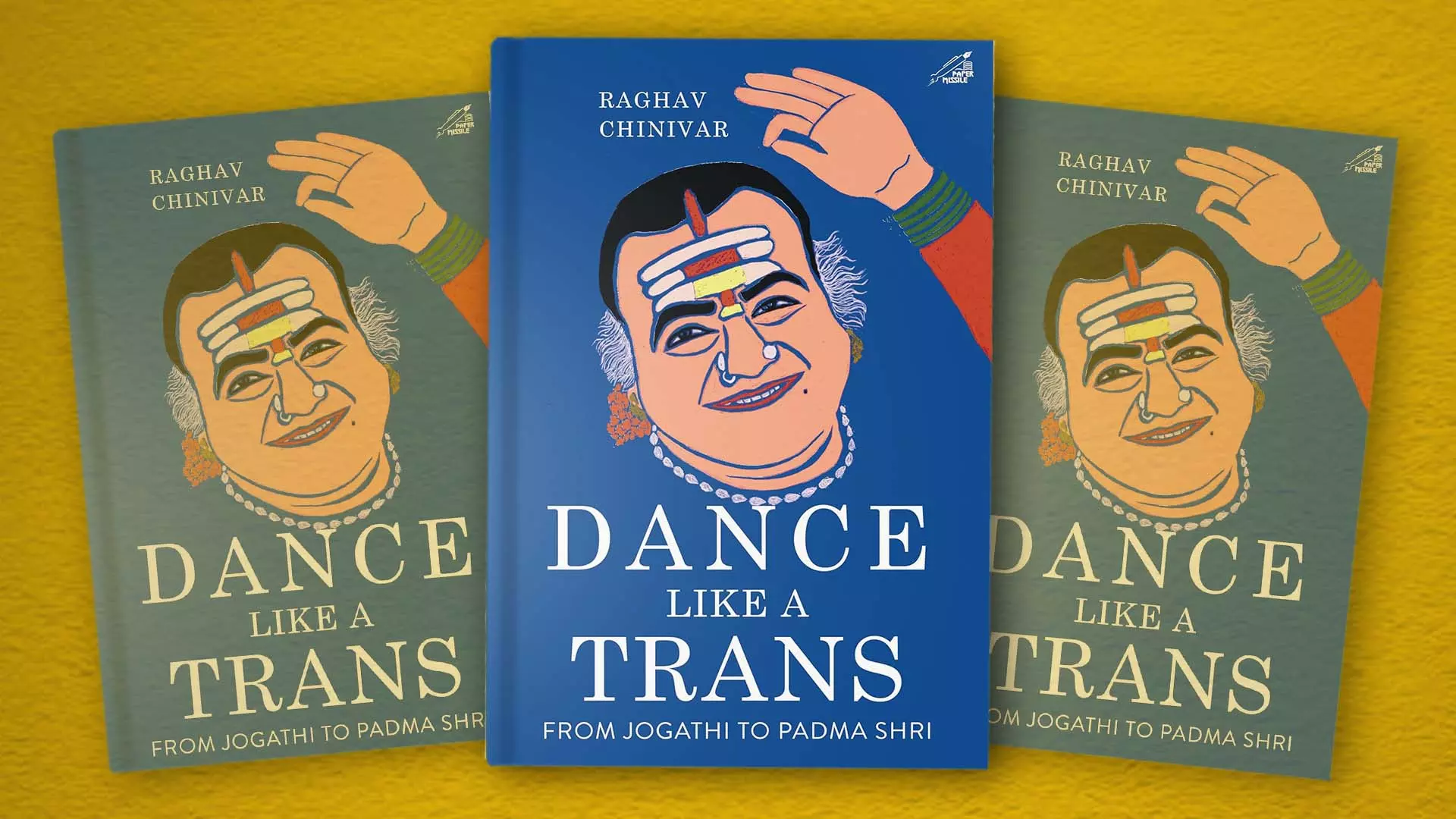
Published by Niyogi Books, the book tells the extraordinary story of Manjamma, a transgender folk artiste and Padma Shri recipient. But this is not simply a celebration of success. It is a narrative on identity, about the body, art, society and survival. Above all, this book is about the price that society extracts from people before it allows them dignity.

Manjamma’s story raises the question: why must a transgender person become extraordinary before society considers them worthy of ordinary respect.
We all need a witness to our lives.
Someone who sees not only what we eventually become, but remembers where we began. Someone who knows the distance between the person the world saw and the person we were struggling to become. Someone who can bear witness to the battles fought in silence, the humiliations survived, the small victories that preceded the visible ones. For Manjamma Jogathi, Raghav Chinivar became that witness.
The late Chinivar’s book, Dance Like a Trans: From Jogathi to Padma Shri, posthumously published by Niyogi Books, tells the extraordinary story of Manjamma, a transgender folk artiste, born Manjunath in rural Karnataka, rejected and humiliated for who she was, initiated into the Jogathi tradition (transwomen, identified as jogathis, married to the Hindu deity Jogappa) and eventually becoming a celebrated folk artist (an exponent who Jogathi Nritya, credited with taking the folk performance from the streets of Karnataka to the stage), the first transgender woman to head the Karnataka Janapada Academy (for folk arts) and a recipient of the Padma Shri.
But to describe this book merely as an inspirational story of a transgender person who overcame adversity would do it a great injustice. Because this is not simply a story of success. It is a story about identity, about the body, about art, about society and about survival. Above all, this book is about the price that society extracts from people before it allows them dignity.
Dance of survival
Manjamma’s story raises the question: why must a transgender person become extraordinary before society considers them worthy of ordinary respect? Why must someone survive rejection, violence, humiliation and exclusion and then rise all the way to national recognition before we are willing to look at their life with admiration? Why is dignity still treated as an award to be earned, rather than a right with which every human being is born?
Even today, dance is somehow inherently associated with the feminine talents — the grace of the body, the movement of the hands, the expressions of the face, have all been ‘gendered’. So, when the ghungroos play their music, gender seeps in. But what happens when the body wearing those ghungroos refuses the gender assigned to it by the world? Manjamma’s story questions whether dance can become a form of politics. Can it become a declaration of identity? Can it become an act of resistance? Can it become survival?
For Manjamma, art is not a hobby. It is not even simply ambition. For her, the stage becomes a place where a person denied space in society creates space for herself. Dance becomes language. Performance becomes identity. The body that society seeks to shame becomes the very instrument through which she claims dignity. There is something profoundly political about that transformation.
We often imagine politics as something that happens in Parliament, in elections, in courts or on the streets. But perhaps politics also happens when a person who has been told to disappear chooses to become visible. Perhaps politics happens when a body that has been shamed refuses shame. Politics happens when ghungroos are tied around the ankles and a person says, without needing to say a word: I am here. I know who I am. And I will not disappear.
The legitimacy of life
The contradictions surrounding the Jogathi tradition make this story even more powerful. There is faith and stigma, sacredness and exclusion, celebration and cruelty, often existing side by side. That contradiction runs far beyond Manjamma’s story. It asks uncomfortable questions of all of us. And perhaps this is the question every remarkable life ultimately leaves us with: what does this story tell us about the world we live in? What does it tell us about our own lives? What does it tell us about ourselves?
Manjamma’s story is remarkable not merely because of how far she travelled — from rejection to recognition, from the margins to the Padma Shri. It is remarkable because it reveals how casually society can decide whose life is legitimate. It reveals the enormous energy human beings are forced to spend simply proving that they have the right to exist as themselves. Beyond gender, there is something here that speaks to all of us.
How many of us have spent parts of our lives performing versions of ourselves that made other people comfortable? How many of us have been told, directly or indirectly, that we are too much of something, or not enough of something else? How many of us know the distance between who the world expects us to be and who we know ourselves to be?
Of course, for transgender persons, that conflict is not merely philosophical. It can determine access to family, education, work, housing, healthcare, safety and life itself. But Manjamma’s story forces every reader to confront a universal question: who gets to tell us who we are?
At a time when the Supreme Court is seized of a challenge concerning changes to India’s legal framework governing transgender rights, we are once again being asked to confront a simple truth, one that lies at the foundation of the struggle for transgender dignity: Identity is felt. It is lived. It is known by the person whose identity it is. It is not something that must be medically diagnosed into existence.
A human being should not have to stand before the State, a medical authority or society and prove who they are. The deepest constitutional promise of dignity must surely include the freedom to name oneself.
In that context, Manjamma’s story is not merely a biography of one extraordinary person. It becomes an urgent political and constitutional text for our times. Laws are ultimately about lives. Behind every legal argument about identity is a person waiting to be believed. Every demand for medical certification is a human-being being asked to prove something that they already know about themselves. Behind every debate about transgender rights are thousands of lives being lived while the rest of society continues to debate whether those lives deserve recognition. The law can open a door. Society must still allow people to walk through it.
Also read: 57 years after Stonewall, why equality, inclusivity still a battle for India's queer community
This is why Manjamma’s story must be read not only as a story about the transgender community. It is also a story about us — about families, communities, institutions, religion, culture and the many ways in which we decide who belongs and who does not. Manjamma’s life is not powerful because suffering made her stronger. We must be careful with that familiar romanticisation of suffering. No person should have to endure cruelty in order to become inspirational to the rest of us. Her life is powerful because, despite everything that attempted to reduce her, she created an identity that could not be contained by the labels imposed upon her. And then she danced, through rejection, through loneliness and through stigma.
She danced until the same society that had pushed her to its margins was compelled to watch her take centre stage.
Being witness
There is another layer of poignancy to this book. Raghav Chinivar spent years listening to a life that deserved to be recorded. There is something beautiful about one human being saying to another: your life happened. I saw it. It matters. And I will make sure that the world knows. That is what writing, at its most meaningful, can do.
History often remembers institutions and powerful people. But the real history of a society also lives in bodies that resisted, artists who survived, communities that preserved traditions, and people whose names never entered our textbooks.
Manjamma Jogathi’s story deserves to be read because it complicates our easy understanding of progress. Yes, India has travelled some distance on transgender rights. But representation without everyday dignity is incomplete progress. Awards without social equality are incomplete progress. Legal recognition without safety, livelihood, healthcare, education and freedom from discrimination is incomplete progress. And visibility without listening is incomplete progress.
Dance Like a Trans is therefore not a book only for people interested in gender or LGBTQIA+ rights. It is for parents, teachers, lawyers and judges, politicians and policymakers, artists, and anyone who has ever used the word “normal” without asking who was given the power to define it. And especially to those who believe that the struggle for equality belongs only to the people who are being discriminated against because it does not. The struggle for equality is a test of all of us.
A democracy is not measured only by how loudly the majority can speak. It is measured by whether the person most likely to be excluded can live freely, safely and with dignity. Manjamma’s story begins in a world that tries to tell her who she must be. It ends with her telling the world who she is. And somewhere between those two points is a dance - a dance of identity, politics, resistance and survival.
Painful. Defiant. Beautiful. Unforgettable.