Why for these Indian drag performers the loss of Dolly Parton feels so personal
For drag performers Lush Monsoon and Hash Brownie, who recently performed a tribute to Parton in Delhi, the 'Queen of Country' music who passed away in August, would remain 'Aunt Dolly'.

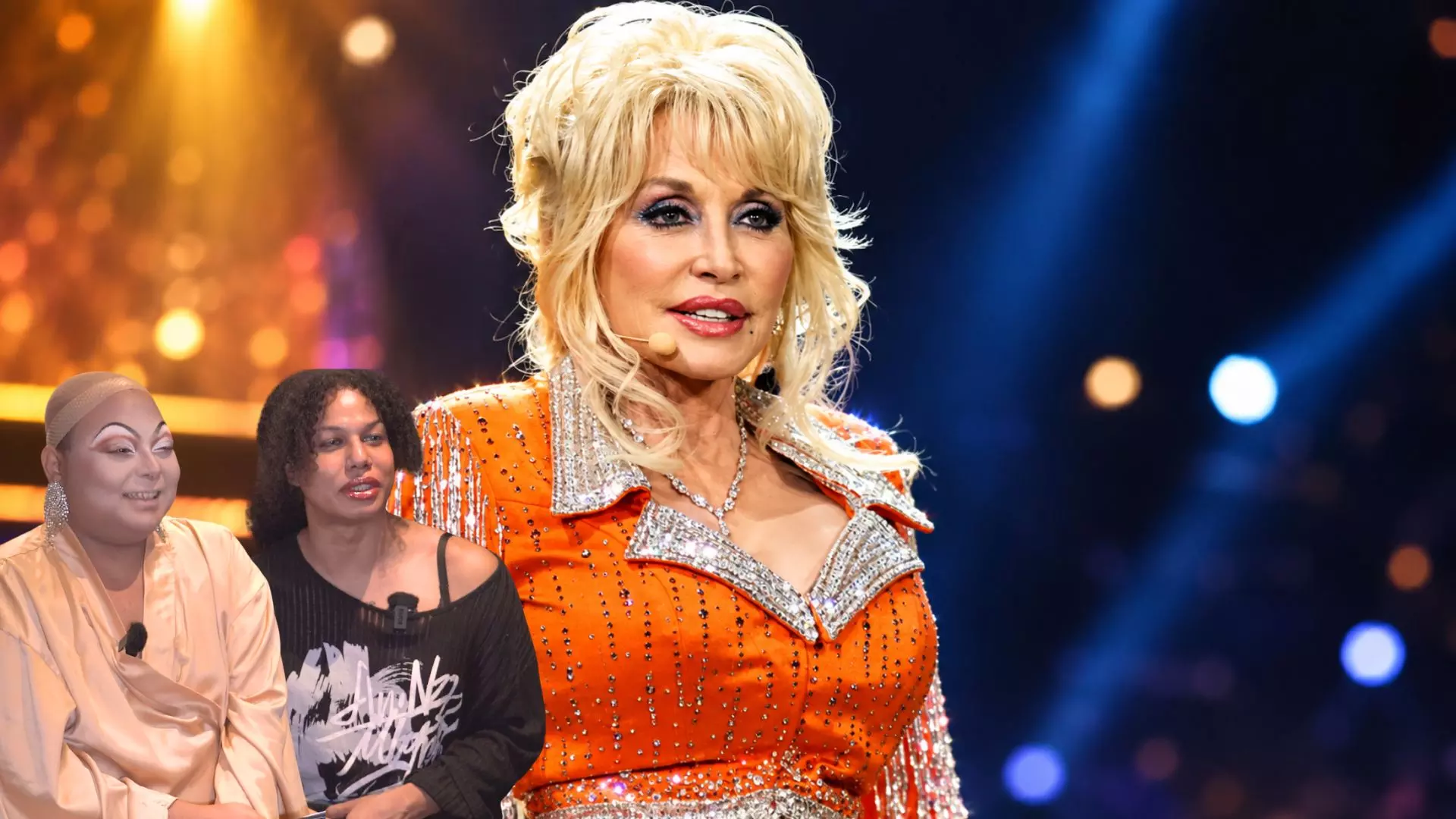
Dolly Aunt
Dolly Parton had once said that if she hadn’t been a woman, she would have been a drag queen. The sense of identification was mutual. In Parton’s death last month — she passed away on August 25, aged 80 — the world lost a legendary singer, songwriter, actor and philanthropist. But to many drag performers, the loss of the ‘Queen of Country’ seemed personal.
“It's as if we felt like we knew her,” said Lush Monsoon, a human rights lawyer and drag performer in India, on the sidelines of a tribute to Parton at Delhi’s The Lalit last week. Lush was one of the performers at the event; the other was make-up artist, stylist, entrepreneur and drag performer Hash Brownie.
Remembering ‘Aunt Dolly’
For decades Parton had been a vocal champion of queer rights. But to Lush she seemed to be more than an ‘ally’. Talking about the drag community, she added: “There are many people who support us, who are allies. But they still do not understand the experience. Dolly Parton understood drag queens”.
Addressing Parton as “Aunt Dolly”, Lush shares that the Parton song that particularly resonates with Lush is “Jolene” — that song that speaks of the fear of losing one’s beloved to another. She sees the song as reflecting a queer experience of desiring someone but being denied them because “the traditional person gets them”.
Referring to reports of her long-time chauffeur having been a trans man, Lush recalled how this was at a time when the conversation about trans rights was still not that advanced. “She understood, recognised and respected the humanity of people,” explained the drag performer, explaining the community’s closeness with her.
Added Hash: “The way she talked about the queer community was so normal, not like she is doing something noble”. “There was no ‘otherising’,” as Lush put it.
It was that same matter-of-factness in her philanthropic work which endeared her to Hash. Talking about her book donation drives, the drag performer wondered at how she sought little publicity for her charitable work. It was one of the things which made Parton a ‘genuine’ ally to her.
Hash discovered Parton later in life, but the more she learnt about the singer and her songs, the more she connected with her. One line stayed with her: “It takes a lot of money to look this cheap.”
An inspiration for drag
Not unlike drag — often associated with over-the-top dressing — Parton was synonymous with flamboyant fashion, all big wigs and her signature rhinestones. Not everyone was a fan. But the star was unperturbed by all the questioning, criticism and censure. “I don't like to be like everybody else…I would never stoop so low as to be fashionable,” she had said, “I just decided that I would do something that would at least get the attention. Once they got past the shock of the ridiculous way I looked and all that, then they would see there was a part of me to be appreciated. I'm very real where it counts, and that's inside…I can afford to…diddle around with make-up and clothes and stuff, because I am secure with myself,” she had added. Another time, she retorted, “It takes a lot of money to look this cheap.”
It was confidence, sure, but it was also about owning her persona. And it is this attitude, said Hash, that has influenced her own approach to drag.
Agreed Lush, “I have a certain confidence which drag gives to me”. According to her, Parton embodied that confidence by refusing to reduce herself because of what other people might think. Makeup, costumes, wigs and even something as simple as lipstick can change how a person carries themselves. Drag performers are frequently questioned about why they need elaborate makeup or costumes, she added. Why does drag have to involve so much makeup? Why can’t queer people be simpler or more relatable? The answer, she said, is that extravagance itself can be a way of claiming space.
Also read: Dolly Parton obit: Why fans of the ‘Queen of Country’ will be singing ‘I will always love you’
Especially for the tribute performance, the motto was not to hold back. “If you like big wigs, go for it. If you like long nails, please go ahead and go for it,” said Lush, with a laugh.
But it takes time and effort to nail that transformative look.
A performance may last only ten minutes, as in the tribute show for Parton, but getting ready can take hours. There is also the mental preparation involved in inhabiting a character.
A bit of ‘jugad’
While both performers agreed that India’s drag scene has changed significantly since they started performing — both Lush and Hash have been performing drag for about a decade — the number of venues remains a major limitation. When they started, Lush said, performers often had to approach venues themselves and explain what drag was before asking to be booked. While more spaces have opened up, they said India still needs sustained venues where drag performers can work regularly. Without those spaces, Lush said, drag risked remaining a hobby rather than a profession.
The act itself remains a bit of a “jugad”, with performers often unable to find the right wigs or shoes their size. Hash has responded by making some of those things herself, from wigs to make-up items.
The future looks promising, with many new drag performers stepping out to take the stage — Lush estimates the size of the drag community in India to be 100 strong.
But the laws can still steal the spring in their steps.
Referring to the controversial Transgender Persons (Protection of Rights) Amendment Act, 2026, which has been challenged in Supreme Court, Lush talks about the drawbacks of moving away from self-identification as trans (the law narrows legal recognition to specific socio-cultural identities such as Hijra, Kinnar, Aravani or Jogti etc). For Lush, laws have an impact beyond access to services such as healthcare. They can influence whether people feel that they are recognised, she explained. Which is also why community matters. Lush described the space created by queer friends and fellow performers as one where people do not have to prove who they are. Instead, they can simply exist and affirm one another.
And it is in this space that Parton would continue to exist as an ally, inspiring them with her music, her statements, her style and her very personality.