



After Trump, China claims it mediated India-Pakistan conflict after Operation Sindoor
China now claims a mediation role in the India-Pakistan conflict after Operation Sindoor, even as India has denied any third-party mediation

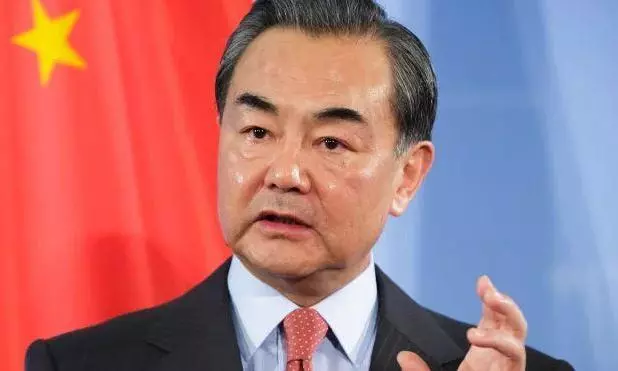
China, after US President Donald Trump, has claimed to have mediated between India and Pakistan during the four-day-long military conflict following Operation Sindoor. The remarks were made by Chinese Foreign Minister Wang Yi on Tuesday (December 30).
However, India has been consistently maintaining that the May 7-10 military conflict with Pakistan has been resolved due to direct talks between the Director General of Military Operations (DGMOs) of the two countries.
“This year, local wars and cross-border conflicts flared up more often than at any time since the end of WWII. Geopolitical turbulence continued to spread,” said Wang.
‘China’s neutral stance’
Addressing the Symposium on the International Situation and China’s Foreign Relations in Beijing, Wang further stated that China, in a bid to “build peace that lasts," has taken an objective and neutral stance while focusing on addressing both symptoms and root causes.
Also Read: China launches 'Justice Mission 2025' war games to encircle Taiwan
“Following this Chinese approach to settling hotspot issues, we mediated in northern Myanmar, the Iranian nuclear issue, the tensions between Pakistan and India, the issues between Palestine and Israel, and the recent conflict between Cambodia and Thailand," added Wang.
China’s role in Indo-Pak conflict
However, China’s role in the India-Pakistan conflict following Operation Sindoor has come under scrutiny in view of the military assistance provided by Beijing to Islamabad.
Also Read: China moves WTO against India over solar and IT sector incentives
China, on May 7, called upon India and Pakistan to exercise restraint, although it criticised India’s air strikes. “China finds India’s military operation early this morning regrettable,” said a Chinese Foreign Ministry statement on the first day of Operation Sindoor.
“China opposes all forms of terrorism,” a Chinese Foreign Ministry statement said in an apparent reference to the Pahalgam terrorist attack and urged both sides to exercise restraint in the interest of peace.
Active military support to Pak
Moreover, China’s action of providing active military support to Pakistan during Operation Siondoor has also come under the scanner. For its part, China, whose arms exports amount to over 81 per cent of Pakistan’s military hardware, sought to downplay India’s Deputy Chief of Army Staff, Lt General Rahul R Singh’s assertion that Beijing used the conflict as a “live lab”, declining to directly answer his charge.
Also Read: As Delhi chokes on smog, China shares ‘Beijing model’ to cut air pollution
Gen Singh said China’s strategy during Operation Sindoor was based on its ancient military strategy of "36 stratagems" and killing the adversary with a "borrowed knife" to buttress the point that Beijing extended all possible support to Pakistan to cause pain to India.
On India-China ties
In his speech on China’s foreign policy initiatives, Wang spoke of the good momentum of improvement of relations between India and China and spoke of Beijing’s invitation to Prime Minister Narendra Modi to take part in the Shanghai Cooperation Organisation (SCO) summit held in Tianjin in August this year.
“Also, this year, we invited the leaders of India and the DPRK to China. China-India relations showed a good momentum, and the traditional friendship with the DPRK was cemented and further promoted,” he said, adding that the SCO summit was a resounding success.
(With agency inputs)